
Digital Enterprise Show 2026 Drives AI Growth
 Vortixel
8 minutes read
Vortixel
8 minutes read
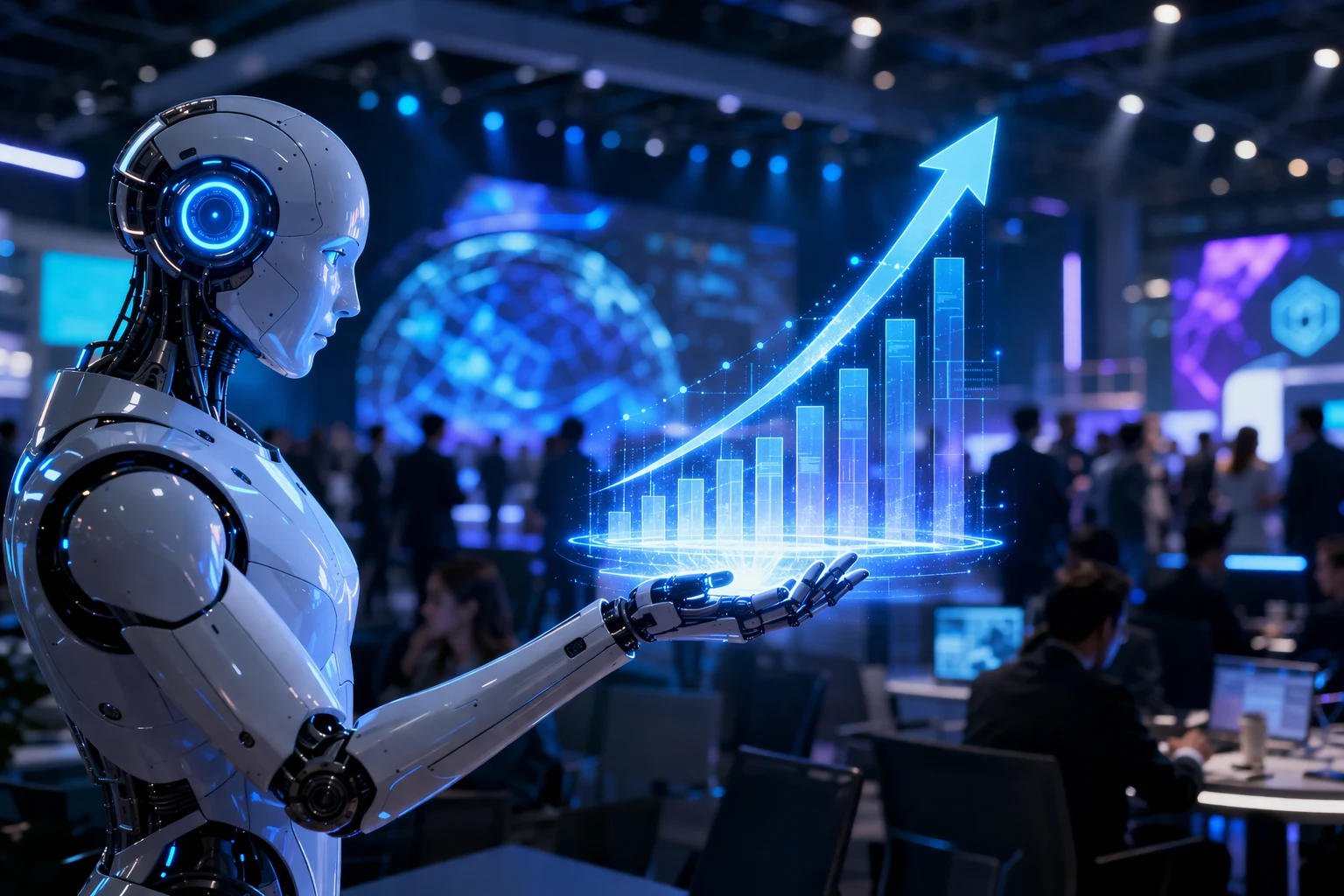
Introduction: The Rise of AI as a Business Core
The Digital Enterprise Show 2026 has emerged as one of the most influential global platforms redefining how businesses approach growth in the age of artificial intelligence. Held in Málaga, Spain, this year’s event did not just highlight technological advancements but showcased a deeper transformation: AI is no longer an optional tool but the foundation of modern business strategy. From startups to multinational corporations, the conversation has shifted from “should we adopt AI?” to “how fast can we scale with AI?” This transition reflects a broader global trend where digital acceleration is driven by intelligent systems capable of learning, adapting, and optimizing outcomes in real time. Companies attending the event were not simply looking for inspiration but actionable frameworks to integrate AI into every layer of their operations.
The tone of DES 2026 was unmistakably forward-looking, with industry leaders emphasizing that the next wave of digital transformation will be defined by how effectively organizations can leverage AI to create scalable, sustainable growth. Discussions ranged from AI-powered decision-making systems to fully automated customer engagement pipelines. What stood out most was the urgency: businesses that fail to adopt AI-driven strategies risk falling behind in an increasingly competitive and fast-moving digital economy. This sense of urgency has become a defining characteristic of the 2026 business landscape.
AI as the New Growth Engine
One of the central themes at the Digital Enterprise Show 2026 was the positioning of AI as the primary engine of business growth. Unlike previous years where AI was often discussed in theoretical terms, this year’s conversations were grounded in real-world applications and measurable results. Companies shared case studies demonstrating how AI has improved operational efficiency, reduced costs, and unlocked new revenue streams. These examples reinforced the idea that AI is not just about automation but about amplification—enhancing human capabilities and enabling organizations to achieve more with fewer resources.
AI-driven growth manifests in several key areas, including predictive analytics, personalized marketing, and intelligent automation. Predictive analytics allows businesses to anticipate market trends and customer behaviors with unprecedented accuracy, enabling proactive decision-making. Personalized marketing, powered by AI, delivers tailored experiences to customers, increasing engagement and conversion rates. Meanwhile, intelligent automation streamlines repetitive tasks, freeing up human talent to focus on strategic initiatives. Together, these elements create a powerful ecosystem where growth is not only faster but also more sustainable.
From Data to Decisions: The AI Advantage
A recurring message throughout DES 2026 was the importance of data as the fuel for AI-driven growth. However, raw data alone is not enough. The real value lies in transforming data into actionable insights that drive decision-making. This is where AI excels. By analyzing vast amounts of data in real time, AI systems can identify patterns, detect anomalies, and generate recommendations that would be impossible for humans to achieve manually.
Businesses showcased how they are leveraging AI to enhance decision-making across various functions, from supply chain management to customer service. For example, AI-powered supply chain systems can predict disruptions and optimize logistics in real time, reducing delays and costs. In customer service, AI chatbots and virtual assistants provide instant support, improving customer satisfaction while reducing operational expenses. These applications highlight the transformative potential of AI when combined with high-quality data and robust analytics capabilities.
The Evolution of Marketing in the AI Era
Marketing has undergone a significant transformation in the AI era, and DES 2026 provided a clear roadmap for what comes next. Traditional marketing strategies, which often rely on broad targeting and manual analysis, are being replaced by AI-driven approaches that prioritize precision and efficiency. AI enables marketers to analyze customer data at a granular level, creating highly personalized campaigns that resonate with individual preferences and behaviors.
One of the most notable trends discussed at the event was the rise of AI agents in marketing. These intelligent systems can autonomously manage campaigns, optimize ad spend, and even generate content in real time. This level of automation allows marketers to focus on strategy and creativity, while AI handles execution and optimization. The result is a more agile and responsive marketing ecosystem that can adapt to changing market conditions almost instantly.
Another key development is the shift from traditional SEO to Answer Engine Optimization (AEO), where content is designed to provide direct, concise answers to user queries. This shift reflects the growing influence of AI-powered search engines and virtual assistants, which prioritize relevance and accuracy over keyword density. Businesses that adapt to this new paradigm will be better positioned to capture and retain audience attention in an increasingly competitive digital landscape.
Startup Ecosystem: Scaling with AI
Startups played a significant role at the Digital Enterprise Show 2026, showcasing innovative solutions that leverage AI to disrupt traditional industries. For many startups, AI is not just a tool but the core of their business model. These companies are using AI to create new products, improve customer experiences, and scale operations rapidly.
One of the key advantages of AI for startups is its ability to level the playing field. With the right AI tools, small teams can achieve results that were previously only possible for large organizations with extensive resources. This democratization of technology is driving a new wave of innovation, where agility and creativity often outweigh size and capital.
However, the event also highlighted the challenges that startups face in adopting AI, including data privacy concerns, regulatory compliance, and the need for specialized talent. Addressing these challenges requires a strategic approach that balances innovation with responsibility. Startups that can navigate these complexities will be well-positioned to thrive in the AI-driven economy.
Leadership in the Age of AI
Another important theme at DES 2026 was the evolving role of leadership in an AI-driven world. As AI becomes more integrated into business operations, leaders must develop new skills and mindsets to navigate this transformation. This includes understanding the capabilities and limitations of AI, fostering a culture of innovation, and ensuring ethical use of technology.
Leaders are no longer just decision-makers; they are facilitators of change. They must create environments where experimentation is encouraged, and failure is seen as a learning opportunity. This cultural shift is essential for organizations to fully realize the potential of AI. Without it, even the most advanced technologies may fail to deliver meaningful results.
Ethics also play a crucial role in AI adoption. As AI systems become more powerful, concerns about bias, transparency, and accountability become increasingly important. Leaders must ensure that their organizations use AI responsibly, maintaining trust with customers and stakeholders. This requires not only technical expertise but also a strong commitment to ethical principles.
The Human-AI Collaboration
Despite the rapid advancement of AI, DES 2026 emphasized that the future of business is not about replacing humans but about enhancing human capabilities. The most successful organizations are those that can effectively combine human creativity with AI-driven efficiency. This collaboration creates a synergy where each complements the other, resulting in better outcomes than either could achieve alone.
Human intuition and creativity remain essential for tasks such as strategic planning, innovation, and relationship building. AI, on the other hand, excels at processing data, identifying patterns, and executing tasks بسرعة and accurately. By leveraging the strengths of both, businesses can create more effective and resilient systems.
This collaborative approach also has implications for the workforce. As AI automates routine tasks, employees must develop new skills to stay relevant. This includes not only technical skills but also soft skills such as critical thinking, communication, and adaptability. Organizations must invest in training and development to ensure that their workforce is prepared for the future.
Global Impact and Future Outlook
The impact of the Digital Enterprise Show 2026 extends beyond individual organizations to the global economy as a whole. As AI adoption accelerates, it is reshaping industries, creating new opportunities, and redefining competitive dynamics. Countries that invest in AI infrastructure and talent development will have a significant advantage in this new landscape.
Looking ahead, the future of AI-driven growth appears both promising and complex. On one hand, AI has the potential to drive unprecedented levels of innovation and efficiency. On the other hand, it raises important questions about regulation, privacy, and the future of work. Addressing these challenges will require collaboration between governments, businesses, and academia.
The event made it clear that we are still in the early stages of the AI revolution. While significant progress has been made, there is still much to explore and discover. The next few years will be critical in shaping how AI is integrated into society and how its benefits are distributed.
Conclusion: Growth in the AI Era
The Digital Enterprise Show 2026 has reinforced the idea that AI is not just a technological trend but a fundamental shift in how businesses operate and grow. From marketing and operations to leadership and workforce development, AI is transforming every aspect of the business landscape. Organizations that embrace this change and invest in AI-driven strategies will be better positioned to succeed in the digital age.
As we move forward, the challenge will not be whether to adopt AI but how to do so effectively and responsibly. The insights shared at DES 2026 provide a valuable roadmap for businesses looking to navigate this transformation. By combining innovation with ethics, and technology with human creativity, companies can unlock new levels of growth and create a more sustainable and inclusive future.