
AI Innovation Awards Redefine Industries in 2026
 Vortixel
12 minutes read
Vortixel
12 minutes read
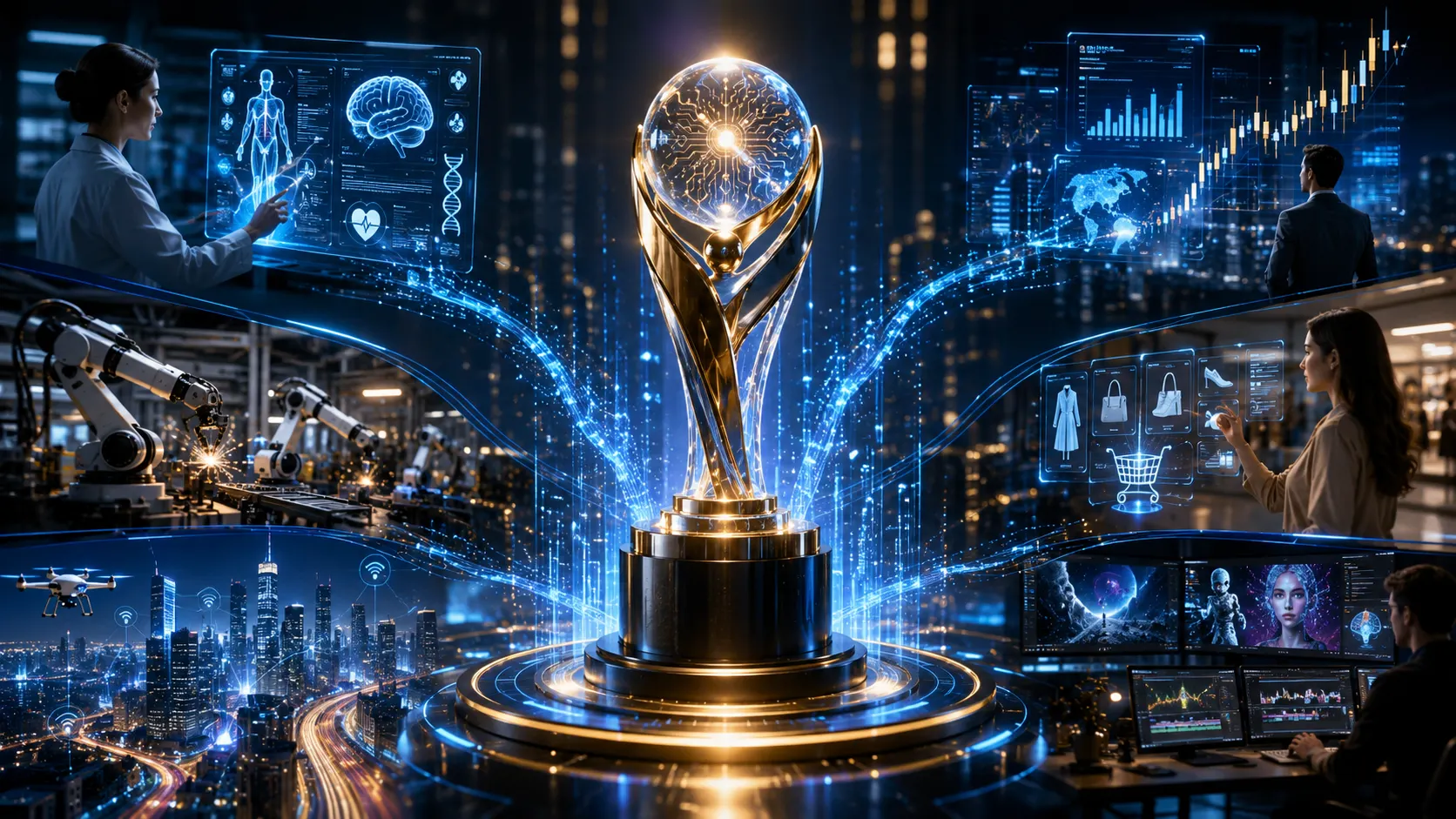
The global tech industry is entering a phase where artificial intelligence is no longer treated like an experimental feature hidden inside software products. In 2026, AI has become the engine behind entire industries, changing how businesses grow, how consumers interact online, and how companies compete in an increasingly digital world. From healthcare and finance to retail, logistics, entertainment, and cybersecurity, the influence of intelligent systems is impossible to ignore. That momentum is exactly why conversations around the AI Innovation Awards are getting louder ahead of the ET Most Innovative AI Product Awards 2026.
What makes this moment feel different is the maturity of the AI ecosystem itself. A few years ago, companies were obsessed with proving they had “AI integration” somewhere inside their platforms, even when the implementation barely solved real-world problems. Today, businesses are judged differently. Investors, customers, and industry leaders now want practical AI products that deliver measurable impact, improve productivity, reduce costs, and create smarter user experiences. The hype culture around artificial intelligence is slowly evolving into something more grounded and competitive.
At the center of this transformation are startups and tech innovators building products that feel deeply connected to everyday life. AI tools are now writing reports, detecting cyber threats, analyzing medical scans, managing customer support systems, optimizing supply chains, and even helping creators produce content faster than ever before. This rapid adoption created an environment where innovation is happening simultaneously across multiple industries instead of staying limited to Silicon Valley-style software companies. The rise of the AI Innovation Awards reflects that wider cultural and technological shift.
The upcoming ET Most Innovative AI Product Awards 2026 arrives during a period where artificial intelligence is influencing business decisions at every level. Companies are competing aggressively to launch smarter products before rivals gain market dominance. Startups are racing to secure funding by proving their AI systems solve meaningful problems instead of chasing empty buzzwords. Consumers are also becoming more aware of how AI impacts their digital experiences daily, whether through personalized recommendations, fraud prevention, automated workflows, or intelligent search systems.
This growing attention toward AI innovation is creating something bigger than an awards season trend. It is shaping how industries define progress itself. Businesses that once viewed automation cautiously are now investing heavily in AI infrastructure because they understand that staying behind could mean losing relevance entirely. The companies gaining recognition in 2026 are not simply building trendy software. They are redesigning the future of work, communication, creativity, and digital interaction through scalable artificial intelligence ecosystems.
Why AI Innovation Became the Biggest Tech Race
The modern technology landscape moves fast, but artificial intelligence accelerated that pace to another level entirely. Companies no longer have the luxury of waiting years to adapt because competitors are deploying AI systems that improve operations almost instantly. This urgency transformed the global business environment into a nonstop innovation race where speed, adaptability, and execution matter more than ever before. That pressure explains why the AI Innovation Awards gained massive attention among startups, enterprises, and investors alike.
One major reason behind this acceleration is the enormous amount of data businesses now handle daily. Every online transaction, customer interaction, cloud operation, and social media activity generates valuable information. Traditional systems struggle to process such massive datasets efficiently, but AI thrives in data-heavy environments. Intelligent algorithms can analyze patterns, predict outcomes, automate decisions, and generate insights at a scale impossible for human teams alone. Companies leveraging these capabilities gain clear competitive advantages almost immediately.
Another factor driving the AI race is changing consumer expectations. People now expect digital experiences to feel personalized, fast, and intuitive. Users want streaming platforms that understand viewing preferences, shopping apps that predict buying habits, and customer service systems capable of solving problems instantly. Businesses failing to deliver these experiences risk losing engagement quickly. Artificial intelligence became essential because it helps companies create responsive and adaptive platforms that feel tailored to individual users.
At the same time, venture capital firms are aggressively supporting AI-focused startups because they see long-term growth potential across nearly every industry. Investors understand that artificial intelligence is not limited to one market category. Instead, it functions like a foundational technology layer capable of transforming healthcare, transportation, education, finance, entertainment, manufacturing, and cybersecurity simultaneously. This broad market applicability makes AI startups highly attractive from a funding perspective.
The rise of global AI competition also pushed innovation forward rapidly. Countries worldwide are investing heavily in artificial intelligence research, infrastructure, and startup ecosystems because technological leadership increasingly influences economic power. Businesses recognized that AI adoption is no longer optional for remaining globally competitive. As a result, awards celebrating technological breakthroughs now represent more than industry recognition. They symbolize leadership in one of the most important technological shifts of this generation.
AI Products Are Solving Real Problems Now
One of the biggest changes happening in 2026 is the transition from theoretical AI applications to practical solutions solving everyday business problems. Earlier AI waves often focused heavily on flashy demonstrations that attracted headlines but struggled to create long-term value. Today, successful products are defined by usability, scalability, and measurable results. The companies earning attention ahead of the AI Innovation Awards are building systems that improve operational efficiency while solving challenges users genuinely face.
Healthcare became one of the clearest examples of meaningful AI integration. Intelligent diagnostic systems now assist doctors in identifying diseases earlier through advanced image recognition and predictive analytics. AI-powered tools help hospitals optimize scheduling, reduce administrative workload, and improve patient monitoring processes. Instead of replacing medical professionals, these systems function as support infrastructure that enhances decision-making speed and accuracy. This practical implementation made healthcare AI one of the fastest-growing innovation sectors globally.
The financial industry also experienced major transformation through artificial intelligence adoption. Banks, fintech startups, and payment platforms increasingly use AI systems for fraud detection, risk assessment, and personalized financial recommendations. Real-time analysis allows platforms to identify suspicious transactions instantly while improving overall customer security. Many companies are also deploying AI chat systems capable of handling complex customer inquiries without long waiting times. These improvements directly impact user trust and operational efficiency simultaneously.
Retail businesses joined the AI movement aggressively as consumer behavior shifted toward digital-first shopping experiences. E-commerce platforms now use machine learning algorithms to recommend products, forecast demand, optimize inventory, and personalize marketing campaigns. AI-generated analytics help businesses understand customer behavior patterns much faster than traditional methods. As competition intensifies online, retailers rely heavily on intelligent systems to maintain relevance and improve conversion rates.
Creative industries experienced some of the most visible AI disruptions in recent years. Designers, marketers, filmmakers, musicians, and content creators increasingly use AI-assisted tools for editing, scripting, animation, branding, and content optimization. While debates around originality and ethics continue, the productivity gains remain undeniable. AI products capable of accelerating creative workflows became essential for businesses operating in fast-paced digital environments where content demand keeps growing nonstop.
Startups Are Driving the AI Revolution
Large corporations play a major role in artificial intelligence development, but startups remain the true engines of experimentation and disruption. Smaller companies move faster, take bigger risks, and adapt more aggressively to market changes compared to traditional enterprises. This flexibility allows startups to create highly specialized AI products targeting problems larger companies sometimes overlook. That startup energy is becoming one of the defining themes surrounding the AI Innovation Awards in 2026.
Many AI startups are built by younger founders who grew up inside internet culture rather than adapting to it later. They understand how modern users behave online, what digital frustrations people experience daily, and how automation can simplify repetitive workflows. Instead of focusing purely on enterprise software, many startups now create AI systems for creators, freelancers, remote teams, online communities, and independent businesses. This broader accessibility helped artificial intelligence move beyond corporate environments into mainstream digital life.
Remote work culture also contributed significantly to startup innovation. Distributed teams rely heavily on productivity software, automated collaboration systems, and AI-driven workflow management tools. Startups recognized these pain points early and began creating intelligent platforms capable of organizing tasks, summarizing meetings, analyzing productivity trends, and streamlining communication across global teams. These products gained rapid adoption because modern work environments demand flexibility and efficiency simultaneously.
Cybersecurity startups became another major force within the AI ecosystem. As cyber threats evolved through automation and generative AI tools, businesses urgently needed smarter defense systems. Startups specializing in AI-powered threat detection, predictive security monitoring, and fraud prevention attracted strong investor interest because digital safety became essential for nearly every industry. Intelligent cybersecurity solutions are now viewed as foundational infrastructure rather than optional technology upgrades.
Interestingly, many startups are also focusing heavily on ethical AI development. Consumers increasingly question how companies collect data, train algorithms, and use automation systems in decision-making processes. Younger founders understand that transparency and trust directly influence product adoption. As a result, some startups are positioning ethical AI practices as part of their core branding strategy, combining innovation with responsible technology implementation.
Generative AI Changed Product Development Forever
The rise of generative AI completely transformed how companies build and launch products. Development cycles that once required months can now move significantly faster because AI tools accelerate coding, design, content generation, and data analysis processes. This shift created massive opportunities for startups while simultaneously increasing competition across industries. Companies preparing for the AI Innovation Awards are increasingly showcasing products enhanced by generative AI capabilities.
Software development changed dramatically as AI coding assistants became more advanced. Developers now use intelligent tools capable of generating code suggestions, debugging systems, and automating repetitive programming tasks. These capabilities allow smaller teams to build products faster without sacrificing scalability. Startups particularly benefit because they can compete more effectively against larger companies despite having fewer resources and smaller engineering departments.
Marketing teams also embraced generative AI aggressively. Businesses use AI systems to create ad copy, analyze audience behavior, generate campaign ideas, and optimize digital content strategies. Personalized marketing became far more efficient because intelligent algorithms can process consumer behavior data in real time while adapting campaigns dynamically. This level of automation helps brands maintain engagement across crowded online ecosystems where attention spans continue shrinking.
The media and entertainment sectors experienced equally dramatic shifts. AI-powered editing tools, virtual production systems, and intelligent recommendation algorithms reshaped how content gets created and distributed. Streaming platforms rely heavily on machine learning to personalize viewing experiences while creators use AI-assisted tools to accelerate production workflows. These technologies are not replacing creativity completely, but they are undeniably changing how creative industries operate at scale.
Customer service environments transformed as well. AI-driven conversational systems became significantly more natural and context-aware compared to earlier chatbot generations. Businesses now deploy intelligent assistants capable of resolving complex customer issues while maintaining conversational flow that feels less robotic. This improvement reduced operational costs while increasing customer satisfaction rates simultaneously, making AI customer support systems one of the most widely adopted business technologies of 2026.
Industries Competing for AI Leadership
The competition surrounding artificial intelligence is no longer limited to tech companies alone. Nearly every major industry is now fighting for AI leadership because digital transformation affects every corner of the economy. This widespread adoption makes the AI Innovation Awards particularly important because the nominees often represent broader industry shifts happening globally.
Healthcare companies continue pushing boundaries through AI-assisted diagnostics, robotic surgery systems, and predictive patient care technologies. Pharmaceutical companies increasingly rely on machine learning models for drug discovery and clinical trial optimization. These innovations help reduce development timelines while improving research efficiency dramatically. Healthcare AI is evolving from support technology into a central component of modern medical infrastructure.
Financial institutions are equally aggressive in pursuing AI advancement. Banks use artificial intelligence for fraud detection, customer personalization, algorithmic trading, and compliance monitoring. Fintech startups compete by offering faster, more adaptive financial experiences powered by real-time data analysis. As digital banking adoption grows globally, intelligent financial systems become increasingly critical for maintaining security and customer trust.
Manufacturing industries also experienced significant AI integration through smart automation systems and predictive maintenance technologies. Factories now use AI-powered analytics to monitor equipment performance, optimize production schedules, and reduce operational waste. These systems improve efficiency while lowering long-term operational costs. Industrial AI applications may not generate as many headlines as consumer-facing technologies, but their economic impact remains massive.
Education technology emerged as another rapidly evolving AI sector. Intelligent learning platforms personalize educational experiences by adapting lessons based on individual student performance patterns. AI tutoring systems provide instant feedback while helping educators identify learning gaps faster. As remote and hybrid learning models continue evolving, educational AI products are becoming more influential across global learning environments.
The Human Side of AI Innovation
Despite all the technical advancements, the most interesting part of the AI revolution remains deeply human. Technology alone does not create meaningful innovation. The products gaining attention in 2026 succeed because they solve emotional frustrations, simplify stressful processes, and improve daily experiences for real people. Behind every successful AI platform are users looking for convenience, security, creativity, productivity, or connection.
Consumers today are far more tech-aware than previous generations. People understand that AI influences social feeds, online shopping recommendations, streaming suggestions, and digital communication systems. This awareness creates higher expectations around transparency and usability. Companies cannot simply market AI as a futuristic buzzword anymore. Users want products that genuinely improve their lives without feeling invasive or overly complicated.
The workplace transformation caused by AI also created emotional tension across industries. Many workers worry about automation replacing jobs while businesses simultaneously seek productivity improvements. Successful AI innovators understand this concern and position their products as collaborative tools rather than replacement systems. Platforms designed to enhance human creativity and efficiency tend to gain stronger long-term acceptance compared to systems perceived as purely disruptive.
Ethical discussions around artificial intelligence continue becoming more important as adoption expands globally. Questions surrounding privacy, algorithmic bias, misinformation, and data ownership remain central to public conversations. Companies competing for recognition through the AI Innovation Awards increasingly emphasize responsible AI development because trust became one of the most valuable currencies in the digital economy.
This human-centered perspective may ultimately define which AI companies survive long term. Businesses capable of balancing innovation, usability, ethics, and transparency will likely build stronger customer loyalty in the years ahead. Technology evolves quickly, but trust takes much longer to earn.
Conclusion
The momentum surrounding artificial intelligence in 2026 reflects something much bigger than another technology trend. AI is rapidly becoming foundational infrastructure for how businesses operate, how consumers interact digitally, and how industries compete globally. The growing excitement ahead of the AI Innovation Awards highlights this transformation clearly because the companies gaining recognition are shaping the future of modern digital ecosystems.
Across healthcare, finance, cybersecurity, retail, education, manufacturing, and entertainment, AI products are solving increasingly complex problems while redefining efficiency standards. Startups remain at the center of this movement because they bring speed, adaptability, and bold experimentation into industries hungry for innovation. Meanwhile, enterprises continue investing heavily in artificial intelligence because remaining competitive without AI support is becoming increasingly difficult.
Generative AI accelerated this evolution dramatically by changing how products are built, marketed, and scaled. Development cycles became faster, automation became smarter, and digital experiences became more personalized. Yet alongside these technological gains, businesses also face growing responsibility around ethics, transparency, and consumer trust.
The rise of the AI Innovation Awards symbolizes this unique moment in technological history. It represents a world where artificial intelligence is no longer viewed as optional future technology but as a defining force shaping economies, industries, and everyday life. The innovators gaining attention in 2026 are not simply building software. They are helping define how humanity interacts with technology for the next generation.