
AI Advertising Personalization Gets Real at Mars
 Vortixel
19 minutes read
Vortixel
19 minutes read
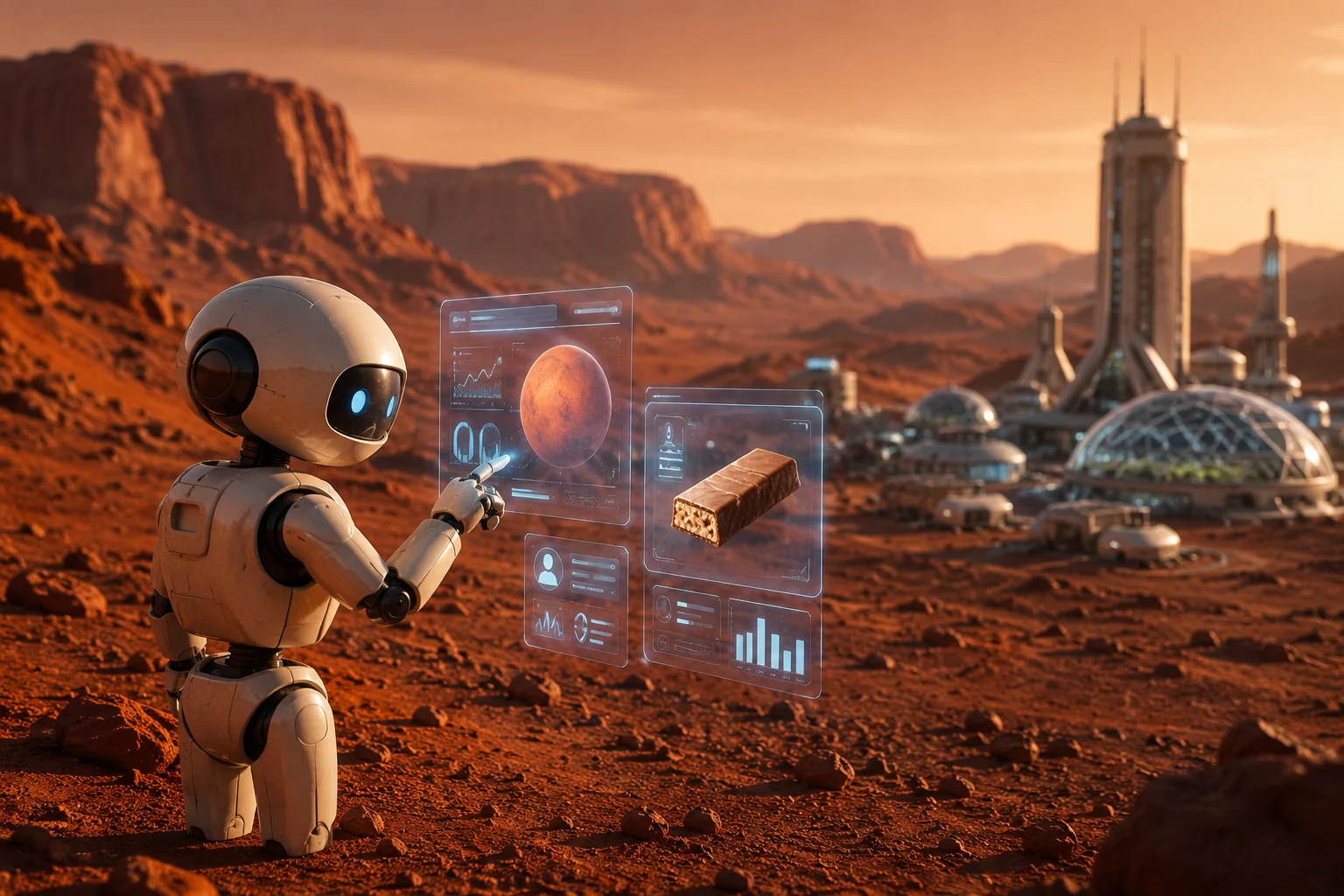
AI advertising personalization is no longer sitting in the “future of marketing” folder that brands open once a quarter for conference slides. It is moving into the daily machinery of how global companies plan campaigns, shape creative ideas, test audience reactions, and decide which message deserves a bigger budget. Mars, the company behind candy and snack names that already live rent-free in pop culture, is leaning into that shift with a sharper view of what modern advertising should become. The old model of launching one massive campaign and hoping it lands with everyone is starting to feel too slow, too expensive, and too vague for a market shaped by fragmented attention. In its place, Mars is chasing a more personal, more data-informed, and more responsive version of advertising that feels less like a billboard shouting at everyone and more like a story that knows who it is talking to.
The timing matters because consumer behavior has become wildly harder to predict. People do not move through one neat funnel anymore, and they definitely do not wait for a brand to tell them what to care about. They jump from TikTok clips to streaming shows, from group chats to retail media, from influencer recommendations to search results, and from AI assistants to online carts in a single day. For a company like Mars, that means a single glossy campaign cannot carry the whole weight of brand growth. The brand has to show up in more places, with more relevant messages, while still protecting the emotional identity that makes products like M&M’s, Snickers, Skittles, Twix, and Pringles instantly recognizable.
Why AI Advertising Personalization Is Mars’ Big Bet
The big idea behind AI advertising personalization is not simply to make more ads faster. That is the shallow version of the story, and it misses the real business move happening underneath. The deeper play is about reducing waste, improving relevance, and giving brands a better way to understand what different audiences actually respond to. Mars is operating in categories where impulse, emotion, habit, humor, nostalgia, and timing all matter at once. If AI can help the company match the right creative angle to the right audience moment, the result is not just sharper targeting but a stronger chance of turning attention into action.
For decades, major packaged goods brands were built through mass reach. A funny commercial, a catchy tagline, a seasonal campaign, or a celebrity moment could travel across television, outdoor ads, retail displays, and social media. That model still has value because big brands need cultural visibility, not just performance clicks. But the modern media environment has made mass advertising less predictable than it used to be. Audiences are split across platforms, algorithms reward different formats, and consumers expect brands to feel timely rather than generic. Mars’ shift signals that even the most familiar consumer brands now need a more flexible engine behind their creative work.
Personalization also changes what “good creative” means. A traditional campaign usually asks whether one message is strong enough for the largest possible audience. An AI-supported campaign can ask a more specific question: which version of the message works best for this segment, in this context, on this channel, at this moment? That does not mean every ad has to become creepy, robotic, or hyper-individualized to the point where people feel watched. The strongest version of personalization is often subtle, using context and audience signals to make the message feel more useful, more entertaining, or more naturally timed. For Mars, the challenge is to personalize without losing the playful, human energy that made its brands famous in the first place.
From Mass Campaigns to Precision Storytelling
The advertising world used to reward brands that could buy attention at scale. Now, attention is more like a moving target with its own mood, language, and micro-culture. A candy ad that works during a live sports conversation may not work inside a gaming community, a streaming platform, a retail app, or a private messaging experience. Mars seems to understand that personalization is not just about demographics, because age and location alone do not explain why someone laughs, clicks, shares, buys, or ignores an ad. The next phase is about precision storytelling, where data helps creative teams understand the situation around the consumer instead of reducing the consumer to a flat profile.
This is where AI becomes especially powerful for brands with many products and many buying occasions. A snack can be an afternoon treat, a party item, a comfort purchase, a holiday ritual, a sports-night companion, or a quick reward after a long day. Each situation has a different emotional trigger, and each trigger can inspire a different creative approach. AI can help map those moments, identify patterns, and suggest which messages deserve testing across channels. The human team still needs to decide what is tasteful, funny, culturally aware, and brand-safe, but the machine can help surface possibilities that would be difficult to spot manually at global scale.
The most interesting part is that precision does not have to kill creativity. In weak hands, personalization turns into bland optimization, where every ad starts to sound like it was written by a conversion dashboard. In stronger hands, personalization gives creative teams more room to experiment because they can test multiple storylines without betting everything on one big idea. Mars can keep the emotional core of a brand intact while creating different expressions for different contexts. That is a major shift from advertising as a finished broadcast to advertising as a living system that learns, adapts, and keeps improving.
What Mars Shows About the Future of Digital Marketing
Mars’ move says a lot about where digital marketing is heading in 2026 and beyond. The center of gravity is moving away from campaigns that are planned once, launched everywhere, and judged after the fact. Growth teams now want campaigns that can listen, adjust, and respond while they are still live. That means creative, media buying, data science, and brand strategy can no longer operate as disconnected departments. The brands that win will be the ones that build feedback loops between what people see, how they react, what they buy, and what the brand learns next.
For marketers, this creates a new operating rhythm. Instead of asking only what the campaign idea is, teams have to ask how the campaign will evolve across different audiences and touchpoints. Instead of treating data as a reporting layer at the end, they need to bring data into the creative process from the beginning. Instead of seeing AI as a shortcut for replacing people, they need to treat it as infrastructure for faster learning. Mars’ strategy feels important because it reflects a larger industry truth: personalization is becoming less of a bonus feature and more of a baseline expectation for serious brand growth.
There is also a media efficiency story here. Advertising costs are high, attention is expensive, and brands cannot afford to waste huge budgets on messages that are too broad to matter. AI gives marketers a way to reduce some of that guesswork by analyzing signals, predicting performance, and helping teams decide where to focus resources. That does not guarantee success, because bad strategy with advanced tools is still bad strategy. But it can help large brands move from “hope this works” to “we have a stronger reason to believe this will work for this audience.” That shift is the difference between old-school reach and modern growth discipline.
The Human Creativity Question
The rise of AI in advertising naturally brings up one uncomfortable question: what happens to human creativity when machines can generate, test, and personalize messages at scale? The honest answer is that creativity becomes more important, not less, but its job description changes. A brand does not become memorable because it produces endless versions of the same average ad. It becomes memorable because it has a point of view, a distinctive voice, and the confidence to make people feel something. AI can help with speed and variation, but it cannot automatically create cultural trust, emotional timing, or the kind of brand humor that people actually want to repeat.
Mars has an advantage because many of its brands already have clear personalities. Snickers has long played with the idea of hunger changing behavior. M&M’s has built character-driven familiarity. Skittles has leaned into surreal humor and colorful weirdness. Twix has often played with playful rivalry and choice. These identities give AI something useful to work with, because personalization works better when the brand foundation is already strong. Without that foundation, AI-generated content can become a flood of polished but forgettable messages that chase relevance without creating attachment.
This is why the future is not “AI versus creatives.” The future is more likely “creative teams with AI versus creative teams without it.” Marketers who know how to brief AI systems, interpret performance signals, protect brand voice, and turn data into story will become more valuable. The boring parts of production may become faster, but the strategic parts will become more demanding. Teams will need stronger judgment, not weaker judgment, because AI can produce many options but cannot always tell which option is culturally smart, emotionally honest, or risky in a way the brand should avoid.
Why Personalization Can Go Wrong Fast
Personalization sounds clean in a strategy deck, but in the real world it can get messy quickly. Consumers want relevance, but they do not want to feel like every brand is quietly tracking their every move. They enjoy useful recommendations, but they reject experiences that feel invasive, manipulative, or overly automated. This is especially true for food, candy, and snack brands, where the purchase is emotional and casual rather than deeply rational. If Mars pushes personalization too aggressively, it could risk turning playful brand moments into something that feels engineered instead of delightful.
The privacy issue is only one layer. Another risk is creative sameness, where AI tools optimize toward what performs today and slowly flatten the brand over time. If every campaign is shaped only by short-term engagement metrics, brands may lose the weirdness, surprise, and long-term memory that make advertising culturally powerful. There is also the risk of over-segmentation, where teams create so many versions of a message that the brand starts to lose a shared identity. Personalization should make the brand feel more relevant, not more fragmented. The strongest brands will use AI to sharpen their voice, not dilute it into a thousand tiny variations with no emotional center.
Another challenge is measurement. AI can make marketers feel more precise, but precision can become an illusion if the wrong metrics guide the system. Clicks, views, watch time, and conversion rates all matter, but they do not always capture brand love, trust, memory, or long-term purchase behavior. A funny ad that people remember for years may not look as efficient in a short-term dashboard as a direct-response unit that drives immediate clicks. Mars has to balance performance with brand-building, because snacks are not only bought through rational targeting. They are bought through memory, mood, habit, and cultural familiarity.
The Growth Marketing Lesson for Other Brands
The Mars example is especially useful for growth marketers because it shows that personalization is not only for tech startups, e-commerce stores, or direct-to-consumer brands. Even legacy consumer giants are rebuilding their marketing engines around sharper data, smarter segmentation, and adaptive creative systems. That should be a wake-up call for smaller brands that still treat AI as an optional experiment. If a company with massive brand recognition sees value in becoming more personal and more precise, then emerging brands cannot afford to ignore the shift. The difference is that smaller teams need to apply the same principles with fewer resources and cleaner priorities.
For a startup or growth-stage company, the lesson is not to copy Mars’ scale. The lesson is to copy the logic behind the move. Start by understanding the audience moments that matter most, then build creative variations around those moments, then test the messages across channels, then use the results to improve the next round. That process can happen with lean tools, small budgets, and simple workflows. The key is to stop treating every audience as one giant crowd. Growth becomes sharper when a brand understands that different people need different reasons to care.
Smaller brands can also learn from Mars’ likely balance between brand voice and campaign flexibility. Personalization should never mean abandoning consistency. A brand should still sound like itself whether the message appears in search, social, email, retail media, video, or a chatbot experience. AI can help adapt the surface of the message, but the core promise has to stay recognizable. That is how companies can personalize without becoming chaotic. The best growth systems create both variation and memory, because performance comes from relevance while brand equity comes from consistency.
How AI Changes the Role of Agencies and Partners
When a brand like Mars gets more serious about AI-powered advertising, the agency relationship changes too. Agencies are no longer just expected to deliver big creative concepts and media plans. They are expected to connect data, identity, technology, content production, testing, and performance insight into a system that keeps improving. That puts pressure on agency partners to be more technical, more strategic, and more accountable. It also forces brands to become better clients, because AI-supported marketing still depends on clear goals, clean inputs, strong governance, and a shared understanding of what success looks like.
The old agency model was often built around campaign cycles. A team would brief, pitch, produce, launch, and then report. The newer model looks more like continuous collaboration, where creative and media teams adjust based on real-time signals. That creates faster learning, but it also requires more discipline. Brands need guardrails around tone, claims, data usage, audience targeting, and creative approval. Without those guardrails, AI can increase speed while also increasing risk. The winners will be the teams that use AI to move faster without losing control of brand quality.
This also changes what talent matters inside marketing organizations. Strategists need to understand data without becoming trapped by spreadsheets. Creatives need to understand AI tools without becoming dependent on them. Media buyers need to understand how algorithms make decisions and where human oversight is still necessary. Brand leaders need to connect experimentation with long-term positioning. In other words, AI does not remove the need for marketing leadership. It raises the bar for what good marketing leadership looks like.
Retail Media, Social Platforms, and the New Ad Stack
Mars’ personalization push also fits into the rise of a much more complex ad stack. Brands now advertise across retail media networks, social platforms, streaming services, connected TV, search, creator partnerships, messaging apps, and owned channels. Each environment produces different data and demands different creative behavior. A message that works in a retailer’s sponsored placement may not work in a short-form video feed. A campaign built for broad awareness may need a different structure when it appears near the point of purchase. AI can help manage that complexity, but only if the brand knows what each channel is supposed to do.
Retail media is especially important for consumer goods companies because it sits close to the buying decision. When someone is browsing snacks online, the brand has a narrow window to influence the choice. Personalization can help show a more relevant product, bundle, message, or occasion-based idea. But social platforms still matter because they shape culture before the purchase happens. The strongest marketing systems connect both sides: the cultural spark that makes people notice and the commerce signal that helps them buy. Mars’ approach suggests that the future belongs to brands that can move smoothly between entertainment and transaction.
The challenge is that every platform wants to be the center of the marketer’s universe. Google, Meta, TikTok, Amazon, Walmart, streaming services, and emerging AI interfaces all offer their own tools, metrics, and optimization systems. A brand can easily become dependent on black-box platforms if it does not build its own understanding of audience behavior. That is why first-party data, clean measurement, and creative learning are becoming so important. AI is powerful, but brands still need their own strategy. Otherwise, personalization becomes something platforms do to the brand rather than something the brand controls.
The Consumer Side of AI-Powered Ads
From the consumer’s perspective, the best AI-powered ad may not feel like an AI-powered ad at all. It might simply feel better timed, more entertaining, less irrelevant, or more connected to what they already care about. That is the quiet promise of personalization. People do not wake up asking for more ads, but they are more open to branded content when it fits the moment and respects their attention. For Mars, the opportunity is to make advertising feel more like participation than interruption. That could mean interactive campaigns, playful messaging experiences, personalized jokes, custom creative formats, or product moments that connect to live cultural events.
Still, consumers are becoming more aware of AI’s role in media. They know that some content is generated, optimized, targeted, or tested by machines. That awareness can create skepticism if brands are not careful. A campaign that feels too synthetic can lose emotional credibility, especially in categories built on pleasure and nostalgia. The smartest brands will not hide behind AI as a gimmick. They will use it behind the scenes to make the experience smoother while keeping the front-facing story human, playful, and emotionally clear.
This is why transparency and taste will matter. Brands do not need to explain every technical detail of their targeting systems, but they do need to avoid making consumers feel tricked. They need to respect privacy boundaries, avoid sensitive targeting mistakes, and make sure creative experiences are genuinely valuable. Personalization should feel like the brand paid attention, not like it crossed a line. The difference between those two reactions is thin, and AI makes it even thinner because the system can move faster than traditional approval processes. Human judgment remains the safety net.
Practical Takeaways for Growth Teams
The first practical takeaway is that brands should define personalization by audience moment, not just audience identity. A person is not only a segment. They are also in a situation, with a mood, a need, a context, and a level of attention. Mars can sell the same snack through humor, comfort, energy, celebration, or sharing depending on the moment. Growth teams should map their own version of those moments and build creative around them. That makes personalization more useful and less creepy, because the message responds to context instead of pretending to know everything about the individual.
The second takeaway is to protect the brand voice before scaling AI content. If the brand voice is weak, AI will only multiply the weakness. Teams should create clear messaging principles, approved claims, tone examples, visual rules, and boundaries around what the brand should never say. That foundation makes AI tools more useful because they have better instructions to follow. It also makes human review easier because teams can judge outputs against a shared standard. Personalization works best when it stretches a strong identity, not when it tries to invent one from scratch.
The third takeaway is to measure both short-term response and long-term brand impact. Growth teams often love what can be tracked immediately, but brands are built through memory as much as conversion. A personalized campaign should be judged by performance signals, but also by whether it strengthens recognition, trust, preference, and cultural relevance. Mars cannot afford to turn iconic brands into disposable ad units, and smaller companies should not make that mistake either. The goal is not to win one click. The goal is to create a system where every message makes the next customer interaction easier.
What This Means for SEO, Content, and Owned Media
The Mars story also has a quiet lesson for SEO and owned content teams. As AI reshapes paid advertising, it also changes how people discover, compare, and trust brands across the open web. Search behavior is becoming more conversational, social discovery is becoming more fragmented, and AI-generated answers are changing how consumers move from question to purchase. Brands cannot rely only on paid targeting to stay visible. They need owned content that explains their value, supports their campaigns, and gives both people and algorithms clear reasons to understand the brand. Paid personalization and organic authority should work together, not compete for attention.
For content teams, this means the old blog strategy of publishing generic keyword articles is not enough. Content needs to answer real audience questions, support campaign themes, and connect to product moments in a way that feels useful. AI can help identify search patterns, cluster topics, refresh old content, and adapt messaging for different customer journeys. But the human editorial layer still matters because content without judgment becomes noise. Growth-focused brands should use AI to improve research and distribution while keeping storytelling, expertise, and editorial taste at the center.
Owned media also gives brands more control over their learning loops. Platform data is useful, but it is rented. A strong website, newsletter, community, content hub, or loyalty experience gives the brand more direct insight into what audiences care about. That matters in a world where privacy rules, platform changes, and AI interfaces can quickly reshape access to consumers. Mars has the scale to work with large data systems, but the principle applies to any brand. The more a company understands its own audience directly, the smarter its personalization can become.
The Bigger Trend: Advertising Becomes Adaptive
The most important trend underneath Mars’ AI push is that advertising is becoming adaptive. Campaigns are no longer static assets that sit in the market unchanged. They are becoming systems that can respond to data, culture, context, and consumer feedback. This does not mean every ad will be generated in real time or every brand will run thousands of creative variations overnight. It means the mindset is changing. Marketers are moving from fixed messages to flexible ecosystems, where creative ideas are built to travel, mutate, and improve across channels.
Adaptive advertising also changes how brands think about speed. In the past, moving fast often meant cutting corners or reacting without strategy. With AI, speed can become more structured if teams build the right workflow. A brand can test ideas quickly, learn from early signals, and invest more heavily in the versions that show promise. But speed should not replace taste, because a fast bad idea is still a bad idea. Mars’ challenge is to use AI to become sharper and more responsive without turning its brands into automated content machines.
This is where the next generation of marketing advantage will likely come from. The winners will not simply be the brands with the biggest budgets or the most advanced tools. They will be the brands that combine data, creativity, technology, and cultural understanding into one operating system. They will know when to automate and when to slow down. They will know when personalization adds value and when a big shared cultural idea is more powerful. Mars is not just chasing efficiency. It is trying to build a marketing model that can stay relevant in a media environment that refuses to sit still.
Conclusion: Mars Turns AI Into a Growth Signal
Mars’ move toward AI advertising personalization is bigger than a candy company testing new marketing tools. It is a signal that the next era of brand growth will be more personal, more adaptive, and more dependent on the relationship between human creativity and machine intelligence. The brands that understand this shift will use AI to make better decisions, reduce wasted spend, and create messages that feel more connected to real consumer moments. The brands that misunderstand it will flood the internet with faster, cheaper, more forgettable content. Mars has the advantage of iconic products, familiar brand worlds, and the scale to experiment, but the lesson applies far beyond snacks. In modern growth marketing, the sharpest ads will not be the loudest ones. They will be the ones that know the moment, respect the audience, and still feel unmistakably human.