
SpaceX AI Expansion Signals a New Growth Race
 Vortixel
14 minutes read
Vortixel
14 minutes read
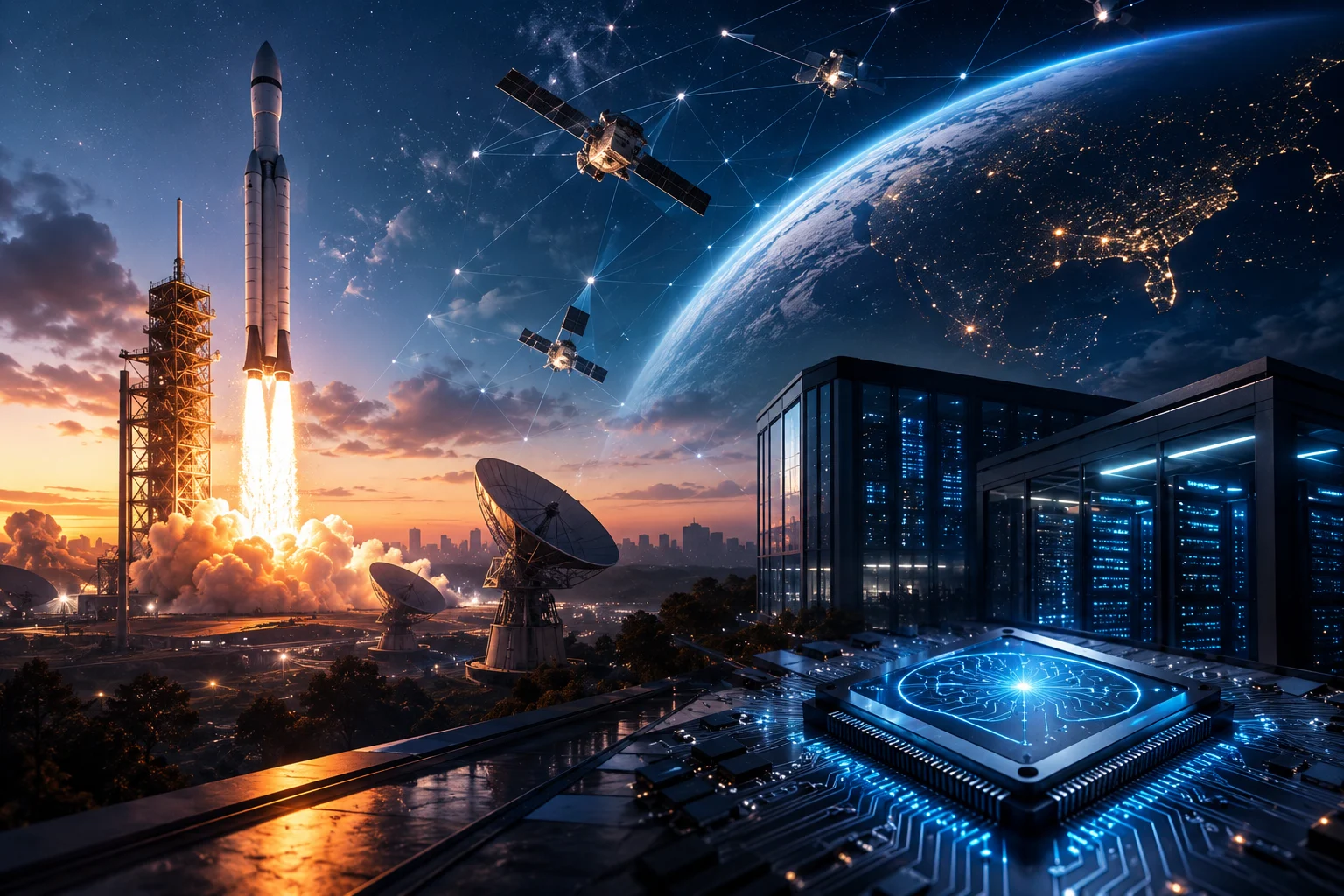
SpaceX AI expansion is no longer just a futuristic talking point floating somewhere between rockets, satellites, and Silicon Valley ambition. It has become a serious capital story, the kind that makes investors, founders, marketers, and tech watchers pause for a second and ask what game is actually being played. The company is reportedly seeking to raise $25 billion through a major notes offering, a move that shows how expensive the next chapter of artificial intelligence has become. This is not simply about building smarter software or adding an AI feature to an existing product. It is about funding the physical backbone of AI itself, from computing power and data centers to energy infrastructure and next-generation systems that could reshape how space technology and digital intelligence work together.
The headline sounds huge because it is huge, but the bigger story is what it says about the direction of the tech industry. AI has moved past the stage where companies could win with clever models, flashy demos, and a strong launch video. The new race is about who can afford the infrastructure needed to train, deploy, and scale advanced intelligence at planetary levels. SpaceX entering that race with a $25 billion funding push sends a signal that AI is becoming a capital-heavy arena where only the most ambitious players can compete at the top. For readers following SpaceX AI expansion, the message is clear: the next growth cycle in technology may be built less on apps and more on infrastructure.
Why SpaceX AI Expansion Matters Now
The timing of the SpaceX AI expansion push matters because the broader technology market is already dealing with an AI spending wave that feels unlike anything from the previous decade. During the cloud boom, companies raced to build data centers and subscription platforms that could serve millions of users. During the smartphone era, the winners were often the companies that controlled devices, operating systems, app stores, and mobile attention. Now the center of gravity is shifting toward AI infrastructure, where the winners may be the companies that control compute, connectivity, chips, energy, and distribution. SpaceX already sits in an unusual position because it owns a space launch business, a satellite internet network, and a brand that can pull global attention almost instantly.
That combination makes this funding story more than a finance update. SpaceX is not just another company trying to buy GPUs and rent servers from someone else. It has the potential to connect AI with Starlink, orbital systems, autonomous space operations, and possibly even space-based computing concepts that once sounded like science fiction. If AI becomes increasingly dependent on massive compute clusters and always-on connectivity, SpaceX has a rare chance to build a stack that reaches far beyond Earth-based software. That is why the $25 billion figure matters: it hints at a company preparing for a much larger battlefield than traditional rockets or satellite broadband alone.
For founders and growth strategists, this is the part worth watching closely. SpaceX is showing that the AI race is not only about product-market fit in the classic startup sense. It is also about capital-market fit, meaning whether a company can convince lenders, investors, and institutions that its long-term AI ambitions are worth funding today. That is a different type of growth strategy from the lean startup playbook many digital businesses still follow. In this new environment, the companies that can tell a believable infrastructure story may gain advantages that smaller competitors cannot easily copy.
The $25 Billion Question Behind the Strategy
Raising $25 billion through notes is not the same thing as casually announcing a new product line. Debt carries pressure, expectations, and a timeline. It tells the market that SpaceX is willing to use its balance sheet aggressively to support its next phase of growth. The proceeds are expected to help with debt repayment and broader corporate purposes, while AI expansion sits at the center of the larger narrative. That structure matters because it shows how closely today’s AI ambitions are tied to financial engineering, not just engineering in the lab.
In practical terms, AI infrastructure burns cash before it creates predictable returns. Data centers need land, cooling, chips, servers, networking, and long-term power arrangements. Advanced models require continuous training, refinement, monitoring, and deployment pipelines that are expensive to operate at scale. If SpaceX is serious about combining artificial intelligence with its broader ecosystem, the company will need spending power that matches the size of its vision. The $25 billion raise looks less like a side project and more like a foundation for a multi-year transformation.
This is where the story becomes especially relevant for the Artificial Intelligence category. AI is often discussed through consumer products, chatbots, automation tools, and workplace productivity apps, but the companies building the deepest moats are thinking several layers lower. They are asking who owns the infrastructure, who controls access to compute, who can secure power, and who can connect users at global scale. SpaceX has already proven that it can take on infrastructure problems that most companies would avoid because they are too expensive, too complex, or too slow. That mindset may become one of its biggest advantages as the AI market matures.
From Rockets to AI Infrastructure
SpaceX built its public identity around rockets, reusable boosters, Mars ambition, and the idea that space should become more accessible. That story was already powerful because it mixed engineering, mission, and brand in a way few companies can pull off. But the AI expansion story adds a new layer to the company’s identity. It suggests SpaceX may not want to be seen only as a launch provider or satellite operator. It wants to be viewed as a technology infrastructure company with the ability to operate across Earth, orbit, and intelligent systems.
That shift is important because markets often reward companies that can expand their narrative without losing the core of what made them valuable. Amazon moved from online retail to cloud infrastructure. Tesla moved from electric cars to energy, autonomy, and robotics. Nvidia moved from gaming graphics to the center of the AI computing economy. SpaceX may now be trying to stretch its story in a similar way, using its space capabilities as a launchpad for a much broader AI infrastructure play. The difference is that SpaceX brings a physical-world advantage that many software-first AI companies do not have.
Starlink is a key reason the story feels different. A global satellite internet network can become more than a connectivity product if it is paired with intelligent systems and large-scale data processing. It could support autonomous operations, remote industrial use cases, defense-related communication, disaster response, maritime services, aviation connectivity, and underserved regions that lack reliable internet. If AI tools become more useful when they are connected everywhere, then global broadband becomes part of the AI stack. That makes the SpaceX AI expansion story feel less random and more strategic.
The AI Race Is Becoming an Infrastructure Race
For years, the internet rewarded companies that could move fast, ship software, and acquire users cheaply. That model still matters, but AI has changed the economics. Training large models and running intelligent services for millions of people requires serious compute capacity, and that capacity does not appear out of nowhere. It depends on chips, data centers, cooling systems, electrical grids, fiber networks, and long-term capital planning. This is why AI feels like a software revolution on the surface but looks like an industrial revolution underneath.
SpaceX fits into that industrial version of AI better than many people might expect. The company already operates in high-cost, high-risk, high-complexity environments where execution is everything. Launch systems, satellite constellations, and orbital logistics require long planning cycles and technical discipline. AI infrastructure demands a similar willingness to invest heavily before the full business model is obvious to everyone else. When seen from that angle, the $25 billion notes offering looks like a continuation of SpaceX’s usual pattern: spend aggressively to build capacity others cannot match.
This also explains why investors may treat the move with both excitement and caution. On one side, a large AI infrastructure push could open massive new markets and deepen SpaceX’s long-term moat. On the other side, the spending required could pressure cash flow, increase debt obligations, and create questions about when the payoff actually arrives. That tension is normal in every major technology platform shift. The market wants growth, but it also wants proof that the growth can eventually become profitable.
What This Means for Business Strategy
The biggest business lesson from the SpaceX AI expansion story is that category leaders do not wait for a market to become comfortable before making their next move. They often act while the strategy still looks too large, too risky, or too early. That is exactly why they can create distance from competitors. By the time the market fully agrees that infrastructure is the winning layer, the companies that invested early may already own the key assets. SpaceX appears to be positioning itself for that kind of long-term advantage.
For startups, this does not mean everyone should suddenly raise billions or chase massive infrastructure plays. Most companies cannot and should not copy SpaceX directly. The more useful insight is to understand where the value chain is moving and choose a position with intention. Some companies will win by building AI models, others by building applications, others by owning data, and others by controlling distribution. The smartest founders will ask where they can create a durable advantage instead of simply adding AI language to their homepage.
For established brands, the lesson is just as clear. AI strategy cannot stay trapped inside innovation departments or experimental pilot programs forever. If AI will affect operations, customer experience, content creation, logistics, personalization, and decision-making, then it needs executive-level planning and real investment. SpaceX is operating at an extreme scale, but the underlying principle applies across industries. Companies that treat AI as infrastructure, not decoration, will likely move faster than those that treat it as a marketing trend.
The Branding Power of a Massive AI Bet
There is also a branding angle that should not be ignored. SpaceX has always been strong at turning technical milestones into cultural moments. A rocket landing is not just an engineering achievement when millions of people watch it like a live event. Starlink is not just a connectivity service when it becomes associated with remote access, emergency response, and global reach. Now, a major AI funding push gives SpaceX a new story to tell about the future it wants to build.
That matters because branding in deep tech is often about making complexity feel understandable. Most people do not follow bond structures, senior notes, compute clusters, or data center economics in detail. But they do understand a bold narrative about rockets, satellites, AI, and the next version of the internet. SpaceX can use that narrative to maintain attention, attract talent, influence partners, and keep itself positioned as one of the defining companies of the decade. In a crowded AI market, attention itself becomes a strategic asset.
Still, strong branding only works if the execution keeps up. A bold funding move creates expectations, and expectations can quickly become pressure. If the AI expansion produces meaningful capabilities, the story becomes stronger. If it turns into expensive ambition without visible progress, the same narrative can become a weakness. That is the risk of building a brand around the future: eventually, the future has to show up.
Impact on Growth Marketing and Digital Strategy
For growth marketers, the SpaceX story is useful because it shows how market narratives can be built around momentum, infrastructure, and strategic timing. The company is not merely selling a product in the traditional sense. It is selling confidence in a direction. That confidence influences investors, customers, governments, partners, and the broader public conversation. In modern growth strategy, the ability to shape belief can be just as important as the ability to capture demand.
This does not mean marketers should copy the scale or drama of SpaceX. It means they should pay attention to how category narratives are formed. AI is crowded with companies making similar promises about productivity, automation, and intelligence. SpaceX stands out because it connects AI to physical infrastructure, space systems, and global connectivity. That gives the company a differentiated story in a market where many brands sound almost identical.
Digital marketing teams can take a practical lesson from this. The best AI positioning usually does not stop at saying a company uses AI. It explains why the company is uniquely capable of using AI in a way others cannot easily match. That uniqueness might come from proprietary data, specialized workflows, trusted distribution, deep customer relationships, or technical infrastructure. SpaceX’s uniqueness comes from assets that are extremely hard to recreate, and that is what makes the story powerful.
Practical Insights for Founders and Operators
The first practical insight is that AI strategy needs to be tied to a real business advantage. Adding AI to a product is not enough if competitors can do the same thing within weeks. The more defensible question is what your company can do with AI that others cannot easily replicate. SpaceX may have an answer through its launch capabilities, satellite network, engineering culture, and access to large-scale capital. Smaller companies need a version of that answer that fits their own market.
The second insight is that capital planning matters more than many teams realize. AI tools can look cheap during experimentation, but costs can rise quickly when usage scales. Inference, storage, model monitoring, data pipelines, security, and integration work can turn a simple AI feature into a major operating expense. SpaceX’s $25 billion move is an extreme example, but it reflects a broader truth. AI growth requires financial discipline, not just technical excitement.
The third insight is that infrastructure choices can become brand choices. Customers may not always understand the technical details, but they notice reliability, speed, availability, and trust. If a company’s AI experience feels slow, generic, or unstable, the brand takes a hit. If it feels powerful, useful, and consistently available, the brand gains strength. This is why the invisible backend of AI can shape the visible customer experience.
The Risk Behind the Momentum
No serious analysis of SpaceX AI expansion should pretend that the strategy is risk-free. Debt can be useful when it funds long-term assets, but it also creates obligations that do not disappear when markets become nervous. AI infrastructure is expensive, and the industry is still figuring out which use cases will generate the strongest long-term returns. Even the most ambitious companies can face pressure if spending grows faster than revenue. SpaceX has a strong brand and unique assets, but that does not remove the basic math of capital-intensive growth.
There is also the question of focus. SpaceX already has huge responsibilities across launches, Starship development, Starlink growth, government contracts, and global operations. Adding a deeper AI infrastructure push could strengthen the company, but it could also stretch management attention and execution capacity. The best version of the strategy would make each part of the business more powerful. The weaker version would create complexity that slows the company down.
Another risk is market expectation. Once a company raises this kind of money under an AI growth narrative, investors will look for visible progress. They will want proof that AI is not just a label attached to expensive spending. They will ask how the investment improves margins, expands markets, strengthens competitive advantage, or creates new revenue streams. In that sense, the funding move is not the end of the story. It is the beginning of a new performance test.
Why This Could Shape Technology Trends
The SpaceX move could influence broader Technology Trends because it connects several major themes into one story. AI needs more compute, compute needs more power, power needs infrastructure, and infrastructure needs capital. At the same time, global connectivity is becoming more important as AI tools move into more industries, regions, and devices. SpaceX sits near the intersection of these trends in a way that few companies do. That makes its funding strategy a useful signal for where the market may be heading.
If SpaceX succeeds, it could encourage more companies to think beyond traditional cloud infrastructure. It may push the conversation toward distributed compute, satellite-supported networks, autonomous systems, and AI services that operate in extreme or remote environments. It could also inspire more partnerships between aerospace, telecommunications, energy, and artificial intelligence companies. The future of AI may not be confined to office software and consumer apps. It may become embedded in transportation, logistics, defense, climate monitoring, robotics, and space-based systems.
This is why the story belongs in more than one category. It is an AI story, but it is also a startup story, a business strategy story, a branding story, and a growth marketing story. The companies that define the next decade may be the ones that can connect multiple markets into one coherent platform. SpaceX has done that before with rockets and satellite internet. Now it appears to be trying to do it again with AI.
Conclusion: SpaceX AI Expansion Is a Market Signal
SpaceX AI expansion is bigger than a $25 billion financing headline. It is a signal that the next phase of artificial intelligence may be shaped by companies willing to build and fund the infrastructure behind the intelligence. The move shows how AI has become deeply connected to capital markets, energy systems, data centers, connectivity, and long-term strategic positioning. It also shows that the most powerful AI stories may come from companies that already control difficult physical infrastructure. SpaceX is not just chasing the AI wave; it is trying to build part of the ocean underneath it.
For business leaders, the takeaway is simple but serious. AI is no longer something to watch from the sidelines or treat as a short-term content trend. It is becoming a structural force that affects how companies raise money, build products, define brands, and compete for the future. SpaceX’s funding push may look extreme, but extreme moves often reveal where the market is going before the rest of the world fully catches up. Whether this bet becomes a masterstroke or a stress test, it will be one of the most important AI growth stories to follow.