
Even Realities Valuation Hits $1 Billion
 Vortixel
16 minutes read
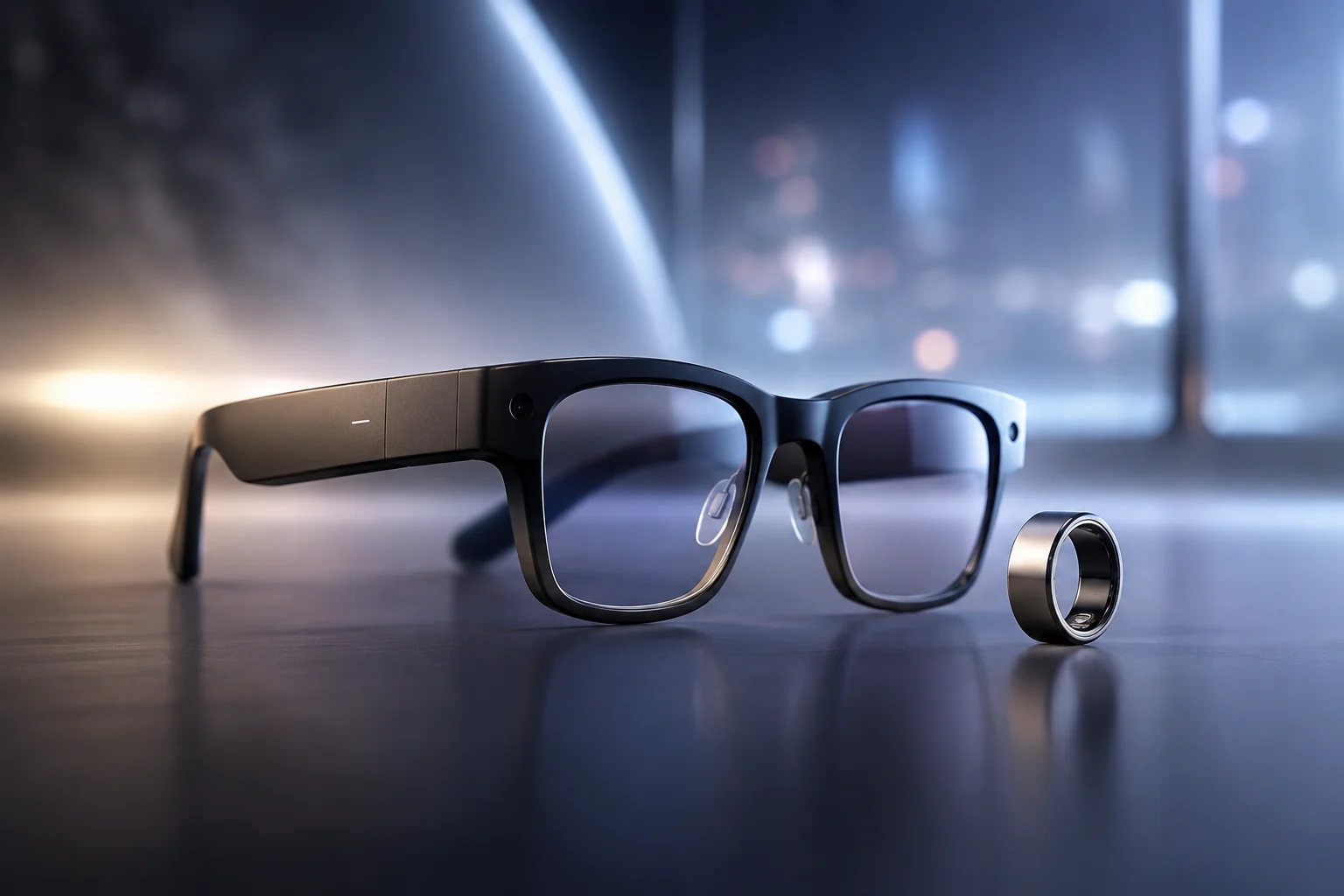
A pair of glasses that looks almost ordinary has become the center of one of the most interesting hardware stories of the year. The Even Realities valuation has reportedly reached $1 billion after the smart eyewear company secured $150 million in fresh funding, officially pushing the young business into unicorn territory. The round was led by major technology investors Meituan and Tencent, giving the startup both substantial capital and powerful strategic support. Yet the size of the deal is only one part of the story, because Even Realities is building its momentum by rejecting several features that competitors consider essential. In a market crowded with cameras, speakers, content tools, and attention-grabbing demonstrations, the company is betting that people may actually want technology that feels quieter.
That approach makes the company’s rise especially notable because smart glasses have historically struggled to move beyond novelty status. Consumers have seen futuristic prototypes, expensive mixed-reality headsets, and ambitious products that looked impressive during demonstrations but awkward in everyday life. Even Realities is trying to avoid that trap by starting with the basic question of whether people would genuinely wear its product for hours. Its glasses are designed to resemble premium traditional eyewear rather than miniature computers attached to a user’s face. The billion-dollar milestone suggests investors increasingly believe that subtle design, privacy, and practical assistance could become a serious business model.
How Even Realities Reached a $1 Billion Valuation
Even Realities was founded in 2023 by a team that included former Apple engineers and professionals with experience in both consumer technology and luxury eyewear. Founder and chief executive Will Wang previously worked on products including the Apple Watch and iPhone, giving the startup a connection to one of the world’s most disciplined hardware cultures. Other team members brought knowledge from technology companies and premium eyewear brands, creating an unusual mix of engineering and fashion expertise. That combination helped the company position its glasses as something closer to an everyday accessory than a science-fiction headset. Within only a few years, the business moved from an ambitious newcomer to a company valued at the symbolic unicorn threshold.
The latest financing is a pre-Series B round worth approximately $150 million, with Meituan and existing backer Tencent leading the investment. Earlier supporters have reportedly included prominent investment groups connected to China’s technology ecosystem, giving the company access to significant financial and operational networks. The funding places the Even Realities valuation at $1 billion and gives the startup more resources to expand production, develop software, grow its retail presence, and support third-party applications. For a hardware company, that capital matters because designing a product is only the beginning of the journey. Manufacturing reliable units at scale, managing inventory, building distribution, and providing customer support can consume money much faster than software development alone.
The speed of the company’s growth also reflects how quickly investor interest has returned to wearable technology. Smart glasses spent years trapped between enthusiasm and disappointment, partly because early products were too bulky, too expensive, or too socially uncomfortable. Advances in microdisplays, waveguide optics, batteries, processors, and artificial intelligence have now made lighter and more useful devices possible. Investors are watching for the company that can turn those improvements into a product people use every day rather than occasionally. Even Realities has emerged as one of the strongest candidates because its strategy focuses on removing friction instead of simply adding more technology.
A Smart Glasses Strategy Built Around Restraint
The most important difference between Even Realities and many of its competitors is the absence of an outward-facing camera. Companies such as Meta have built much of their smart glasses experience around photography, video capture, music, voice assistance, and social sharing. Even Realities deliberately follows another path, using visual displays to deliver information while avoiding the feeling that everyone nearby could be recorded. The company also leaves out conventional speakers, reducing both hardware complexity and concerns about audio leaking into public spaces. This makes the glasses less suitable for capturing content, but potentially more acceptable in offices, meetings, public transportation, and private social settings.
That decision is not merely a technical compromise because it shapes the entire identity of the brand. When a product includes a camera, users must consider when recording is appropriate, while people nearby may wonder whether recording is happening at all. Removing the camera allows Even Realities to frame its device as an information tool rather than a surveillance device. The glasses can support navigation, notifications, translation, transcription, teleprompter functions, and artificial intelligence without constantly observing the surrounding world through video. In an industry known for adding every possible feature, choosing what not to include has become one of the company’s strongest differentiators.
This strategy also addresses a basic social challenge that has followed smart glasses since the earliest consumer experiments. People do not evaluate eyewear in the same way they evaluate phones, laptops, or headphones because glasses sit directly on the face and become part of personal appearance. A device can offer impressive specifications and still fail if users feel self-conscious wearing it in a restaurant or during a business meeting. Even Realities treats comfort, weight, frame design, and visual subtlety as core product requirements rather than decorative details added after engineering is complete. The result is a product philosophy built around blending into daily life instead of constantly announcing its presence.
From the Even G1 to a More Ambitious G2
The company introduced its first major consumer product, the Even G1, in 2024 and quickly gained attention for creating lightweight display glasses that resembled ordinary frames. The G1 used waveguide optics to place digital information within the wearer’s field of view while keeping the overall design relatively slim. Its features included directions, live translation, notifications, notes, transcription, and a teleprompter mode that appealed to speakers and professionals. Although the product was not flawless, it proved that a useful heads-up display could fit inside glasses that people might realistically wear outside a technology conference. That initial validation gave the company a foundation for a more refined second generation.
The Even G2, launched in late 2025, pushed the concept forward with a larger and sharper display, improved materials, greater durability, and a design that remained close to conventional eyewear. The glasses weigh less than many competing augmented-reality devices and are designed for extended use rather than short entertainment sessions. Their display can present text, directions, prompts, translations, and contextual information without completely covering the user’s view. Battery performance extending beyond a full day also supports the idea that the product belongs in a normal routine. Instead of trying to replace a smartphone, the G2 functions as a quieter layer of information that reduces the need to repeatedly look at one.
Even Realities also introduced the R1 smart ring as an optional controller for the G2 experience. The ring allows users to navigate menus and interact with information without repeatedly touching the frames or making obvious gestures in the air. It also includes health-related functions, helping the company build a broader wearable ecosystem around its glasses. The combination shows how a startup can distribute controls across multiple devices rather than forcing every sensor and interface into one product. This modular approach could help the glasses stay lightweight while giving power users access to more advanced interactions.
Artificial Intelligence Moves Onto the Face
The rise in the Even Realities valuation is closely connected to the belief that glasses could become one of the most important interfaces for artificial intelligence. Smartphones made digital services available everywhere, but users still need to remove a device from a pocket, open an application, and direct their attention toward a screen. Smart glasses can shorten that process by presenting relevant information directly within the user’s natural line of sight. Artificial intelligence makes this experience more useful because it can summarize, translate, organize, and respond to information rather than merely displaying raw notifications. The combination creates the possibility of an assistant that feels present without demanding constant visual attention.
One of Even Realities’ most notable software features is Conversate, which is designed to assist users during real-time discussions. The system can provide live transcription, identify important points, generate explanations, and surface prompts while a conversation is happening. Prep Notes allows users to add documents or background material before a meeting so the glasses can present relevant context at the right moment. A salesperson could review product details without looking down at a laptop, while a manager could receive reminders about key questions during an interview. These examples move smart glasses away from entertainment and toward practical professional assistance, where users may be more willing to pay for measurable value.
At the same time, real-time assistance introduces its own ethical questions even when a product has no camera. Microphones and transcription tools can still process conversations involving people who may not realize that software is analyzing what they say. A discreet display may also allow users to receive suggestions without others knowing that an AI system is participating indirectly in the discussion. The company will need clear privacy controls, visible communication, strong data protection, and responsible default settings as adoption grows. Removing the camera reduces one major concern, but responsible ambient computing requires more than a single hardware decision.
Why Investors Are Returning to Smart Glasses
The new funding arrives as technology companies intensify their efforts to build the next major computing platform after the smartphone. Meta has expanded its eyewear partnerships, Snap continues developing advanced display glasses, and several Asian hardware companies are introducing products across augmented reality and AI wearables. Apple’s entry into spatial computing increased awareness of face-worn devices, even though a headset and a lightweight pair of glasses serve very different situations. The competitive activity signals that the industry no longer views smart eyewear as a distant experiment. Instead, companies are searching for the right combination of design, usefulness, cost, battery life, and social acceptance.
Artificial intelligence has strengthened the investment case because it gives wearable displays a clearer purpose. Earlier smart glasses often presented basic notifications or navigation while struggling to justify why the information needed to appear on the face. Modern language models can generate summaries, assist conversations, translate speech, answer questions, and connect information across services. Those capabilities create moments when immediate, hands-free access can be genuinely more convenient than using a phone. Investors are therefore funding not only a piece of hardware but a potential gateway through which consumers may interact with AI throughout the day.
Even Realities also benefits from positioning itself between simple audio glasses and heavy augmented-reality headsets. Audio glasses are comfortable and increasingly popular, but they cannot quietly display text, maps, or prompts. Full mixed-reality devices can create rich visual environments, but their weight, appearance, battery demands, and prices often limit everyday use. Even’s product offers a narrower display experience, yet that limitation may be exactly what makes it practical. The company is effectively betting that a useful amount of information delivered comfortably will outperform a spectacular experience that consumers rarely wear.
A Premium Product Still Facing Mainstream Barriers
A billion-dollar valuation does not automatically mean that smart glasses have reached mainstream adoption. The Even G2 sits in a premium price range, and buyers may pay more when prescription lenses or the R1 ring are added. For many consumers, that total cost competes with smartphones, laptops, watches, and other devices that already have established roles. People must also be convinced that the glasses solve problems frequently enough to justify wearing, charging, and maintaining another connected product. The company’s next growth phase will depend on turning early enthusiasm into repeatable demand beyond developers, technology fans, and highly mobile professionals.
Software reliability is another challenge because wearable devices have little room for frustrating experiences. A phone application that disconnects occasionally may be annoying, but glasses that fail during navigation, translation, or a presentation can immediately lose a user’s trust. Reviews of earlier products have praised Even Realities’ hardware while also identifying bugs, connection issues, and functions that still need refinement. Fresh funding can help the company expand its engineering and quality-assurance teams, but rapid growth can create operational pressure of its own. The strongest design in the market will not be enough unless the entire experience becomes dependable.
Distribution and customer service will be equally important because glasses are more personal than most consumer electronics. Buyers want to know whether a frame fits their face, whether prescription options are available, and how the device feels after several hours. Online sales can create awareness, but physical retail partnerships may be necessary to reach customers who want adjustments or professional guidance. Returns, repairs, lens replacement, and regional support also become more complicated as international sales increase. Building a global eyewear business requires a different operational model from shipping identical smartphones in standardized boxes.
The Business Strategy Behind the Unicorn
Even Realities offers a useful lesson in how startups can compete against companies with larger budgets and broader ecosystems. Instead of matching every feature offered by Meta, Snap, or another technology giant, the startup has narrowed its product around display-based assistance, comfort, and privacy. This gives customers a clear reason to consider the brand rather than viewing it as a smaller imitation of an established competitor. The approach demonstrates a classic positioning principle: a startup does not need to win every category when it can own a meaningful one. Readers following similar market shifts can explore more Business Strategy analysis across emerging technology industries.
The company has also built a narrative that connects technical choices with emotional benefits. Removing a camera is described not only as saving weight or battery power but as helping technology respect human attention and privacy. A minimalist display is framed not as a limitation but as a way to provide information without overwhelming the wearer. Premium materials support the idea that the glasses belong in fashion and professional environments rather than only in gaming setups. This alignment between product design, brand messaging, and customer concern makes the company easier for both consumers and investors to understand.
The strategy could become more powerful as the Even Hub developer platform grows. Hardware companies face a difficult problem because they cannot predict every use case that customers may value. A developer ecosystem allows outside creators to build specialized tools for reading, transportation, productivity, accessibility, fitness, and entertainment. More applications can increase the usefulness of the glasses, which attracts more buyers and gives developers a larger audience in return. However, Even Realities must provide stable tools, fair platform policies, effective discovery, and enough active users to keep developers interested.
What the Funding Could Change Next
The $150 million investment gives Even Realities several possible paths for expansion, although the company must choose carefully. It can improve manufacturing capacity, negotiate component supply, expand retail partnerships, and enter more international markets. It can also invest in artificial intelligence, developer tools, battery efficiency, optics, prescription support, and software stability. The temptation after a large funding round is to pursue too many goals at once, especially when competitors are announcing new features rapidly. Preserving the focused product identity that created the company’s momentum may be just as important as accelerating growth.
Future generations of the glasses are likely to become lighter, faster, and more capable as components continue improving. The company has indicated that it remains focused on ambient computing rather than building a headset that attempts to replace every screen. A future model could introduce more contextual awareness while still avoiding the heavy, visually dominant design associated with full augmented reality. Even Realities may eventually reconsider limited camera technology, but doing so would require careful communication because camera-free design is central to its current positioning. Every new capability will need to be measured against the comfort, privacy, and simplicity that made the brand distinctive.
Partnerships could also play a larger role in the company’s next chapter. Eyewear retailers can provide fitting expertise, enterprise software companies can develop professional workflows, and AI providers can supply specialized models or services. Navigation platforms, translation companies, health applications, and productivity tools all have reasons to explore a display that remains visible while users move through the real world. Tencent and Meituan may bring strategic knowledge and ecosystem connections beyond their financial investment. The challenge will be integrating partnerships without turning the product into a crowded collection of services that weakens its simple experience.
Practical Insights for Founders and Marketers
The first practical insight from Even Realities is that product restraint can become a growth engine. Startup teams often assume that competing means matching the feature list of the market leader, but feature parity can make a smaller brand invisible. Removing an expected component can create differentiation when the decision solves a genuine customer concern. In this case, leaving out cameras supports lighter design, longer battery life, simpler social use, and a privacy-focused identity. Founders should therefore evaluate whether every popular feature strengthens their core promise or merely increases complexity.
A second lesson is that category growth does not require copying the dominant interpretation of that category. Smart glasses are often presented as cameras, headphones, social devices, or miniature augmented-reality headsets. Even Realities interprets them as discreet visual assistants designed to support tasks without replacing normal human interaction. That different definition helps the startup avoid competing only on specifications where larger companies hold an advantage. Marketers can apply the same thinking by redefining the customer outcome instead of fighting over identical product claims.
The third insight is that design and technology cannot be separated when the product becomes part of someone’s appearance. Wearable startups need to study fashion, identity, comfort, and social behavior with the same seriousness they apply to chips and software. Consumers may tolerate a thick laptop because it sits on a desk, but they will judge every gram and curve of something worn on the face. Even Realities’ mix of former consumer-electronics engineers and eyewear expertise helped it treat these factors as one design problem. Teams building hardware should recruit across disciplines early instead of expecting engineering alone to produce cultural acceptance.
A final lesson is that a strong valuation should be treated as an opportunity rather than proof of victory. Investors are pricing future growth, not certifying that manufacturing, customer retention, margins, and mainstream adoption have already been solved. The company must now demonstrate that its products can improve quickly while maintaining the qualities that earned attention. It must also build repeatable sales channels and a software ecosystem capable of supporting customers over several product generations. For other startups, the milestone shows that fundraising headlines create momentum, but durable value comes from execution after the announcement fades.
Even Realities Valuation Signals a Wider Shift
The Even Realities valuation reaching $1 billion represents more than another startup joining the unicorn club. It reflects growing confidence that smart glasses may finally become a practical consumer category, powered by better optics, smaller components, stronger batteries, and more useful artificial intelligence. It also shows that a challenger can gain attention by taking the opposite direction from larger competitors. While other companies compete to place more cameras and capabilities on the face, Even Realities has built its identity around displaying less information more thoughtfully. That contrast has turned a relatively young hardware startup into one of the most closely watched names in wearable technology.
The company still faces difficult questions about pricing, software reliability, privacy, distribution, and long-term consumer demand. A premium product must become useful enough that customers continue wearing it after the initial excitement disappears. Its developer ecosystem must create experiences that make the hardware more valuable, while its manufacturing operation must scale without sacrificing quality. Competitors with enormous resources will keep improving their own designs and may adopt some of the same minimalist ideas. Even Realities therefore has a meaningful lead in positioning, but it does not have unlimited time to turn that position into a lasting advantage.
For now, the funding round confirms that investors see real potential in a quieter vision of wearable computing. Even Realities is not promising a digital world that replaces the physical one, but an interface that adds useful context while allowing people to remain present. That idea feels less dramatic than the biggest augmented-reality demonstrations, yet it may be better aligned with how consumers actually adopt technology. The next phase will reveal whether camera-free display glasses can move from a compelling alternative to an everyday platform. If the company succeeds, its billion-dollar valuation may be remembered not as the peak of the story, but as the moment the smart glasses market learned that less can genuinely become more.