
BYD Export Growth Powers a Three-Month Rebound
 Vortixel
18 minutes read
Vortixel
18 minutes read
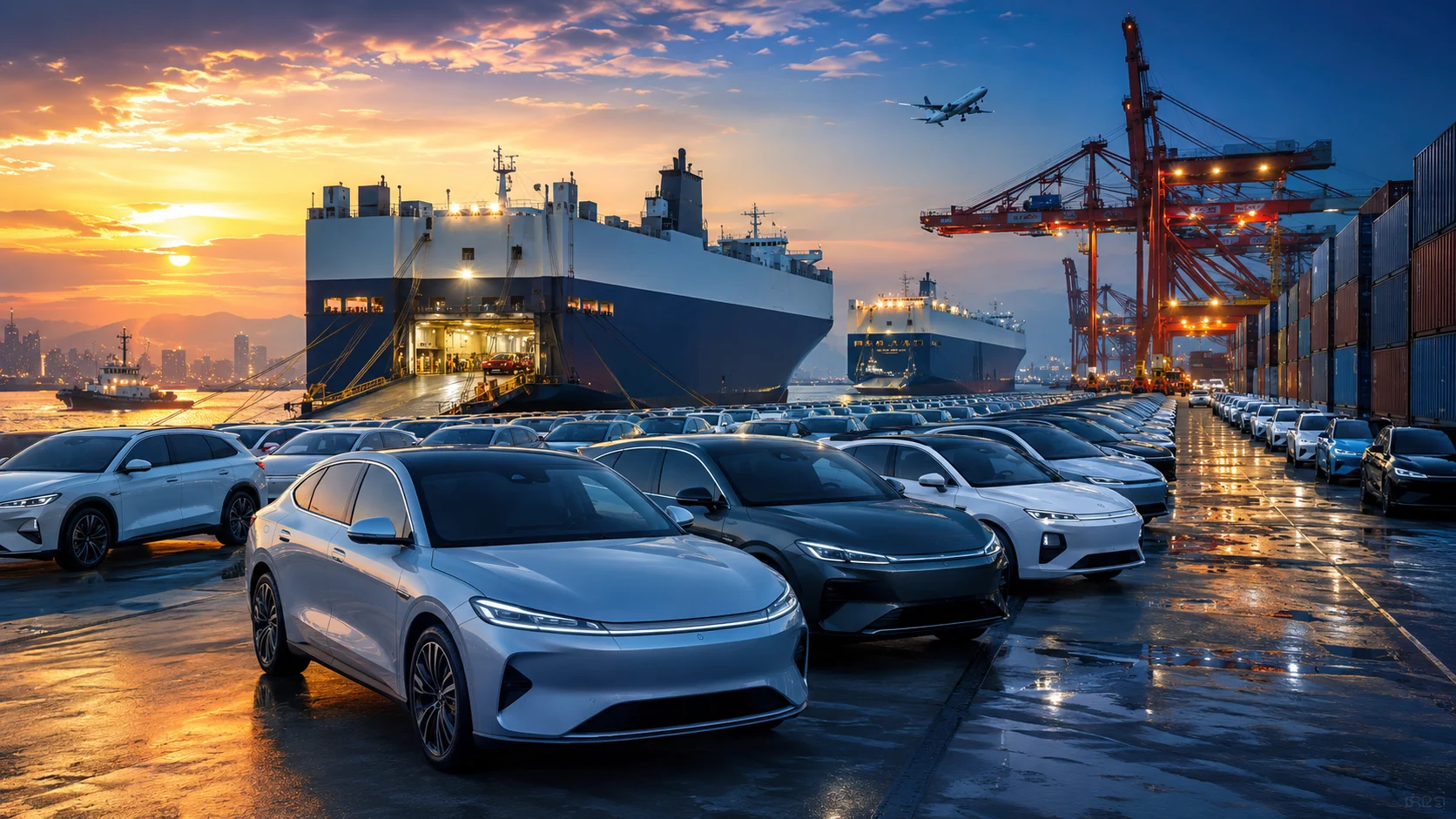
BYD’s latest sales rebound did not begin with a dramatic comeback in its home market. It came from thousands of vehicles moving through ports, arriving at foreign dealerships, and reaching customers who may not have seriously considered a Chinese car brand just a few years ago. In July 2026, the automaker sold 419,211 new-energy vehicles worldwide, extending its year-over-year sales growth for a third consecutive month. Overseas passenger vehicle and pickup sales climbed to a record 179,841 units, showing why BYD export growth has become one of the most important stories in the global electric vehicle industry. The numbers reveal more than a strong month because they show how BYD is turning international expansion into a shield against weaker demand and brutal competition inside China.
The July result represented a 21.8% increase from the same month a year earlier and marked BYD’s strongest monthly performance of 2026 so far. More importantly, overseas volume increased by roughly 124% year over year and accounted for close to 43% of the company’s total sales. That means international business is no longer a small side project designed mainly to build brand recognition. It is becoming one of the central engines supporting BYD’s scale, revenue opportunities, production planning, and long-term negotiating power. For a company once viewed primarily as a Chinese domestic champion, the shift is both rapid and strategically significant.
Exports Turn Into BYD’s Main Growth Engine
BYD’s three-month run of annual sales growth began modestly in May, when the company ended an eight-month period of year-over-year declines. Sales improved again in June, reaching more than 403,000 vehicles as overseas deliveries set another record. July then pushed the recovery further, with total volume rising above 419,000 units and exports reaching a new peak. The pattern suggests that the rebound is not being created by a one-time promotion, a temporary delivery backlog, or an unusually easy comparison period alone. Instead, the company is building a broader international sales base capable of supporting monthly performance even when Chinese consumers become more cautious.
The scale of that change becomes clearer when overseas deliveries are compared with BYD’s total monthly sales. Selling nearly 180,000 passenger vehicles and pickups outside China in a single month means foreign markets contributed almost as much volume as many established automakers generate across entire regions. It also means BYD can spread development, manufacturing, logistics, marketing, and technology expenses across a much larger customer base. Greater scale does not automatically guarantee higher profits, especially when pricing remains aggressive, but it gives the company more room to compete. In the auto industry, where factories and product platforms require enormous investment, volume remains one of the strongest strategic advantages a manufacturer can possess.
Exports are especially valuable because the Chinese vehicle market has become one of the toughest competitive environments in the world. Domestic automakers are launching new models at a relentless pace, adding advanced software features, improving battery performance, and cutting prices to attract buyers. Established international brands are also defending their positions while newer electric vehicle companies fight for survival and market share. This pressure makes it difficult for any manufacturer to depend entirely on Chinese demand, regardless of how strong its technology or brand may be. BYD’s expansion abroad allows it to search for growth in markets where competition, consumer preferences, pricing structures, and electric vehicle adoption are developing differently.
Why BYD Export Growth Matters Now
BYD export growth matters because the global auto market is entering a period when electric vehicles are becoming mainstream without following one universal path. Some countries are moving quickly toward fully electric models, while others are embracing plug-in hybrids as a more practical transition. BYD can compete across both categories because it sells battery-electric vehicles and plug-in hybrids under several brands and price levels. That product flexibility gives the company a wider pool of potential customers than manufacturers that depend heavily on one powertrain strategy. It also helps BYD adjust its lineup according to charging infrastructure, fuel costs, government incentives, and consumer confidence in each market.
In regions where charging networks are still developing, plug-in hybrids can provide a less intimidating entry point for drivers. Buyers can complete daily trips using electricity while retaining a gasoline engine for longer journeys or areas with limited charging access. In more mature electric vehicle markets, BYD can emphasize fully electric models that compete on range, interior technology, safety, and value. This dual approach lets the company participate in the energy transition without betting that every country will move at the same speed. It is a practical growth strategy built around local market conditions rather than a single global assumption.
The timing is also important because BYD is expanding while many legacy automakers are dealing with slower demand, high development costs, and uncertainty about electric vehicle profitability. Some established manufacturers have delayed targets, adjusted production plans, or leaned more heavily on hybrid vehicles. BYD enters that environment with years of experience producing batteries, power electronics, electric drivetrains, and complete vehicles at large scale. Its vertical integration can help reduce dependence on outside suppliers and shorten the path between product development and mass production. That does not eliminate all risk, but it provides operational control that becomes particularly valuable when markets change quickly.
A Global Brand Is Being Built Market by Market
International growth is rarely achieved by shipping the same vehicle everywhere and expecting consumers to adapt. Car buyers care about road conditions, climate, body style, charging availability, resale value, service quality, financing, and brand reputation. BYD’s global challenge is therefore much larger than producing affordable electric cars. It must create a customer experience that feels local, reliable, and permanent in each country it enters. That requires dealerships, parts distribution, trained technicians, financing partnerships, marketing campaigns, software support, and products configured for regional expectations.
BYD has responded by combining exports with a wider network of regional manufacturing and assembly investments. Local production can reduce shipping expenses, shorten delivery times, and help the company respond more quickly to changes in demand. It may also reduce exposure to tariffs or political criticism aimed at vehicles imported directly from China. Factories outside the home market create local employment and supplier relationships, giving governments a stronger economic reason to support the brand’s presence. Over time, this approach can transform BYD from a foreign exporter into a manufacturer with a meaningful local footprint.
Southeast Asia has become one of the clearest examples of this strategy. The region combines large urban populations, growing middle classes, expanding infrastructure, and governments interested in attracting electric vehicle investment. BYD has built brand recognition in countries including Thailand, Indonesia, Malaysia, Singapore, and the Philippines, although its position differs in each market. Local factories and assembly partnerships can help the company serve regional customers without relying entirely on Chinese production. The region also offers a valuable testing ground for models designed around affordability, compact dimensions, tropical climates, and mixed charging conditions.
Europe presents a different opportunity and a more complicated challenge. Consumers in many European countries are familiar with electric vehicles, but they also have strong expectations around safety, efficiency, design, handling, and after-sales support. BYD must compete against Volkswagen, Renault, Stellantis, BMW, Mercedes-Benz, Tesla, Hyundai, Kia, and a growing field of Chinese brands. European tariffs on electric vehicles manufactured in China add another layer of pressure, making local production and supply-chain planning increasingly important. Success in Europe could strengthen BYD’s global credibility, but earning durable market share will require more than low prices.
Affordability Opens the Door, Trust Keeps It Open
Price remains one of BYD’s strongest tools because electric vehicles are still too expensive for many mainstream buyers. A competitive sticker price can persuade consumers to test-drive an unfamiliar brand and compare it with established alternatives. However, affordability alone cannot secure long-term growth in an industry where people often keep vehicles for many years. Customers also want confidence that replacement parts will be available, software problems will be fixed, batteries will remain dependable, and resale values will not collapse. BYD’s next phase of international growth will depend on whether it can convert price-driven curiosity into lasting trust.
This is where branding becomes as important as manufacturing. In China, BYD is already widely recognized, but international consumers may know little about its history, technology, or product range. The company must explain why its batteries are safe, how its vehicles are engineered, and what separates its models from an increasingly crowded field. It must also avoid being seen only as a cheaper alternative to better-known brands. Strong global brands eventually need emotional relevance, recognizable design, dependable service, and a clear identity that remains consistent across countries.
The work becomes even more complex because BYD operates several brands and product tiers. Its main brand targets a broad market, while Denza, Fangchengbao, and Yangwang aim at more specialized or premium customers. A multi-brand structure can help the company reach different audiences without stretching one identity too far. At the same time, each brand requires marketing investment, distribution decisions, and a distinct reason to exist. Expanding too many identities too quickly could create confusion, while managing them well could allow BYD to compete across a much wider portion of the market.
The Product Mix Behind the Rebound
BYD’s July performance also shows why total sales figures need to be examined carefully. The company’s battery-electric vehicle sales remained under pressure compared with the previous year, even though they improved from June. Plug-in hybrid sales also faced challenges, reflecting changing demand and intense competition within China. Commercial vehicle sales, however, increased sharply, adding another source of momentum to the overall result. The export surge was therefore not simply the outcome of every product category growing at the same pace.
This uneven performance matters because it shows that BYD is still navigating a complicated transition rather than enjoying effortless growth. International volume is compensating for weaker areas, but the company must continue refreshing products and protecting demand at home. Domestic scale still supports its factories, supplier relationships, research programs, and ability to launch models quickly. Losing too much ground in China would create pressure that exports might not fully offset, especially if global trade barriers rise. The strongest long-term position would combine stable domestic leadership with increasingly diversified international sales.
The mix between fully electric and plug-in hybrid vehicles will also influence BYD’s margins, brand positioning, and geographic opportunities. Fully electric models can strengthen the company’s technology image and benefit from markets with extensive charging infrastructure. Plug-in hybrids can generate volume in countries where consumers remain concerned about range or where public chargers are limited. Offering both allows BYD to follow demand rather than forcing customers into a single solution. The risk is that managing multiple architectures, regulations, and marketing messages can increase complexity across the global organization.
What the Rebound Says About Business Strategy
BYD’s recent sales pattern offers a useful lesson for companies in almost any industry: growth becomes more resilient when it comes from multiple markets. Businesses that rely heavily on one country, customer segment, platform, or distribution channel can look powerful until conditions suddenly shift. BYD spent years building manufacturing capacity and product breadth, but its current advantage comes from applying those capabilities across a much larger geographic network. The company is using international expansion not only to increase sales but also to rebalance where its growth originates. That makes exports a strategic tool rather than a simple end-of-quarter volume boost.
This approach fits a broader principle within business strategy: diversification works best when it is supported by a repeatable operating system. BYD can enter multiple countries because it already has battery technology, vehicle platforms, manufacturing expertise, and a large product pipeline. It does not need to invent an entirely new business every time it crosses a border. Instead, it adapts a common foundation to local regulations, customer preferences, and distribution structures. The ability to repeat and localize at the same time is one of the clearest differences between expansion and scalable expansion.
There is also a timing lesson in BYD’s push abroad. The company did not wait until every international market was fully prepared for mass electric vehicle adoption. It entered early enough to build recognition, learn from customers, develop dealer networks, and adjust products before the market became even more crowded. Early expansion involves uncertainty and can be expensive, but it creates knowledge that late entrants cannot purchase instantly. BYD’s current export numbers are partly the result of infrastructure and relationships established before overseas demand reached today’s scale.
Tariffs Could Reshape the Next Stage
The same export model driving BYD’s rebound also exposes the company to political and regulatory pressure. Governments are increasingly concerned about the effect of Chinese electric vehicles on domestic manufacturers, jobs, technology, and supply chains. Tariffs can raise prices, reduce demand, and make vehicles produced in China less competitive. New rules may also cover software, connected-car data, battery sourcing, cybersecurity, or ownership structures. As BYD becomes more successful internationally, it will attract greater scrutiny from policymakers as well as competitors.
Local manufacturing is one response, but it is not a complete solution. Building factories requires capital, time, regulatory approval, reliable suppliers, and enough demand to keep production lines efficient. A plant can reduce some tariff exposure while creating new risks related to labor costs, currency movements, politics, and local market volatility. BYD must therefore decide carefully where full manufacturing makes sense and where imports or assembly partnerships remain more efficient. The best structure may differ widely between Europe, Latin America, Southeast Asia, the Middle East, and other regions.
Political pressure could also influence how BYD communicates its global identity. The company may need to emphasize local employment, regional research, dealer investment, and partnerships rather than presenting every market primarily as a destination for Chinese exports. This is not merely a public relations exercise because the location of investment can shape government attitudes and consumer perceptions. A brand that contributes visibly to a local economy may receive a different response from one viewed only as an importer. BYD’s ability to become locally embedded could determine how far its international momentum can continue.
Pressure Builds on Established Automakers
BYD’s record overseas month sends a clear message to established car companies: Chinese electric vehicle competition is no longer confined to China. Automakers that once studied BYD mainly as a domestic rival now face it in showrooms across Europe, Asia, Latin America, Australia, and other markets. The company’s combination of scale, battery expertise, competitive pricing, and rapid product development can force rivals to adjust their own plans. Some may cut prices, while others may accelerate partnerships, localize battery supply, simplify vehicle platforms, or focus more heavily on brand strength. Consumers could benefit from more choice, but manufacturers will face greater pressure on margins and investment returns.
Legacy automakers still hold major advantages, including trusted brands, extensive service networks, financing operations, manufacturing experience, and deep customer relationships. They also understand the regulations and preferences of their home markets in ways that a newer entrant may not. However, those strengths can become expensive if companies carry too many factories, slow development processes, or complicated product portfolios. BYD’s speed challenges an industry traditionally organized around long vehicle cycles and gradual change. The competitive battle will not be decided by one sales month, but July shows that the balance is moving.
Tesla faces a particularly interesting comparison because it helped establish the modern global electric vehicle market. BYD now competes through a broader range of prices, vehicle types, and powertrain options, while Tesla remains more concentrated around fully electric models. The companies also have different strengths in software, manufacturing, charging, branding, and geographic access. Treating their rivalry as a simple monthly sales contest misses the larger transformation taking place. The more important question is which company can build a durable global ecosystem while maintaining demand, innovation, service quality, and financial discipline.
The Hidden Cost of Growing This Fast
Rapid expansion creates its own problems, especially in the automotive business. Every new country adds regulations, languages, marketing requirements, service obligations, spare-parts inventories, software variations, and customer expectations. A vehicle launch can produce impressive early orders, but poor service can damage a brand much faster than advertising can repair it. BYD must ensure that its dealer and support networks grow at a pace that matches vehicle sales. Scaling the visible side of the business without strengthening the less glamorous infrastructure behind it would put future loyalty at risk.
Profitability is another issue hidden beneath strong volume numbers. Exporting vehicles can offer better pricing opportunities than selling them in China, but transportation, tariffs, dealer margins, marketing, and market-entry costs can reduce the benefit. Aggressive discounts may accelerate market share while making it harder to establish a premium image later. New factories can improve long-term economics but require heavy spending before reaching efficient utilization. Investors will eventually want evidence that overseas growth produces sustainable earnings rather than volume purchased through low prices and high investment.
Quality control must remain consistent as production spreads across more locations. Customers do not care whether a problem began with a supplier, factory process, software update, dealer, or shipping delay because they associate the entire experience with the brand. A recall or reliability issue in one market can travel globally through social media and online reviews. BYD’s manufacturing reputation will therefore depend on maintaining standards across company-owned plants, local facilities, logistics networks, and distribution partners. International scale amplifies successful execution, but it also amplifies mistakes.
Practical Growth Lessons From BYD’s Playbook
BYD’s export-led rebound offers several practical insights for founders, marketers, and business leaders outside the automotive industry. The first is that international expansion should solve a strategic problem rather than exist only as a symbol of ambition. BYD needed additional growth channels as domestic conditions became more difficult, and overseas markets provided a way to use existing production and technology at greater scale. The company entered with products it could already manufacture efficiently instead of building a completely unrelated offering. Expansion becomes more credible when it extends a proven advantage into new demand.
- Build a repeatable core before expanding. A company needs technology, operations, product quality, and financial capacity that can support multiple markets without collapsing under complexity.
- Adapt the offer to local conditions. Customers in different regions may need different products, pricing, payment options, service models, or marketing messages.
- Treat distribution as part of the product. Availability, delivery, support, and repair experiences shape customer trust as much as the item being sold.
- Use diversification to reduce dependence. New markets can protect growth when a core market slows, but they should not become an excuse to ignore weaknesses at home.
- Measure durable economics, not vanity volume. Sales growth matters only when customer acquisition, pricing, service costs, and long-term margins can support the business.
The second lesson is that distribution deserves the same strategic attention as product development. BYD can manufacture advanced vehicles, but international growth depends on getting them through ports, into dealerships, registered under local rules, and serviced after purchase. Digital companies often face a similar reality when entering a new market. Translation and advertising may create awareness, but payment systems, customer support, regulations, partnerships, and user behavior determine whether adoption lasts. Growth frequently fails not because the product is weak, but because the delivery system around it was never designed to scale.
The third lesson involves patience. BYD’s July export record may look sudden when viewed as a headline, but it reflects years of investment in batteries, manufacturing, product development, shipping, dealerships, and local partnerships. Companies often celebrate the moment when growth becomes visible while overlooking the long preparation that made it possible. Sustainable momentum usually arrives after repeated experiments, costly mistakes, and operational improvements that the public never sees. BYD’s three-month rebound is best understood as a delayed return on capabilities built long before July 2026.
What Comes After Three Months of Growth?
The next test is whether BYD can maintain momentum through the remainder of 2026. One strong quarter can change investor sentiment, but the auto industry is shaped by annual targets, production cycles, model launches, pricing decisions, and economic conditions. Export growth must remain strong enough to offset any continued weakness in China without creating excessive inventory abroad. New models need to attract customers beyond early adopters, and regional factories must move toward efficient production. BYD will also need to protect its margins as competitors respond with discounts and new products of their own.
Observers should watch the percentage of total sales generated overseas, not only the absolute number of exported vehicles. If international markets consistently contribute around 40% or more of monthly volume, BYD’s business structure will have changed in a fundamental way. It would become less dependent on Chinese consumer cycles and more exposed to global currency, regulatory, and political developments. That trade-off could make revenue more diversified while making operations more complicated. The quality of that diversification will depend on whether overseas sales are profitable, repeatable, and supported by strong customer satisfaction.
Market share by country will provide another important signal. A rapid launch can produce impressive growth percentages when starting from a small base, but durable success requires continued registrations after the initial excitement fades. Service capacity, repeat purchases, fleet demand, financing, and used-car values will reveal whether BYD is becoming part of the mainstream market. Strong sales across several countries would be more meaningful than dependence on one or two exceptional regions. The company’s ambition is global, so its resilience will ultimately be measured by the breadth of markets where it can compete consistently.
BYD Is No Longer Waiting for Global Recognition
BYD’s July performance shows a company moving beyond the stage of asking international consumers to notice it. With 419,211 vehicles sold worldwide and nearly 180,000 passenger vehicles and pickups delivered overseas, the automaker is building a global business at a pace rivals cannot ignore. Its third consecutive month of annual growth suggests that international demand is beginning to reshape the company’s overall sales trajectory. The recovery remains uneven, and challenges involving tariffs, margins, service, brand trust, and domestic competition have not disappeared. Still, the export numbers demonstrate that BYD now has a powerful growth channel outside China.
The deeper story is not simply that more BYD vehicles are being shipped abroad. It is that a company built around Chinese manufacturing scale is learning how to turn that scale into international presence, local operations, and broader consumer relevance. Successful globalization will demand patience, investment, and discipline far beyond the factory floor. BYD must prove that it can support customers, protect quality, navigate politics, and earn trust in markets with very different expectations. Those tasks will determine whether July becomes a temporary high point or the beginning of a more durable global era.
For now, BYD export growth is doing exactly what an effective expansion strategy should do: opening new demand, reducing reliance on one market, and giving the company more ways to keep moving when conditions change. The three-month rebound does not guarantee an easy road ahead, but it confirms that BYD’s international push has reached meaningful scale. Foreign sales are no longer supporting the edges of the business because they are helping carry the center. As the electric vehicle market becomes more competitive and politically complicated, that global reach may become BYD’s most important advantage. The next chapter will reveal whether the company can turn record exports into lasting market leadership.