
Growth Marketing 2026: Viral Isn’t Enough Now
 Vortixel
8 minutes read
Vortixel
8 minutes read
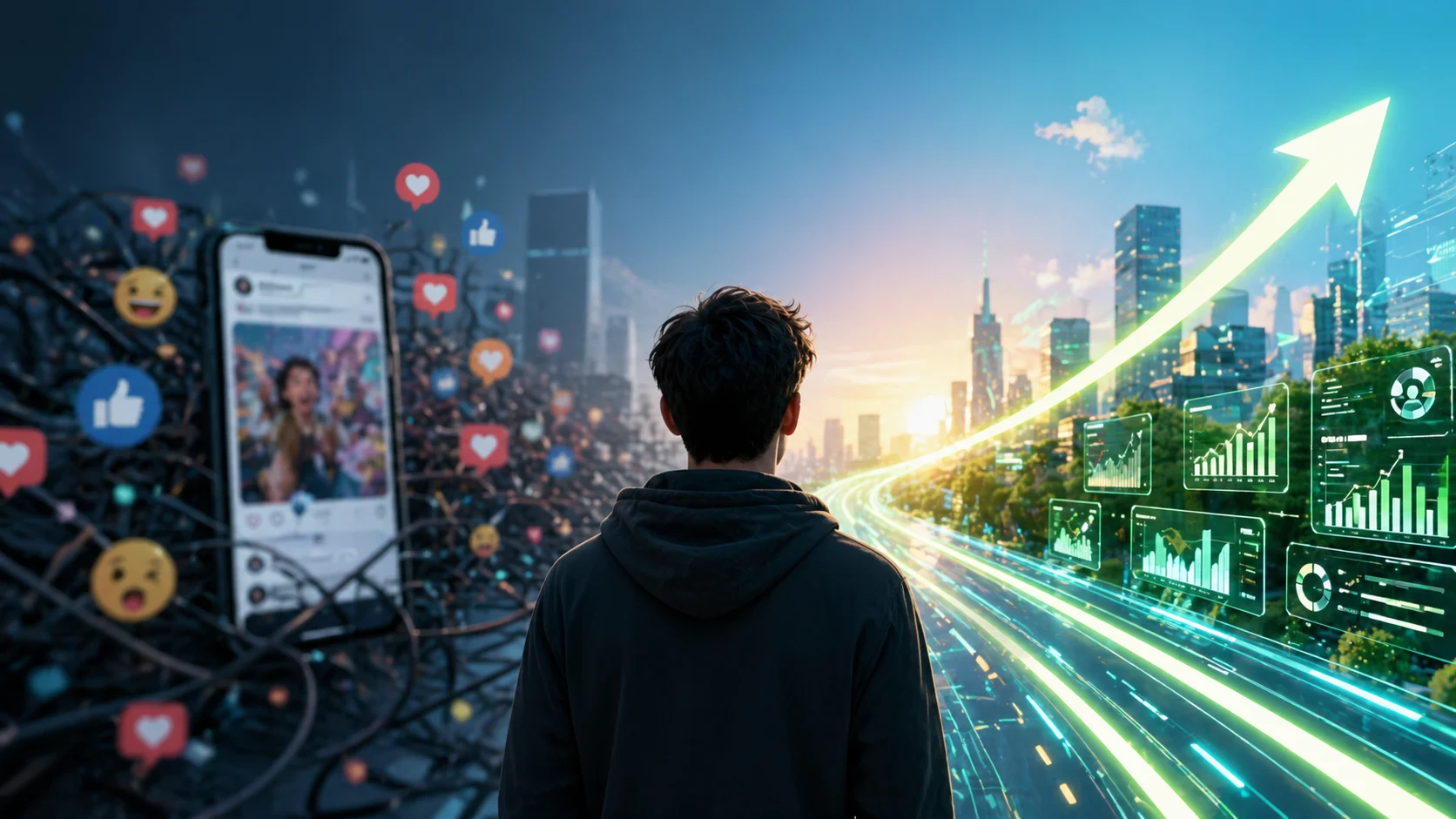
In 2026, the rules of digital growth have changed fast. For years, brands chased one thing above everything else: going viral. A trending TikTok clip, a meme tweet, a sudden Instagram explosion, or a lucky influencer mention could turn unknown companies into overnight names. But now, smart businesses are learning a hard truth. Growth marketing in 2026 is no longer about viral moments. It is about sustainable systems, trust, retention, data, and long-term brand value.
The internet has matured, audiences are sharper, and algorithms are less generous. People scroll faster, ignore more ads, and trust fewer brands. That means one million views can look impressive while producing almost zero real business results. Many startups and companies now understand that attention without conversion is just noise.
This shift has created a new era where marketers are focusing less on hype and more on strategy. The brands winning in 2026 are not always the loudest. They are the smartest, fastest learners, and most consistent builders. They know that real growth comes from repeat customers, community loyalty, strong positioning, and data-backed execution.
If you still think viral content is the ultimate shortcut, this article will explain why that playbook is fading. More importantly, it will show what actually works in modern growth marketing 2026.
Why Viral Marketing Lost Its Crown
A few years ago, virality felt like magic. One creative campaign could generate millions of impressions overnight. The cost was low, the reach was huge, and brands loved the headlines. But in 2026, virality is no longer reliable for several reasons.
First, platforms are saturated. Every business wants attention. Every creator is optimizing hooks, thumbnails, captions, and trends. The result is a crowded battlefield where standing out is harder than ever. What once felt fresh now feels copied within hours.
Second, audiences have become resistant. People know when content is trying too hard. They can spot forced trends, fake relatability, and manufactured hype instantly. If something feels inauthentic, users move on in seconds.
Third, virality often fails to convert. A skincare brand can get ten million views, but if viewers do not trust the product, pricing, or reviews, sales stay flat. Many brands learned that reach does not equal revenue.
Finally, platform algorithms are unstable. Depending only on viral hits means your growth depends on systems you do not control. One update can destroy traffic overnight.
That is why modern companies are replacing hope-based marketing with process-based growth systems.
What Growth Marketing Means in 2026
Growth marketing today is broader than traditional advertising. It combines branding, performance marketing, product experience, analytics, retention, content strategy, and experimentation into one engine.
Instead of asking, “How do we go viral?” smart teams ask:
- How do we acquire quality users consistently?
- How do we improve conversion rates?
- How do we reduce churn?
- How do we increase lifetime value?
- How do we build referral loops?
- How do we create brand trust over time?
This mindset changes everything. Rather than chasing spikes, businesses build compounding momentum.
A viral campaign may create one exciting week. A strong growth system can create three profitable years.
Trust Became the New Currency
In 2026, trust matters more than attention. Consumers are tired of overpromises, fake urgency, manipulated reviews, and empty branding language. They want proof, transparency, and real value.
That is why brands investing in trust are outperforming flashy competitors.
Trust is built through:
- Honest product messaging
- Fast customer support
- Real user reviews
- Transparent pricing
- Strong refund policies
- Consistent quality
- Useful educational content
- Ethical data practices
When trust is high, conversion rates improve naturally. Customer acquisition costs also become more manageable because satisfied users generate referrals.
This is why some smaller brands are scaling faster than giant companies. They may have fewer impressions, but they have deeper loyalty.
Retention Beats Reach Every Time
One of the biggest growth lessons in 2026 is simple: keeping a customer is often more profitable than acquiring a new one.
Many brands spent years pouring budgets into traffic while ignoring retention. They celebrated new users while existing customers quietly disappeared.
Now, the smartest marketers prioritize:
- Email re-engagement flows
- Loyalty programs
- Subscription upgrades
- Personalized recommendations
- Community access
- Exclusive drops
- Better onboarding experiences
Retention creates compounding revenue. If a customer buys three times instead of once, the economics of your business improve dramatically.
This is especially true with rising ad costs. When paid acquisition becomes expensive, retention becomes your secret weapon.
Community Is Stronger Than Followers
Follower counts used to impress everyone. But in 2026, community quality matters more than audience size.
A brand with 20,000 engaged fans can outperform one with 2 million passive followers. Why? Because community members buy, recommend, defend, and create content around brands they love.
Modern growth brands are building communities through:
- Private Discord groups
- Telegram channels
- Insider newsletters
- Ambassador programs
- Live Q&A sessions
- User-generated content campaigns
- Founder-led storytelling
People want belonging, not just consumption. They want brands that feel human.
That is why faceless corporate marketing is losing relevance. Audiences connect with stories, values, and personalities.
Performance Marketing Is Smarter Now
Paid ads still matter in 2026, but lazy targeting is dead.
The old model of broad ads + generic landing pages + hope is too expensive now. Winning brands are using performance marketing with precision.
They focus on:
- First-party data audiences
- Creative testing at scale
- AI-assisted copy optimization
- Fast landing page experiments
- Micro-segment targeting
- Full-funnel attribution models
- Post-click conversion optimization
Ads alone do not drive growth anymore. The full customer journey matters.
If your ad is great but your checkout page is slow, you lose. If your targeting is strong but your offer is weak, you lose. If your CAC is low but retention is poor, you still lose.
Growth in 2026 is connected thinking.
SEO Made a Powerful Comeback
While social media became more volatile, SEO regained importance. Why? Because search traffic often signals intent.
Someone scrolling a feed may be bored. Someone searching “best CRM for startups” is ready to evaluate solutions.
That difference matters.
Brands are investing again in:
- Long-form authority content
- Comparison pages
- Problem-solving blog posts
- Product-led SEO
- Review optimization
- Local SEO
- AI search visibility
Search traffic may grow slower than viral spikes, but it often converts better and lasts longer.
A single well-ranked article can generate leads for years. That is sustainable growth.
Content Strategy Changed Forever
In 2026, content is still king, but random posting is dead.
Brands now need strategic content ecosystems. Every piece should serve a role:
- Awareness content attracts new audiences
- Education content builds trust
- Case studies reduce doubt
- Product demos increase conversion
- Community content boosts loyalty
- Founder content builds personality
- SEO content captures intent
This means content teams now think like operators, not entertainers.
The question is no longer “Did this post get views?”
The real question is “Did this content move people deeper into the funnel?”
That shift separates vanity metrics from business metrics.
AI Changed Growth Execution
Artificial intelligence has become a serious advantage in marketing operations. But not in the way many expected.
AI did not replace marketers. It upgraded marketers.
Winning teams use AI for:
- Faster ad copy testing
- Predictive churn analysis
- Email personalization
- Keyword research
- Customer support automation
- Funnel diagnostics
- Data interpretation
- Creative ideation
The biggest winners are not companies using AI to spam content. They are companies using AI to improve decisions and speed.
That difference is huge.
Low-quality AI content floods the internet. High-quality AI-assisted strategy creates scale.
The Metrics That Matter in 2026
If virality is not the main goal, what should brands measure now?
Serious growth teams focus on:
- Customer Acquisition Cost (CAC)
- Lifetime Value (LTV)
- Retention Rate
- Churn Rate
- Conversion Rate
- Repeat Purchase Rate
- Referral Rate
- Revenue Per User
- Organic Traffic Growth
- Branded Search Demand
These metrics reveal whether growth is real or fake.
A campaign with low sales and huge impressions may look exciting publicly. But internally, it is weak performance.
A campaign with moderate reach and excellent LTV can become a business machine.
Why Brand Matters More Again
For years, some startups believed branding was optional. They thought aggressive ads alone could scale forever.
That idea collapsed.
In 2026, brand strength reduces acquisition costs. Familiar brands convert better. Trusted brands survive price wars. Loved brands recover faster from mistakes.
Strong branding means:
- Clear positioning
- Recognizable voice
- Consistent visual identity
- Emotional relevance
- Memorable promise
- Reliable customer experience
People buy what they remember and trust.
That is why modern growth marketing blends performance and brand together instead of treating them as enemies.
How Startups Should Grow in 2026
If you are building a startup today, the smartest playbook is not chasing trends daily. It is building repeatable systems.
Focus on:
1. Nail Product-Market Fit
No marketing can permanently save a weak product.
2. Own One Channel First
Master one growth engine before expanding.
3. Build Retention Early
Returning users are gold.
4. Create Authority Content
Teach your market. Become useful.
5. Track Real Metrics
Revenue beats likes.
6. Build Brand Personality
People connect with identity.
7. Use AI Wisely
Speed up execution, not authenticity.
What Big Brands Are Learning Too
Even enterprise brands are adapting. Massive budgets no longer guarantee wins.
Large companies are restructuring around agile growth teams that can test faster, personalize better, and respond to market shifts quickly.
They are combining:
- Brand storytelling
- Creator partnerships
- CRM automation
- Loyalty ecosystems
- First-party data strategies
- Cross-channel attribution
- Community engagement
Big companies want startup speed with enterprise scale.
That hybrid model is becoming the future.
The Death of Vanity Metrics
One of the healthiest changes in 2026 is the decline of vanity metrics.
Brands are finally asking harder questions:
- Did views become customers?
- Did traffic become revenue?
- Did users stay?
- Did CAC improve?
- Did brand searches rise?
- Did referrals grow?
This creates smarter decisions.
Numbers that look impressive on screenshots are no longer enough in boardrooms.
What Comes Next
Growth marketing will continue evolving. But the direction is clear.
The next winners will combine:
- Human creativity
- AI efficiency
- Strong community
- Trusted brands
- Smart analytics
- Excellent products
- Long-term consistency
That mix is harder than chasing virality, but far more valuable.
Final Thoughts
Growth marketing 2026 is not about going viral anymore. Viral moments can still help, but they are no longer the core strategy. Sustainable growth now comes from trust, retention, community, performance systems, SEO, and data intelligence.
The brands that understand this shift will keep growing while others keep chasing temporary noise.
Attention is easy to rent. Loyalty is hard to earn.
And in 2026, loyalty wins.