
Robot Marathon Sparks Startup Automation Boom
 Vortixel
8 minutes read
Vortixel
8 minutes read
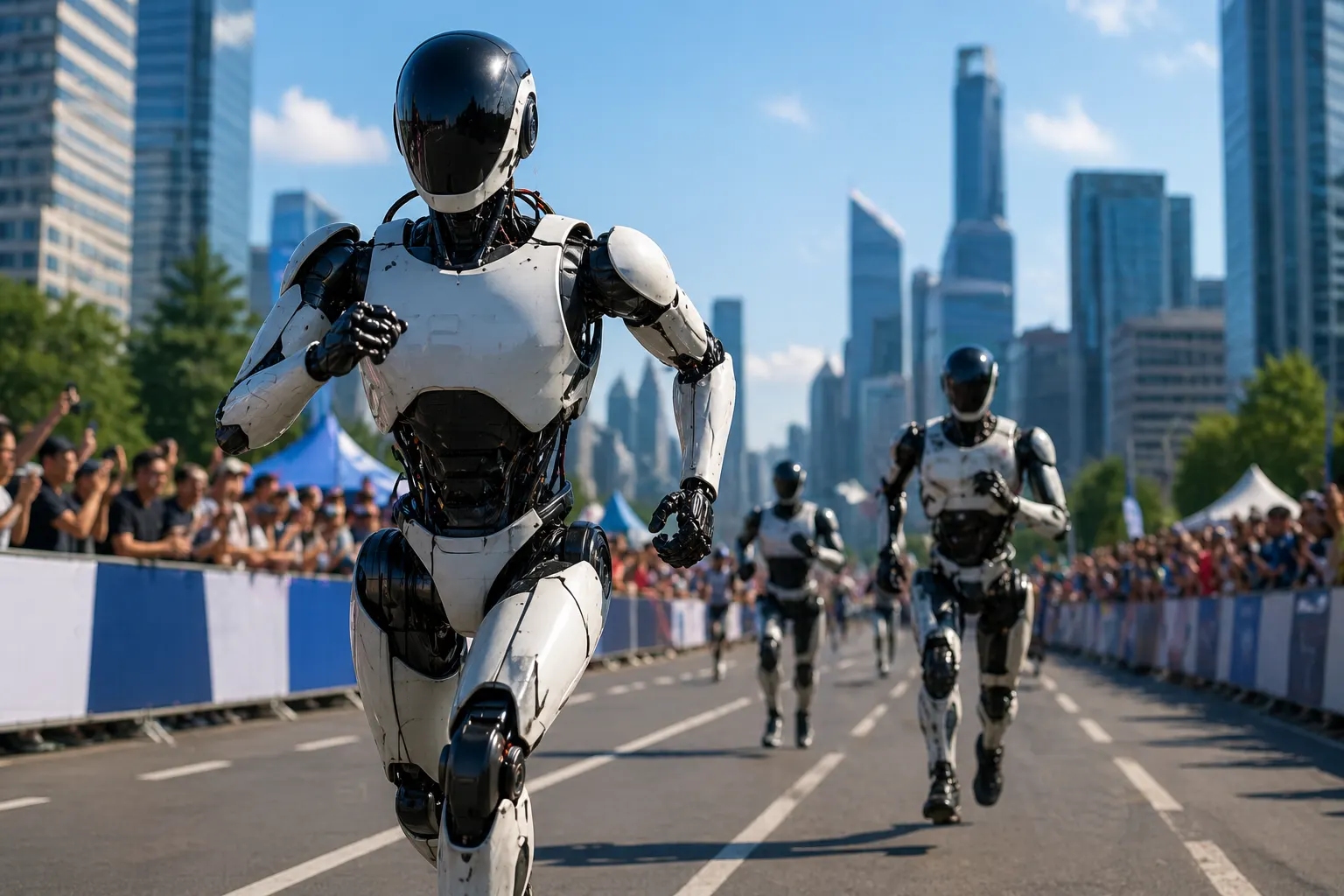
The global technology scene moves fast, but every once in a while, one event changes the tone of the entire conversation. In 2026, one of those moments arrived through an unexpected arena: a marathon. Reports about robots successfully competing in endurance-based public events instantly grabbed attention across business, startup, and innovation circles. What looked like a futuristic spectacle quickly became something much bigger. It signaled that robotics has moved beyond factory cages and research labs into real-world environments where adaptability, stamina, and decision-making matter. That shift is exactly why the phrase Robot Marathon Sparks Startup Automation Boom has become highly relevant.
For founders, investors, and growth strategists, the robot marathon story is not about entertainment. It is about proof. If machines can navigate public routes, maintain balance over distance, respond to changing surroundings, and operate consistently under pressure, then automation opportunities are no longer theoretical. They are practical, commercial, and scalable. This opens the door for a new generation of startups focused on robotics services, logistics automation, warehouse intelligence, healthcare support systems, construction robotics, and smart city operations.
The startup ecosystem has always responded quickly to signals of readiness. The internet created SaaS giants. Smartphones created app empires. AI created a new wave of productivity startups. Now physical AI and robotics may be entering their breakout era. The marathon story gives investors and founders a visual symbol that robotics is reaching consumer and enterprise maturity faster than many expected. That is why automation startups worldwide are paying close attention.
This article explores why the robot marathon matters, how it creates startup opportunities, what industries will benefit most, and how founders can ride the automation wave in 2026 and beyond.
Why the Robot Marathon Became a Big Deal
At first glance, a robot joining or completing a marathon may sound like a PR stunt. But in the technology world, demonstrations often predict future commercial markets. Self-driving car tests once looked experimental. Drone deliveries once looked unrealistic. AI chat tools once looked niche. Then they scaled.
A marathon is not a simple test. It requires endurance, battery management, motion efficiency, route awareness, hardware durability, environmental response, and stable operation over time. For a robot to participate successfully in that environment means several systems are working together at a high level. That is the real headline.
Robots are no longer limited to repetitive indoor tasks. They are becoming more capable in semi-structured and unpredictable environments. This matters because real businesses operate in messy conditions. Warehouses change layouts. Hospitals have crowded hallways. Construction sites evolve daily. Streets contain obstacles. Hotels deal with constant movement. If robots improve enough to handle complexity, startup opportunities multiply rapidly.
The marathon symbolized readiness. It showed robotics moving from prototype culture into applied business potential.
Why Startups Love These Signals
Startup founders search for timing advantages. Being too early can kill a company. Being too late means entering a crowded market. The smartest founders watch for signals that technology is becoming affordable, useful, and demanded by the market.
The robot marathon sends several strong signals:
1. Hardware Is Improving Fast
Battery life, sensors, processors, lightweight materials, and motor efficiency continue to advance. These upgrades lower the cost and increase the usefulness of robots.
2. AI Makes Robots Smarter
Modern robots do not rely only on movement systems. They use AI vision, predictive analytics, route planning, and contextual learning. That dramatically improves performance.
3. Labor Gaps Are Growing
Many industries face staffing shortages, rising wages, or repetitive tasks people do not want. Automation becomes attractive when economics tighten.
4. Investors Want the Next Big Category
After software and generative AI, many venture capital firms are now exploring physical AI, robotics infrastructure, and automation platforms.
For startup founders, these four forces create rare momentum.
Top Startup Opportunities in Automation After the Robot Marathon
The most exciting part of this trend is not the robots themselves. It is the businesses built around them. Here are some high-potential startup sectors.
1. Warehouse Robotics Startups
E-commerce continues growing globally. Warehouses need speed, accuracy, and 24/7 performance. Startups can build robots for:
- Picking items
- Moving inventory
- Packing assistance
- Shelf scanning
- Returns processing
Even mid-sized retailers now seek affordable automation.
2. Delivery Robotics
Last-mile delivery remains expensive. Autonomous sidewalk bots, drone hybrids, and smart locker systems can reduce costs and improve speed.
Opportunities include:
- Food delivery bots
- Grocery route robots
- Parcel handoff systems
- Campus delivery fleets
Urban density makes this especially attractive.
3. Healthcare Support Robots
Hospitals are under pressure worldwide. Staff burnout, aging populations, and operational inefficiency create strong demand.
Robotics startups can focus on:
- Medicine transport
- Cleaning automation
- Patient guidance
- Mobility assistance
- Senior care companions
Healthcare buyers value consistency and time savings.
4. Construction Tech Robotics
Construction remains one of the least digitized industries. Yet it desperately needs productivity gains.
Possible startup products:
- Bricklaying robots
- Site inspection drones
- Safety monitoring bots
- Material transport machines
- Progress tracking systems
Massive upside exists because the market is huge.
5. Hospitality and Retail Service Robots
Hotels, malls, airports, and retail stores need customer-facing efficiency.
Use cases include:
- Check-in support
- Room delivery bots
- Cleaning robots
- Smart inventory patrols
- Queue management assistants
When labor costs rise, these tools become easier to justify.
Why 2026 Feels Different From Earlier Robotics Hype
Robotics has been “the future” for years, so why does 2026 feel more real? Because multiple layers matured at once.
AI Vision Is Better
Robots can now identify objects, obstacles, pathways, and human movement more accurately.
Cloud Connectivity Is Stronger
Devices can update models, share data, and improve remotely.
Components Are Cheaper
Sensors, cameras, chips, and batteries became more accessible.
Software Ecosystems Expanded
Developers now have frameworks to build faster instead of reinventing everything.
Businesses Are More Open to Automation
After supply chain shocks and labor shortages, companies actively seek resilience.
That combination creates startup-friendly conditions rarely seen before.
How Founders Can Build in the Robot Economy
Many people assume robotics startups require huge factories and billion-dollar budgets. That is outdated thinking. Founders can enter through software, services, integrations, or niche hardware.
Start With a Pain Point, Not a Robot
Bad approach: “I want to build a robot.”
Smart approach: “Warehouses lose money because inventory counts are inaccurate.”
Then build automation around the pain.
Choose Vertical Niches
Instead of generic robots, solve specific markets:
- Restaurant kitchen automation
- Elderly home mobility tools
- Farm crop monitoring bots
- Hotel linen transport systems
- Cold storage inspection robots
Niche focus helps early traction.
Use Robotics-as-a-Service
Many businesses do not want large upfront costs. Subscription models reduce friction.
Example:
- Setup fee
- Monthly maintenance
- Software dashboard
- Performance analytics
- Upgrade support
This recurring revenue model is attractive to investors.
Combine Human + Robot Workflows
Total replacement is often unrealistic. Hybrid systems win faster.
Examples:
- Robot transports goods, staff handles exceptions
- AI inspection flags issues, humans verify
- Cleaning bot handles floors, team handles detail work
The best automation often augments humans instead of replacing them.
Investor Interest in Physical AI Is Rising
Venture capital tends to move in waves. Right now, investors are asking what comes after pure software AI tools. One answer is physical AI: machines that act in the real world.
Why investors like this category:
- Large enterprise contracts
- Recurring service revenue
- Strong moats from hardware + software integration
- High switching costs
- Global scalability
Once a robot system becomes embedded in operations, customers rarely change providers quickly.
That makes automation startups attractive long-term plays.
Challenges Startups Must Solve
The opportunity is real, but so are the obstacles. Smart founders understand both sides.
1. Reliability
One failure in a warehouse or hospital can damage trust. Systems must be dependable.
2. Regulation
Public robots, drones, and autonomous systems often face legal barriers.
3. Cost
Hardware margins can be difficult early on. Founders need efficient manufacturing strategy.
4. Maintenance
Robots need servicing, updates, parts, and monitoring.
5. Customer Education
Some industries still fear automation. Sales cycles can be long.
Winning startups solve these issues with strong operations, not hype.
Global Markets to Watch
The robot marathon story gained attention partly because Asia continues leading in robotics experimentation. But opportunity is worldwide.
Asia
Strong manufacturing ecosystems, smart city initiatives, and fast adoption.
United States
Deep venture capital networks and enterprise software integration strength.
Europe
Industrial automation, logistics modernization, and sustainability-driven innovation.
Middle East
Smart infrastructure, mega-projects, and hospitality automation demand.
Southeast Asia
Growing digital economies, urban delivery demand, and labor optimization needs.
For founders, geography matters. Some markets buy faster than others.
How Growth Teams Can Use the Trend
Even non-robotics companies can benefit from the buzz around automation.
Content Marketing
Publish insights on how robotics changes your industry.
Brand Positioning
Show your company as future-ready.
Partnership Strategy
Integrate with robotics providers early.
Operational Efficiency
Use automation tools internally before competitors do.
The robot marathon is not only a startup story. It is a market narrative that smart brands can use.
The Gen Z Workforce Perspective
Younger professionals often approach automation differently than previous generations. Many do not fear technology replacing everything. Instead, they expect tools to remove boring tasks and create smarter roles.
That matters for hiring. Companies adopting robotics may attract talent interested in innovation, analytics, and modern workflows.
Instead of manually moving boxes, teams manage systems. Instead of repetitive inspections, they analyze performance dashboards. The workplace evolves.
What Happens Next
The next five years could bring rapid commercialization:
- Robot fleets in malls
- Autonomous warehouse micro-centers
- Smart hospital logistics systems
- Construction robots on major sites
- Home support robots for aging populations
- AI patrol systems for facilities
The companies built now may become category leaders later.
Just as early SaaS founders built giants from boring software problems, robotics founders may build giants from physical workflow problems.
Final Thoughts
The headline Robot Marathon Sparks Startup Automation Boom matters because it represents more than a race. It represents readiness. It shows robotics entering a new phase where endurance, movement intelligence, and practical deployment are visible to the public and credible to investors.
For startup founders, this is a timing signal. Hardware is improving. AI is accelerating capability. Labor challenges are increasing demand. Capital is looking for the next frontier. That combination rarely stays open forever.
The biggest winners will not simply build cool robots. They will solve expensive business problems with scalable automation models. They will understand industry pain points, create recurring revenue systems, and combine machine efficiency with human strengths.
In 2026, the marathon may have been symbolic. But for startups, the race has only just begun.