
Samsung and SK Hynix Build New AI Chip Hub
 Vortixel
16 minutes read
Vortixel
16 minutes read
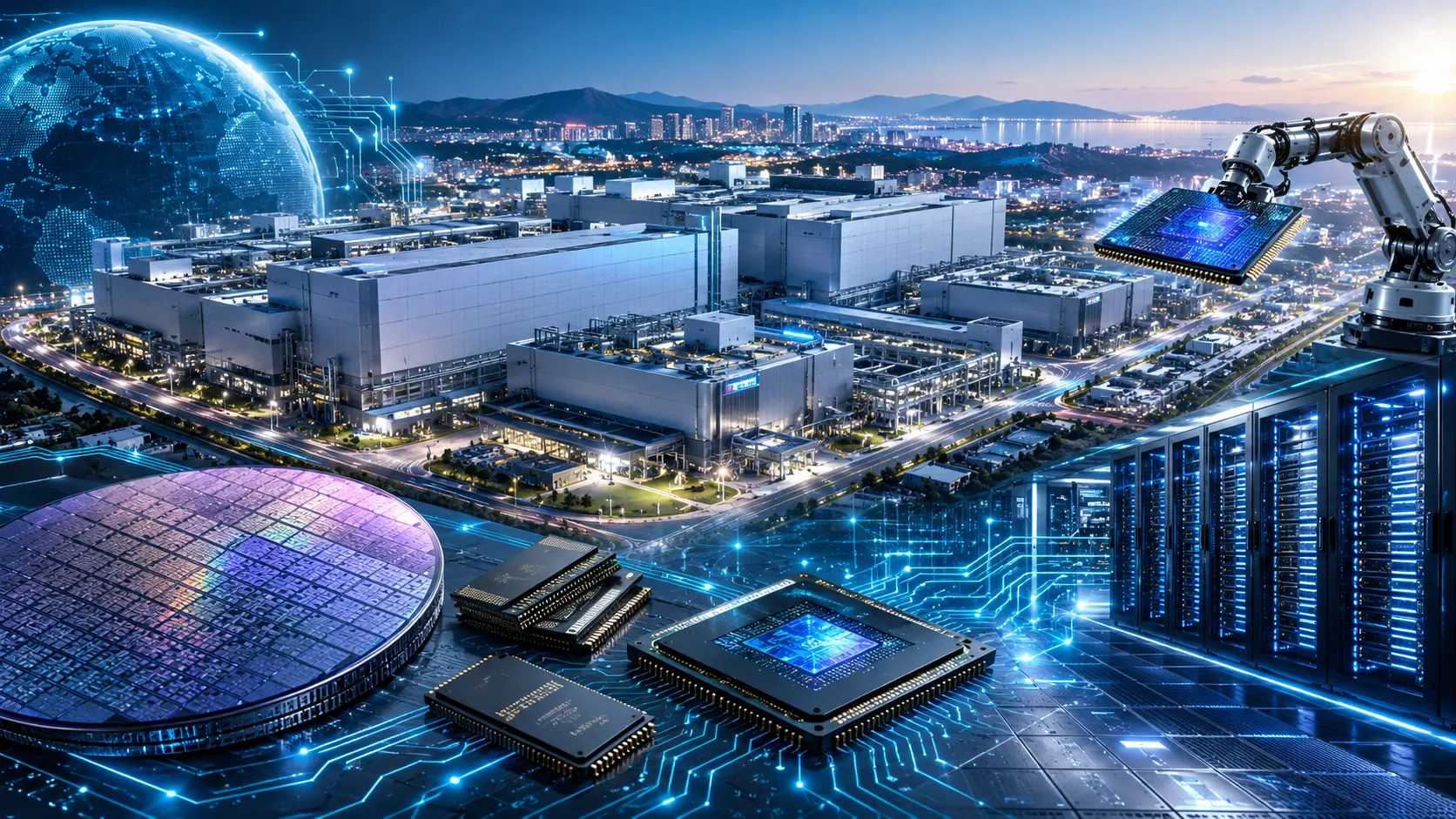
The global race for artificial intelligence is no longer just about who writes the smartest model or launches the flashiest app. It is increasingly about who controls the physical backbone behind the AI economy: chips, fabs, memory supply, energy, water, talent, and the industrial muscle to scale everything at once. That is why South Korea’s new plan with Samsung Electronics and SK Hynix feels less like a regular corporate expansion and more like a national growth strategy for the next decade. The country is moving to build a massive AI chip hub in its southwest region, aiming to lock in its role as one of the world’s most important semiconductor powerhouses. For readers following AI chip hub strategy, this is one of the clearest signals yet that the next phase of AI competition will be built as much in industrial zones as in software labs.
At the center of the story are two names that already sit deep inside the modern tech supply chain: Samsung and SK Hynix. Samsung is a global giant across memory chips, foundry services, smartphones, displays, and consumer electronics, while SK Hynix has become one of the most watched companies in the AI boom because of its strength in high-bandwidth memory. Together, they are not just responding to demand; they are trying to shape the market before the next bottleneck hits. The planned chipmaking hub is designed to serve a world where AI servers, data centers, autonomous systems, robotics, and enterprise automation keep pulling more memory and processing capacity into the cloud. In simple terms, if AI is the new engine of digital growth, South Korea wants to own more of the factory floor where that engine gets built.
Why the AI Chip Hub Matters Right Now
The timing of this AI chip hub is important because the AI market has moved from experimental hype into heavy infrastructure spending. A few years ago, the public conversation around AI was mostly about chatbots, image generators, coding assistants, and creative tools. Now the deeper business conversation is about compute capacity, energy grids, server farms, specialized memory, and whether the supply chain can keep up with companies racing to train and run more powerful systems. Every new AI product needs hardware behind it, and every major AI platform depends on semiconductor companies that can produce advanced components at scale. That is why Samsung and SK Hynix are making a move that looks bigger than a typical expansion cycle.
South Korea already has a strong chip ecosystem, but much of its semiconductor manufacturing strength has historically been concentrated around existing industrial corridors. The new hub in the southwest is meant to spread capacity, relieve pressure from crowded regions, and create a wider national base for future chip production. This matters because semiconductor manufacturing is not easy to relocate or scale quickly. Fabs require huge capital spending, stable access to electricity, reliable water supply, specialized equipment, cleanroom expertise, logistics networks, and a workforce that can handle highly technical operations. When a country decides to build a new chip cluster, it is making a long-term bet on land, policy, talent, and the direction of global demand.
The AI boom has also changed the type of chip demand that matters most. Traditional consumer electronics cycles still matter, but AI data centers now require massive amounts of high-performance memory and advanced packaging. High-bandwidth memory, often shortened to HBM, has become especially important because AI accelerators need fast memory to move huge amounts of data efficiently. SK Hynix has gained major momentum in this area, while Samsung has been working to strengthen its position in the same race. The new hub gives both companies more room to build for a future where memory is not just a commodity part, but a strategic layer of the AI stack.
Samsung and SK Hynix Are Playing a Long Game
What makes this story fascinating is that Samsung and SK Hynix are not simply chasing a short-term sales spike. They are placing a long-term bet that AI infrastructure will remain one of the strongest growth engines in technology. That bet is not risk-free, because semiconductor markets are famous for boom-and-bust cycles. When demand looks unstoppable, companies invest aggressively, but if too much supply comes online at once, pricing pressure can hit hard. Still, the scale of AI adoption across cloud computing, enterprise software, consumer platforms, and industrial automation suggests that demand for advanced chips may stay structurally high for years.
Samsung brings a broad advantage because it operates across multiple layers of the semiconductor and electronics world. Its experience in memory, logic, manufacturing, and global device ecosystems gives it a wide view of where demand is moving. SK Hynix, on the other hand, has become a sharper symbol of the AI memory surge, especially as HBM becomes critical for the next generation of AI servers. The two companies are competitors, but in this national strategy, their investments also reinforce South Korea’s collective position. That combination of rivalry and shared industrial ambition is part of what makes the Korean chip sector so powerful.
For Samsung, the new hub can help strengthen its manufacturing scale and support its attempt to stay competitive in advanced memory and chip production. For SK Hynix, the project offers a pathway to deepen its lead in memory technologies that are tightly linked to AI workloads. For South Korea, the bigger picture is even more strategic: the country wants to make sure that global AI infrastructure continues to depend on Korean manufacturing expertise. In a world where supply chains are increasingly shaped by geopolitics, that dependence carries economic and diplomatic weight. The AI chip hub is therefore not just a corporate move; it is a national positioning play.
The Growth Strategy Behind the Mega Hub
From a growth perspective, this move is a case study in how countries and companies can build defensible advantages. Growth is often discussed in terms of marketing funnels, customer acquisition, search traffic, and product-led expansion, but at the highest level, growth also comes from infrastructure control. Whoever controls the chokepoints in a fast-growing market can influence pricing, availability, partnerships, and long-term industry direction. Samsung and SK Hynix are expanding around a chokepoint that every AI company understands: there is no AI scale without enough advanced chips. That makes the hub relevant not only for semiconductor analysts, but also for founders, marketers, investors, and strategists watching where the digital economy is heading.
The hub also shows how growth strategy can be built around ecosystem design instead of isolated production. A single fab is powerful, but a cluster can be much more valuable because suppliers, talent, logistics, training institutions, and adjacent industries begin to gather around the same location. Over time, that creates a compounding effect. Suppliers become faster, workers become more specialized, universities align programs with industry needs, and regional governments invest in supporting infrastructure. For a website focused on Business Strategy, this is the kind of move that demonstrates how scale becomes a moat when it is connected to place, policy, and timing.
The planned southwest expansion also reflects a broader push to distribute growth beyond the most crowded economic centers. That matters because modern industrial policy is not only about production efficiency. It is also about regional balance, political support, job creation, and long-term resilience. If semiconductor production remains too concentrated in one area, companies face risks related to land costs, congestion, power demand, and local bottlenecks. By creating a new base, South Korea can try to reduce pressure on existing hubs while giving Samsung and SK Hynix more space to expand for the AI era.
AI Demand Is Turning Memory Into a Power Asset
For a long time, memory chips were often viewed through the lens of cyclical hardware markets. Prices rose and fell depending on supply, consumer electronics demand, smartphone cycles, and PC shipments. AI has changed that conversation because memory is now deeply tied to the performance of advanced computing systems. Large AI models need to move data quickly between processors and memory, and that makes technologies like HBM extremely valuable. The companies that can reliably produce the right memory at scale now have a stronger role in the future of AI infrastructure.
This is where SK Hynix has become especially interesting. Its rise in the AI memory market has shown that a company can transform its position by betting early on a technology that later becomes essential. Samsung still has massive scale and technical depth, but the AI race has created a more dynamic competitive field than many people expected. The new hub gives both companies more room to compete, cooperate with suppliers, and meet customer demand from global cloud and AI companies. It also tells the market that South Korea does not want to be a passive supplier in the AI boom; it wants to define the supply map.
For AI companies, the availability of advanced memory and chip capacity can shape product roadmaps. When supply is tight, costs rise, launch timelines stretch, and smaller players can struggle to access the hardware they need. When capacity expands, more companies can build, test, and deploy AI products at scale. That does not mean chips suddenly become cheap or easy to get, but it does mean the infrastructure base becomes deeper. The AI chip hub could therefore influence not just Korean exports, but the pace at which AI services expand globally.
The Data Center Connection
The chip hub story also connects directly to the rise of AI data centers. Every AI data center is basically a physical expression of digital ambition: rows of servers, advanced cooling systems, huge energy needs, and constant demand for the latest hardware. As companies build bigger AI models and serve more users, the pressure on data center infrastructure keeps rising. This is why chip production, power planning, and cloud expansion now belong in the same conversation. A country that wants to lead in AI cannot think only about algorithms; it has to think about the industrial systems that keep those algorithms running.
South Korea’s broader plan includes not only chip fabs, but also AI data center investment and related infrastructure. That matters because chips and data centers feed each other. More fabs can produce the memory and semiconductor components needed for AI servers, while more data centers create domestic and regional demand for advanced hardware. This loop can become a growth flywheel if managed well. It can also create pressure on energy grids, water systems, and local communities if planning falls behind ambition.
The energy question is especially important. AI data centers consume large amounts of power, and semiconductor fabs also need stable energy to operate without interruption. If South Korea wants the southwest hub to become a durable competitive advantage, it will need to match industrial expansion with serious energy planning. Renewable energy potential in the region may help, but semiconductor and AI infrastructure require reliability as much as capacity. The winners in the AI infrastructure race will not only be the companies with the biggest checks; they will be the ones that solve the boring but brutal constraints of power, cooling, water, and skilled labor.
What This Means for Global Tech Competition
The new hub lands in a world where chips have become strategic assets. The United States, China, Taiwan, Japan, Europe, and South Korea are all trying to strengthen their semiconductor positions because chips now sit at the center of economic security. AI has made that reality even sharper. Countries do not want to depend too heavily on fragile supply chains when advanced computing is tied to defense, finance, healthcare, transportation, and communication systems. South Korea’s move with Samsung and SK Hynix is part of this bigger global shift toward industrial self-confidence.
The project also shows that semiconductor leadership is no longer only about making smaller and faster chips. It is about the full ecosystem: memory, packaging, equipment, materials, talent, logistics, data centers, and policy. Advanced packaging, for example, is becoming more important because AI systems need chips and memory to work together efficiently. That means countries with strong manufacturing depth can gain an edge by connecting different parts of the supply chain. For readers tracking Technology Trends, the lesson is clear: the AI race is becoming more physical, more expensive, and more geopolitical.
There is also a branding angle here that should not be ignored. South Korea has already built a global reputation through consumer tech, entertainment, automobiles, batteries, and electronics. A massive AI chip hub strengthens the country’s identity as a serious technology nation with the ability to build at global scale. This kind of national brand matters because investors, partners, engineers, and multinational customers pay attention to where momentum is forming. When a country repeatedly proves that it can turn strategic industries into export engines, it becomes easier to attract the next wave of partnerships.
The Risks Behind the Big Bet
Even with all the excitement, the hub comes with real risks. Semiconductor projects are expensive, slow, and vulnerable to market swings. If AI demand keeps growing at its current pace, the investment may look smart and even necessary. But if demand cools, if customers delay spending, or if too much global supply arrives at once, companies could face margin pressure. The chip industry has seen this pattern before, and investors know that today’s shortage can become tomorrow’s oversupply.
Infrastructure risk is another major issue. A hub of this size needs roads, grid capacity, water access, suppliers, housing, schools, training pipelines, and public support. It also needs enough skilled engineers and technicians to operate complex facilities. Building fabs is not like opening a regular factory; the technical standards are extremely demanding. If the surrounding ecosystem does not develop quickly enough, the project could face delays, cost overruns, or operational friction.
There is also the challenge of timing. AI demand is huge, but the technology market can shift quickly. New chip architectures, efficiency improvements, export restrictions, cloud spending cycles, and customer concentration could all change the economics of future fabs. Samsung and SK Hynix have the experience to navigate these issues, but size does not eliminate risk. In fact, the larger the bet, the more important execution becomes.
Practical Insights for Founders and Marketers
For founders, the biggest takeaway is that AI growth depends on infrastructure realities. It is easy to build a pitch deck around AI, but harder to build a durable company when compute costs, model performance, and hardware availability keep changing. Startups that understand the chip and data center layer can make smarter decisions about product design, pricing, and scaling. They can also identify opportunities in less crowded areas, such as AI operations, energy optimization, model efficiency, enterprise integration, and supply chain software. The AI chip hub is a reminder that the best AI opportunities may not always look like consumer apps.
For marketers, this story shows how technical infrastructure can become a powerful narrative. Samsung and SK Hynix are not just building factories; they are building confidence in future capacity. That matters because business buyers want reliability, especially when they are planning expensive AI deployments. A company that can communicate scale, resilience, and long-term commitment has an advantage in markets where trust matters. This is where growth marketing and industrial strategy overlap more than people usually admit.
For SEO teams, the hub also creates a cluster of content opportunities. Topics like AI memory chips, HBM demand, semiconductor supply chains, AI data centers, Korean chip strategy, and Samsung versus SK Hynix can all support evergreen and news-driven content. The key is to avoid treating the story as a one-day headline. Instead, smart publishers can build explainers, trend analysis, company profiles, and strategy breakdowns that remain useful as the hub develops. Search demand around AI infrastructure is likely to keep growing because more business leaders are trying to understand what sits behind the tools they use every day.
How the Hub Could Reshape Regional Growth
The regional impact may become one of the most important parts of the story. When a chip hub succeeds, it can transform the economic identity of a region. Local suppliers gain new customers, universities adjust talent pipelines, housing demand rises, and service industries grow around the industrial base. This can create a powerful development engine, especially in areas that have not received the same level of investment as major capital-region clusters. South Korea’s southwest region could become a more visible player in the global semiconductor map if the plan moves from announcement to execution.
However, regional growth also needs careful management. Large industrial projects can increase local inequality if benefits are captured by a narrow group of companies or workers. They can also strain infrastructure if housing, transit, and public services do not expand with job creation. The best version of the hub would connect corporate investment with local education, supplier development, and long-term community planning. That would make the project not only a semiconductor story, but also a broader economic development story.
There is a lesson here for other countries as well. Industrial growth works best when it is not treated as a single announcement, but as a system. Companies need incentives, but they also need talent. Regions need investment, but they also need livability. Governments need ambition, but they also need execution discipline. The Samsung-SK Hynix hub will be watched closely because it sits at the intersection of all these forces.
The Bigger Trend: AI Is Moving From Apps to Assets
The biggest trend behind this story is that AI is moving from apps to assets. In the early stage of the generative AI wave, attention went to the visible layer: chat interfaces, creative outputs, productivity tools, and viral demos. Now the market is paying more attention to the asset layer underneath it all. That includes chips, data centers, energy contracts, cooling systems, model training pipelines, and specialized engineering talent. Samsung and SK Hynix are investing in the part of AI that most users will never see, but every serious AI company will need.
This shift will likely change how companies think about competitive advantage. Software still matters, but software companies are increasingly limited by hardware availability and compute economics. A better model is valuable, but it needs affordable infrastructure to reach users at scale. A strong enterprise AI product is promising, but it must deliver performance without destroying margins. The companies that understand both the software layer and the infrastructure layer will have a clearer view of where the market is going.
The hub also points to a future where AI growth becomes more capital intensive. That may favor large players with deep balance sheets, but it can also create new markets for smaller companies that help optimize, monitor, secure, or connect the infrastructure stack. Every time a giant ecosystem expands, new service layers appear around it. That is why the Samsung-SK Hynix project is not only relevant to chipmakers. It is relevant to anyone building around AI, cloud, automation, cybersecurity, analytics, or enterprise transformation.
Conclusion: A New Chapter for the AI Chip Hub Race
The Samsung and SK Hynix plan to build a massive AI chip hub marks a new chapter in the global AI infrastructure race. It shows that the future of AI will not be decided only by model quality, app design, or software distribution. It will also be shaped by fabs, memory supply, data centers, energy planning, regional development, and the ability to execute huge industrial strategies over many years. South Korea is making a bold move to protect and expand its semiconductor leadership at a time when AI demand is turning chips into one of the world’s most strategic assets. For Growth Vortixel readers, the real takeaway is simple: the next wave of digital growth belongs to those who understand the infrastructure beneath the interface.
Samsung and SK Hynix are not just building more production capacity; they are building a platform for future influence. If the hub succeeds, it could strengthen South Korea’s role in AI supply chains, create new regional growth, and give global technology companies a deeper hardware base for the next generation of AI services. The risks are real, especially around oversupply, infrastructure pressure, and execution timing. But the direction is unmistakable: AI is becoming an industrial race as much as a software race. The countries and companies that move early, build deeply, and connect strategy with infrastructure will have the strongest chance to define what comes next.