
Neko Health Funding Fuels Preventive Care Growth
 Vortixel
12 minutes read
Vortixel
12 minutes read
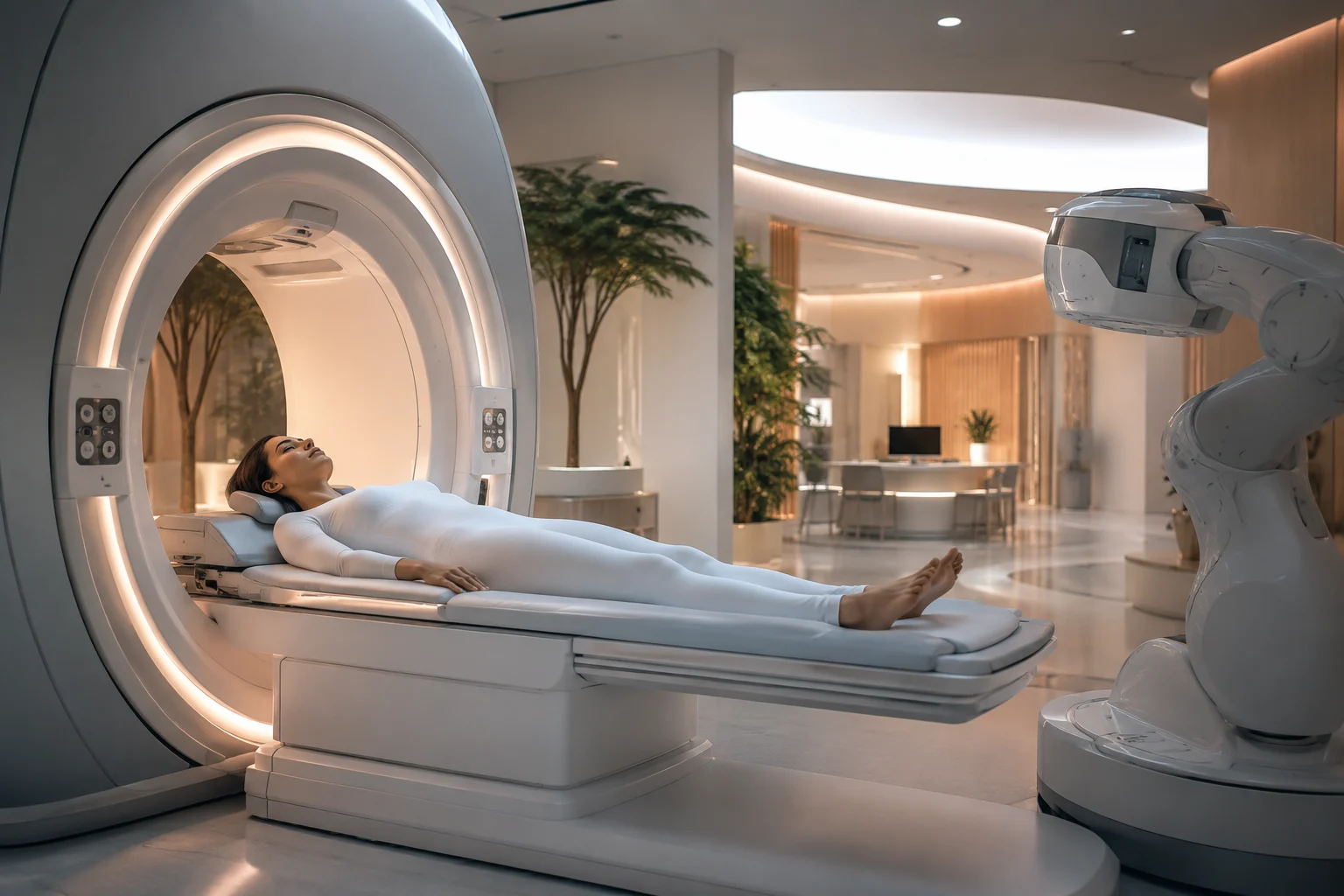
Neko Health funding has turned one of Europe’s most watched healthtech startups into a global growth story with serious U.S. ambitions. The company, co-founded by Spotify founder Daniel Ek and entrepreneur Hjalmar Nilsonne, has raised $700 million to push its preventive healthcare model into America, starting with clinics in New York and other major cities. That number is not just big because it sounds impressive; it signals how hard investors are now leaning into the idea that healthcare should move earlier, faster, and more data-driven. For years, the medical system has largely revolved around reacting once people already feel sick, but Neko Health is selling a different kind of promise: scan, detect, explain, and intervene before problems become expensive or life-changing. For readers following Neko Health funding as a business trend, this moment feels like a clean snapshot of where startup capital, AI infrastructure, consumer health, and premium wellness culture are all colliding.
The story lands at a moment when preventive health is moving from niche luxury into mainstream conversation. People are wearing smart rings, tracking sleep, comparing blood panels, and treating health data like a dashboard they can refresh. Neko Health is trying to take that behavior out of fragmented apps and into a clinical experience that feels smoother, calmer, and more complete. Its full-body scan model combines imaging, sensors, blood testing, and doctor consultation into a single visit designed to give users a clearer view of their bodies. The result is a startup that does not look like a traditional hospital operator, does not feel like a typical wellness brand, and does not pitch itself as another random AI tool chasing hype.
Why Neko Health Funding Matters Now
The new Neko Health funding round matters because it arrives when investors are becoming more selective, especially after years of inflated startup valuations and uneven tech exits. A $700 million raise in this climate tells the market that preventive healthcare is no longer being treated like a soft lifestyle category. It is being viewed as a platform opportunity, with hardware, software, clinical operations, consumer branding, and data infrastructure all layered into one business. That combination is difficult to build, but it can also create strong defensibility if the company executes well. In growth terms, Neko Health is not just selling scans; it is trying to build a repeatable preventive care operating system that can scale city by city.
The company’s valuation has reportedly climbed close to $7 billion, which puts it in rare territory for a healthtech startup that is still expanding its physical footprint. That valuation reflects more than current clinic revenue, because investors are clearly betting on future behavior change. If people begin treating annual scans the way they treat dental checkups, gym memberships, or routine bloodwork, the market could become much bigger than today’s early adopter crowd. The challenge is that preventive health sounds simple in marketing but becomes complicated in real life, especially when medical regulation, clinical accuracy, insurance expectations, and patient anxiety enter the picture. Neko Health now has enough capital to move aggressively, but it also has a bigger responsibility to prove that the experience is not just sleek, but genuinely useful.
The Startup Built Around Early Detection
Neko Health’s core product is a preventive body scan designed to identify possible health risks before they become obvious symptoms. The experience has been described as fast, tech-heavy, and surprisingly consumer-friendly compared with the usual friction of healthcare visits. Instead of asking people to wait weeks for scattered appointments, the model brings multiple checks into a single guided process. Skin imaging, cardiovascular risk indicators, blood markers, and metabolic signals are part of the broader promise around early detection. For a generation used to instant banking, same-day delivery, and real-time fitness data, that kind of healthcare experience feels more aligned with modern expectations.
That consumer-friendly layer is important because most people do not avoid preventive care because they hate health. They avoid it because the system feels slow, confusing, expensive, and emotionally exhausting. Neko Health is trying to repackage prevention as something that feels clear and worth repeating, not something people postpone until a doctor insists. The company’s clinics are also part of the product, because the design of the visit affects trust, comfort, and perceived value. In a market where healthcare brands often struggle to feel human, the ability to make diagnostics feel approachable may become one of Neko Health’s strongest growth advantages.
From Sweden to the U.S. Healthcare Arena
The U.S. expansion is the real pressure test. Sweden and the United Kingdom gave Neko Health a strong launchpad, but America is a different beast with higher healthcare spending, sharper competition, more regulatory complexity, and a deeply fragmented patient experience. New York is a logical starting point because it has dense urban demand, high-income early adopters, employer wellness buyers, and a culture that quickly turns health trends into status signals. At the same time, success in New York does not automatically translate into national scale. The company will need to prove that its model can operate efficiently in one of the world’s most expensive healthcare markets without becoming only a boutique service for the wealthy.
That balance will define the next chapter of Neko Health’s growth. Preventive scans can easily become positioned as luxury longevity products, especially when celebrity investors and premium clinic design are part of the public story. But the bigger business opportunity depends on moving beyond wealthy biohackers and health-obsessed professionals. If Neko Health can lower operational costs, build trust with clinicians, and eventually connect with employers or insurers, it could become part of a broader preventive care ecosystem. If it stays too premium, the brand may still grow, but its impact and addressable market could be narrower than its valuation suggests.
AI, Sensors, and the New Healthtech Stack
The rise of Neko Health also reflects a bigger shift in Technology Trends: the most exciting startups are no longer purely digital. They are blending physical infrastructure with AI systems, custom hardware, data pipelines, and human service layers. This is harder than launching an app, but it can create a deeper moat when the experience works. Neko Health needs clinics, scanners, clinicians, patient flows, regulatory approvals, and data interpretation tools to all function together without making the customer feel like they are inside a machine. That is why the company sits at an interesting intersection between Startup scaling and real-world healthcare execution.
AI is not the whole product, but it is likely to be one of the engines behind the company’s long-term strategy. The more scans the company performs, the more structured health data it can analyze, refine, and use to support clinical decision-making. That does not mean AI replaces doctors, and it should not be framed that way. The more realistic vision is a workflow where machines help spot patterns, organize risk signals, and make doctors more efficient during consultations. If Neko Health can keep the human layer strong while making the technology quietly powerful, it could avoid the cold, robotic feeling that often hurts digital health adoption.
The Growth Strategy Behind the $700 Million Raise
The growth strategy looks simple from the outside: raise capital, open clinics, increase scan capacity, and expand into high-demand markets. But underneath that simple roadmap is a much more complex operating challenge. Every new clinic needs real estate, trained staff, medical compliance, equipment, patient acquisition, and a consistent customer experience. Scaling a healthtech clinic network is not like scaling a SaaS dashboard where new users can join with almost no marginal friction. Neko Health has to grow like a tech company while operating with the discipline of a healthcare provider.
That is where the large funding round becomes strategically important. Capital gives the company room to invest in clinics before revenue fully catches up, expand research and development, and build operational systems that can support repeatable launches. It also gives Neko Health the ability to compete for talent across medicine, engineering, product design, and regulatory leadership. The company is entering a category where trust is earned slowly and lost quickly, so every expansion decision needs to feel controlled rather than rushed. The smartest version of this growth story is not just opening as many clinics as possible, but learning how to make each clinic more efficient, more accurate, and more trusted over time.
Why Investors Are Chasing Preventive Healthcare
Investors are drawn to preventive healthcare because the current system is painfully expensive and often late to act. Chronic diseases, cardiovascular conditions, metabolic issues, and cancer risks can generate enormous costs once they progress. A company that helps people identify risks earlier could have value for individuals, employers, insurers, and healthcare systems. That potential is why the category attracts both venture capital and high-profile names from tech, sports, and entertainment. The logic is clear: if people already spend heavily on fitness, supplements, wearables, and private care, a more complete preventive scan could become a natural next step.
Still, investor excitement does not guarantee medical impact. Preventive screening can be powerful, but it can also create false positives, unnecessary anxiety, and follow-up costs when not managed carefully. This is one of the biggest questions surrounding full-body scan startups in general. The best companies in the space will need to prove that they are improving outcomes, not simply generating more data and more concern. Neko Health’s future credibility will depend on how well it communicates risk, how responsibly it handles findings, and how tightly it connects scans with actionable medical guidance.
The Celebrity Investor Effect
Neko Health’s funding story also comes with a wave of recognizable investor names, which naturally makes headlines louder. Celebrity and billionaire participation can help a startup break through public noise, especially in a category where consumer trust and brand awareness matter. But famous backers can be a double-edged sword in healthcare. They create visibility, but they can also make a serious medical product feel like a trend or luxury flex if the brand is not careful. Neko Health has to make sure the conversation stays focused on preventive care, clinical quality, and long-term access rather than just star-powered validation.
For growth marketers and founders, this part of the story is a useful lesson in positioning. High-profile investors can open doors, but they are not a substitute for product-market fit. In healthcare, the product has to work in a deeply personal way because people are trusting it with information about their bodies. A beautiful clinic and famous backers may get someone interested, but the follow-up experience determines whether they come back next year. If Neko Health can turn initial curiosity into recurring trust, the celebrity layer becomes useful amplification rather than the center of the brand.
What This Means for the U.S. Wellness Market
The U.S. wellness market is already packed with brands promising optimization, longevity, and personal control. What makes Neko Health different is that it sits closer to medical diagnostics than lifestyle coaching. That distinction matters because American consumers are increasingly skeptical of vague wellness claims but still hungry for clear health information. A scan-based model gives the company a more concrete product than many wellness brands can offer. At the same time, it must avoid overselling certainty, because health data is rarely as simple as a green or red dashboard.
If Neko Health succeeds, it could pressure traditional healthcare providers to rethink the patient experience. People may start asking why routine preventive checks need to feel so scattered and inefficient. Clinics, hospitals, and employer health programs could respond by modernizing their own screening experiences or partnering with companies that already have strong consumer interfaces. That competitive pressure could be healthy if it improves access and clarity. The risk is that the market splits into two tracks, where wealthy consumers get beautifully designed preventive care while everyone else remains stuck in the same slow system.
Practical Insights for Founders and Growth Teams
There are several practical lessons in this story for founders watching the Neko Health funding moment closely. First, the strongest startup narratives often come from solving an old problem with a new operating model, not just adding AI to a pitch deck. Healthcare prevention has existed forever, but Neko Health is trying to redesign how it is packaged, delivered, and repeated. Second, trust-heavy industries reward companies that blend design with credibility. A smooth user experience helps people start, but expert guidance and responsible communication help them stay.
Third, physical-world startups need different growth math than pure software companies. Opening clinics is slower and more expensive than launching new app markets, but it can also build a stronger brand presence and deeper customer relationship. Fourth, category timing matters. Neko Health is rising while consumers are already familiar with wearables, AI health tools, longevity podcasts, and direct-to-consumer testing. The company is not forcing the market to care about health data from zero; it is giving an already curious audience a more complete experience.
The Hard Questions Ahead
The next phase will bring harder questions than the funding announcement itself. Can Neko Health maintain quality as it scales across new cities? Can it make preventive scans feel accessible without becoming medically shallow? Can it prove that its model leads to better decisions, not just more information? These questions matter because healthcare growth is not only measured in booked appointments or waitlists. It is measured in trust, outcomes, repeat usage, and the ability to fit responsibly into the wider medical system.
Pricing will also shape the company’s future. If the scan remains within reach for upper-middle-class consumers, the brand can build a broad premium audience. If U.S. pricing climbs too high, it may become another luxury health product admired by many but used by few. Employer partnerships could help solve that gap, but employers will want evidence that the service improves health engagement or reduces downstream costs. Insurers may be even more cautious, especially if scans create expensive follow-up pathways without clear outcome benefits.
Conclusion: Neko Health Funding Signals a Bigger Shift
Neko Health funding is bigger than one startup’s expansion plan because it captures a broader shift in how people, investors, and founders are thinking about healthcare. The old model asks people to wait until something feels wrong, then navigate a system that often feels fragmented and slow. Neko Health is betting that the next generation of healthcare consumers will want earlier insight, cleaner experiences, and a more active role in managing risk. That bet is ambitious, expensive, and difficult to execute, but it fits the direction of modern health behavior. If the company can combine clinical discipline with startup speed, its U.S. expansion could become one of the most important preventive care stories to watch in the years ahead.