
China Economic Stimulus Faces Its Big Test
 Vortixel
18 minutes read
Vortixel
18 minutes read
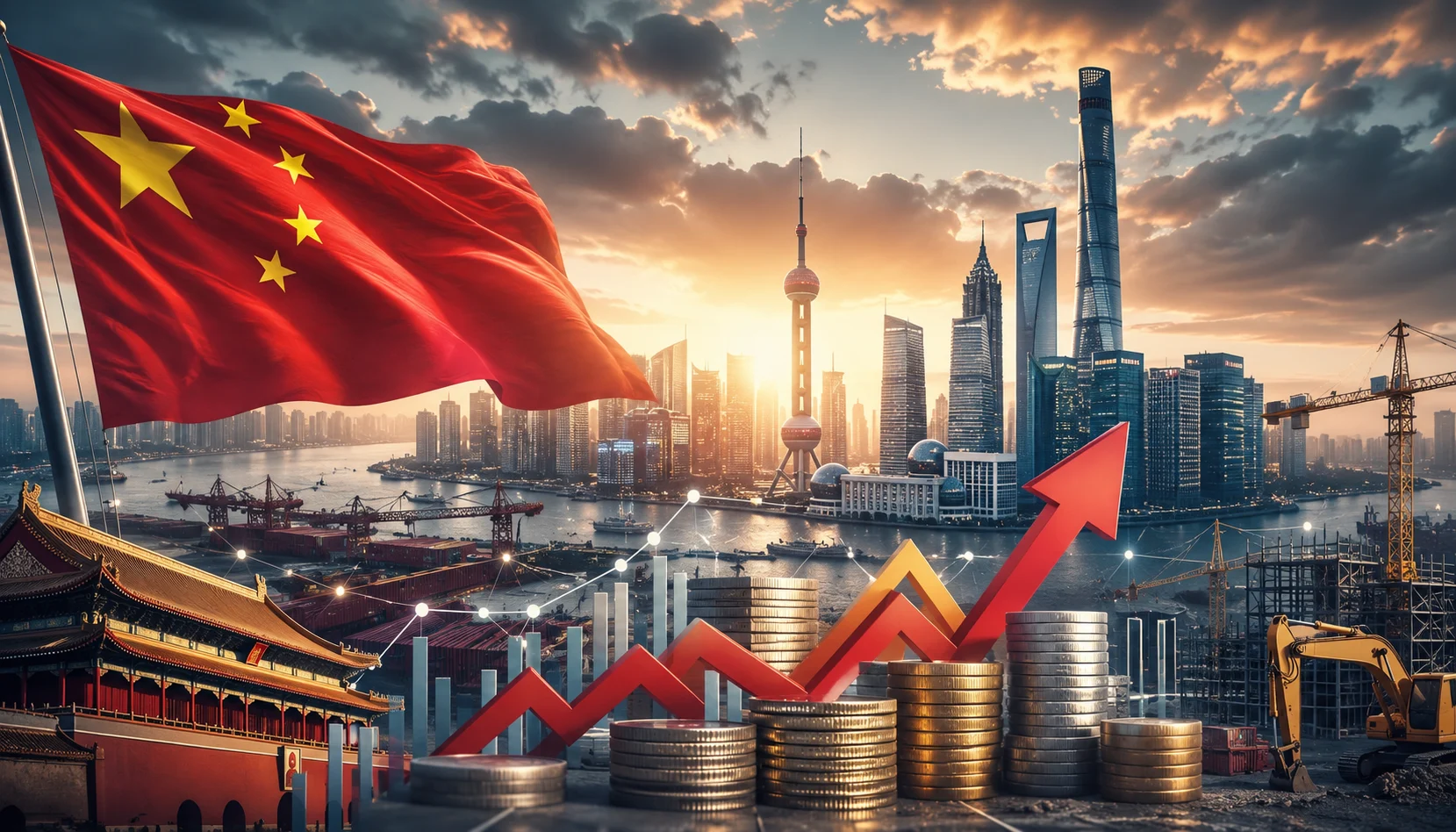
China economic stimulus is back at the center of the global growth conversation because the world’s second-largest economy is no longer moving with the same effortless momentum investors once took for granted. After years of relying on exports, infrastructure, property activity, and manufacturing power, China is facing a slower, more complicated chapter where households are cautious, property confidence remains fragile, and businesses are watching policy signals like weather alerts. The mood is not a full-blown panic, but it is definitely not calm either, because every slowdown in China now travels through global supply chains, commodity markets, startup funding, luxury demand, tech manufacturing, and investor psychology. For Growth Vortixel readers, this is not just another macro headline from far away; it is a live case study in how a massive economy tries to defend growth when the old playbook starts losing its punch. That is why China economic stimulus matters right now, not only for economists, but also for founders, marketers, operators, and anyone trying to understand where the next wave of global business pressure may come from.
The story begins with a slowdown that feels unusually visible because it is showing up across several layers of the economy at once. China’s second-quarter growth has cooled, retail sales are soft, property investment remains under pressure, and consumer confidence is still carrying the emotional bruises of a long real estate downturn. At the same time, exports and high-tech manufacturing continue to do some of the heavy lifting, which makes the economy look strong from one angle and uneven from another. This split creates a strange tension: China can still produce, ship, build, and innovate at huge scale, but its households are not spending with the kind of confidence policymakers want to see. When that gap grows too wide, stimulus stops being just a policy option and starts becoming a credibility test.
Why China Economic Stimulus Is Back in Focus
China economic stimulus is gaining attention because the slowdown is not only about one weak sector or one bad quarter. The property market has been a major drag for years, but the latest pressure is broader, touching consumer demand, private investment, local government finances, and expectations for future income. Households that once treated real estate as a reliable wealth engine are now more careful, and that caution can easily spill into spending decisions on cars, appliances, travel, education, and lifestyle upgrades. Businesses also notice this mood shift, because weaker domestic demand can make companies slower to hire, expand, advertise, or invest in new projects. In that environment, Beijing’s next stimulus steps will be judged not only by their size, but by whether they can change behavior on the ground.
The big challenge is that China has already used stimulus many times before, so expectations are more complicated now. In earlier cycles, infrastructure spending, credit support, property easing, and local government investment could quickly create visible momentum. Today, the economy is more mature, debt levels are more sensitive, and policymakers are trying to avoid repeating the kind of excess that inflated the property bubble in the first place. That means China’s leaders are under pressure to do enough to support growth, but not so much that they create fresh financial risks. This is the delicate line that makes the current stimulus debate feel more strategic than reactive.
For global markets, the stakes are high because China’s economy is still deeply connected to demand for energy, metals, industrial goods, consumer brands, and technology components. A stronger Chinese recovery can lift sentiment across Asia, support commodity exporters, and improve the outlook for multinational companies that depend on Chinese consumers. A weaker or disappointing policy response, however, can pressure everything from copper prices to luxury earnings and emerging-market confidence. That is why investors watch Chinese policy meetings with the same intensity they reserve for central bank decisions in the United States or Europe. When China hints at more countercyclical support, the market hears a possible turning point, even if the details are still cloudy.
The Slowdown Behind the Stimulus Talk
China’s slowdown is not happening in a vacuum, and that is what makes the situation more layered. The global economy is also dealing with trade tensions, energy price uncertainty, shifting supply chains, and a technology race that is pulling investment toward artificial intelligence, semiconductors, robotics, and automation. China has been strong in many of these strategic sectors, but advanced manufacturing strength does not automatically fix weak household demand. A factory can be busy while a family still feels uncertain about buying a new apartment, upgrading a car, or spending more on services. That split between industrial resilience and consumer hesitation is one of the clearest reasons stimulus is being discussed so seriously.
The property sector remains the emotional center of the slowdown because housing has long been tied to household wealth, local government revenue, and broader confidence. When property prices soften and developers struggle, the impact is not limited to construction sites or balance sheets. Families may feel less wealthy, local governments may have less fiscal room, banks may become more cautious, and related industries can lose momentum. Furniture, appliances, building materials, interior design, landscaping, and local services all feel the aftershocks when housing activity weakens. This is why a property downturn can become a confidence downturn if it lasts long enough.
Retail sales are another key part of the story because consumption is supposed to play a bigger role in China’s next growth model. For years, analysts have argued that China needs to rebalance away from heavy dependence on exports and investment toward stronger domestic consumption. That transition is easier to describe than to execute, especially when households are worried about jobs, income stability, retirement costs, and asset values. If consumers keep saving defensively, stimulus aimed only at production may not create the broad recovery policymakers want. The real test is whether policy can make people feel confident enough to spend, not just whether it can push more credit into the system.
What Kind of Stimulus Could China Use?
China has several stimulus tools available, but each one comes with trade-offs. Fiscal policy is likely to be the main channel because it can target infrastructure, local government support, household incentives, and strategic industries more directly than broad monetary easing. The government could accelerate spending, increase special bond issuance, support consumer trade-in programs, expand subsidies, or direct more help toward struggling local governments. It could also continue easing restrictions around housing purchases, mortgage rates, or developer financing, although that path must be handled carefully because the property sector is already overbuilt in many areas. In simple terms, China has firepower, but the market wants to know where that firepower will be aimed.
Monetary policy still matters, but it may not be the star of this stimulus cycle. Interest rate cuts and reserve requirement adjustments can help liquidity, but they do not automatically create demand if businesses and households do not want to borrow. This is a familiar problem in economies where confidence is weak: cheaper money helps only when people believe the future is worth investing in. China’s central bank also has to consider currency stability, bank margins, capital flows, and the broader financial system. That makes fiscal stimulus, targeted credit, and confidence-building measures more important than a simple rate-cut story.
Consumer-focused stimulus would probably get the most attention because household demand is the missing piece. Trade-in subsidies for appliances, electric vehicles, electronics, and home upgrades can create short-term spending bursts, especially if they are easy to understand and widely accessible. Direct support for families, services, or lower-income households could have a stronger consumption effect, but China has traditionally preferred investment-led tools over broad cash-style transfers. Still, the current cycle may require more creativity because infrastructure alone cannot solve a household confidence problem. If Beijing wants a durable rebound, it needs stimulus that reaches people’s daily decisions, not just construction cranes and industrial parks.
The Tech Growth Angle No One Should Miss
One reason China’s slowdown feels different from older slowdowns is that the country is simultaneously pushing hard into high-tech growth. Artificial intelligence, electric vehicles, batteries, advanced manufacturing, robotics, semiconductors, and green energy are still central to China’s growth strategy. These sectors can create productivity gains, export power, and long-term competitiveness, but they do not always create broad employment or household income growth quickly. A city can attract an advanced chip facility or robotics hub while small businesses nearby still struggle with weak consumer traffic. This is the tension between future-facing industrial policy and present-day household pressure.
For startups and growth teams, this creates an important lesson: innovation alone does not guarantee demand. A market can have world-class production capacity and still face weak consumer conversion if confidence is low. China’s tech ecosystem is powerful, but the domestic economy needs more than supply-side excellence to create balanced growth. Companies selling software, consumer goods, mobility services, fintech tools, education products, or lifestyle experiences still need households and businesses willing to spend. That makes the stimulus conversation highly relevant to business strategy, because it shows how macro confidence can shape even the most modern growth channels.
The artificial intelligence boom also adds a new layer to China’s policy choices. AI infrastructure requires chips, energy, data centers, cloud platforms, research talent, and massive capital spending. That can support investment growth, but it can also widen the gap between high-productivity sectors and traditional employment-heavy industries. If stimulus flows mainly into advanced manufacturing and AI infrastructure, it may strengthen China’s long-term competitive position without immediately repairing consumer sentiment. The smarter move may be a blended approach that supports frontier technology while also stabilizing household income expectations and small business activity.
Global Markets Are Reading the Signals Carefully
Investors are watching China’s stimulus signals because the country can still move global expectations quickly. When traders believe Beijing is preparing meaningful support, Chinese equities can rally, industrial metals can strengthen, and Asian currencies can get a sentiment boost. When policy sounds vague or underwhelming, the opposite can happen, especially if growth data keeps disappointing. This is why official language around “countercyclical adjustments” matters more than it may sound at first. Markets are not only reacting to what China does today; they are pricing what China might be willing to do if conditions worsen.
The most important market question is whether stimulus will be big enough and targeted enough to shift expectations. Small measures can stabilize nerves, but they may not convince households or businesses that a genuine turning point has arrived. Large measures can create stronger momentum, but they may raise concerns about debt, wasteful investment, or delayed structural reform. China’s leadership has to manage that balance while also protecting its long-term goals around technological self-reliance, financial stability, and social confidence. That makes the policy path more like a chessboard than a simple rescue button.
International companies are also watching because China remains a major revenue market even when growth slows. Luxury brands, automakers, chip suppliers, industrial equipment firms, travel companies, and consumer platforms all have exposure to Chinese demand. If stimulus revives spending, those businesses may see better performance in the second half of the year and beyond. If the recovery remains uneven, global companies may need to reset expectations and look for growth elsewhere. This is why China’s domestic policy decisions can end up shaping earnings calls in New York, Seoul, Tokyo, Paris, and Frankfurt.
Why Confidence Is the Real Currency
The deeper issue behind China’s stimulus debate is confidence, and confidence is harder to rebuild than infrastructure. When people believe their income will rise, their assets will hold value, and their job prospects are stable, they spend with more freedom. When they feel uncertain, they delay purchases, save more, and become skeptical of short-term incentives. This is why a discount voucher or lower mortgage rate may not be enough if households still worry about the future. Stimulus works best when it changes the story people tell themselves about what comes next.
Business confidence follows a similar logic. Companies invest when they believe demand will be there, policy will remain predictable, and margins can improve. If executives see weak domestic consumption, property stress, and uncertain global trade conditions, they may choose caution even when credit is available. That caution can slow hiring, reduce marketing budgets, delay expansion, and weaken the very demand policymakers want to restore. This is why stimulus must speak to both balance sheets and psychology. Money matters, but belief turns money into action.
China’s leadership understands this, which is why policy messaging has become a major part of the growth strategy. Signals about support for private companies, consumption, employment, technology, and local governments can influence behavior before every measure is fully implemented. However, messaging has limits if households and businesses do not see concrete improvements. The next phase will likely depend on whether policy announcements translate into visible changes in income, spending, investment, and property stabilization. Without that translation, stimulus risks becoming noise instead of momentum.
The Property Problem Still Shapes Everything
No discussion of China’s slowdown can avoid property because real estate has been one of the biggest engines of growth and one of the biggest sources of stress. For years, housing development supported construction jobs, local government revenue, household wealth, and demand for raw materials. When that engine slows, the effects spread widely and can last longer than a typical cyclical downturn. Developers face pressure, unfinished projects hurt confidence, and families become hesitant to treat housing as a guaranteed investment. This is why property stabilization remains one of the most important pieces of any serious stimulus package.
The hard part is that China does not necessarily want to restart the old property boom. A return to aggressive speculation could create short-term growth but make long-term financial risks worse. Policymakers appear more interested in stabilizing the sector, completing homes, protecting buyers, and preventing a deeper confidence shock. That is a very different goal from reigniting a nationwide housing frenzy. In growth terms, it means China may need to find new demand engines while carefully managing the decline of an old one.
This transition has global consequences because China’s property cycle has historically influenced demand for steel, copper, cement, energy, machinery, and household goods. A weaker property sector can pressure commodity exporters and industrial companies that benefited from China’s construction boom. At the same time, a shift toward technology, green energy, and advanced manufacturing creates new winners in batteries, robotics, semiconductors, and smart infrastructure. The growth map is not disappearing; it is being redrawn. Investors and businesses that understand this shift can avoid mistaking slowdown for total stagnation.
What This Means for Founders and Growth Teams
For founders, China’s stimulus debate is a reminder that macro conditions can rewrite growth assumptions quickly. A company may have a strong product, clean funnel, and sharp brand position, but if customers become cautious, conversion rates can fall and sales cycles can stretch. This is especially true for businesses exposed to discretionary spending, enterprise expansion budgets, imported components, or cross-border demand. Growth teams should pay attention to China not because every startup sells there, but because China influences global prices, supply chains, investor sentiment, and category momentum. In a connected economy, a slowdown in one giant market can quietly change the math in many smaller ones.
There is also a lesson in how governments and companies both manage trust. China’s policymakers are trying to persuade households and businesses that support is coming and that the economy can stabilize. Brands face a similar challenge when demand softens: they must prove value, reduce perceived risk, and make customers feel safe taking action. During uncertain periods, messaging that worked in a boom can suddenly feel too aggressive or out of touch. The best growth strategies become more empathetic, more practical, and more focused on confidence-building.
Businesses should also watch how Chinese stimulus affects input costs and market demand. If infrastructure and manufacturing support increase, demand for commodities and industrial components may rise. If consumer subsidies expand, categories like electric vehicles, appliances, travel, digital services, and lifestyle goods may see stronger activity. If property support becomes more meaningful, adjacent sectors could benefit from stabilization rather than explosive growth. The practical move is not to make one dramatic bet, but to build flexible scenarios around different stimulus outcomes.
The Bigger Trend: Growth Is Getting More Managed
China’s current moment reflects a larger global trend: growth is becoming more managed, more political, and more strategic. Governments are no longer simply stepping back and letting markets run the show, especially in sectors tied to technology, energy, national security, and social stability. China’s stimulus choices sit inside this bigger shift, where economic policy is also industrial policy, social policy, and geopolitical strategy. Supporting growth is not just about boosting GDP; it is about choosing which industries rise, which risks get contained, and which social pressures are reduced. That makes the next stimulus package important beyond the headline number.
This managed-growth era creates opportunities and risks for businesses. On one side, public investment can create huge new markets in AI, green technology, robotics, digital infrastructure, and advanced manufacturing. On the other side, companies must navigate policy shifts, local priorities, regulatory changes, and changing consumer expectations. The winners are often businesses that can read policy direction early and adapt their positioning before competitors do. In China’s case, that means watching not only how much stimulus arrives, but which sectors receive the clearest support. The direction of policy can be just as valuable as the amount of money behind it.
For digital marketers and growth strategists, this is also a reminder that demand is never purely organic. Demand is shaped by income, credit, confidence, policy, culture, and timing. A campaign launched into a confident market behaves differently from the same campaign launched into a cautious one. China’s slowdown shows how quickly a huge consumer base can become more selective when wealth expectations change. That is why macro awareness is becoming a real growth skill, not just something for economists and investors.
Possible Paths for China’s Next Move
The first possible path is moderate stimulus, where China adds support but avoids anything that looks like a massive rescue package. This could include targeted fiscal spending, consumer incentives, local government assistance, property stabilization steps, and continued support for strategic industries. The goal would be to keep growth within an acceptable range while avoiding new debt risks. This path is cautious, controlled, and consistent with Beijing’s preference for stability. The risk is that markets and households may see it as too small to change the mood.
The second path is a stronger demand-side push, where policymakers focus more directly on households and consumption. This could involve larger subsidies, broader trade-in programs, support for services, measures to improve job confidence, or policies that reduce household financial stress. Such a move could be more effective in lifting retail activity because it targets the weak spot more directly. However, it would also represent a shift from China’s traditional comfort zone of investment-led stimulus. The question is whether policymakers are ready to lean harder into the consumer side of the economy.
The third path is a technology-led stimulus strategy that doubles down on China’s long-term industrial ambitions. In this scenario, support flows heavily toward AI, chips, robotics, green energy, advanced manufacturing, and digital infrastructure. This could strengthen productivity and global competitiveness, but it may not immediately solve household caution or property stress. It would be a future-growth strategy more than a quick consumer-recovery strategy. The most likely outcome may be a blend of all three paths, with policymakers trying to stabilize today while still investing in tomorrow.
Risks That Could Complicate the Recovery
Even with stimulus, China faces several risks that could make the recovery uneven. The property sector may take longer to stabilize than expected, especially if homebuyer confidence remains weak. Local governments may face budget pressure that limits their ability to support growth without additional help. Global trade tensions could pressure exports, particularly if major economies become more aggressive about tariffs, industrial policy, or supply chain security. Consumer confidence could also remain stubbornly low if households do not see clear improvements in jobs and income.
There is also the risk of stimulus fatigue. If people have seen repeated support measures without a lasting improvement in daily life, they may become less responsive to new announcements. Markets can also become harder to impress when investors expect policy support but doubt its effectiveness. This creates a higher bar for Beijing, because symbolic moves may not be enough. A successful package needs to feel credible, targeted, and connected to the real pressure points. Otherwise, it may create a short market bounce without changing the economic trend.
Another complication is the global perception of China’s growth model. Some investors still see China as a long-term powerhouse with unmatched manufacturing depth and policy capacity. Others worry that demographics, debt, property weakness, and geopolitical tension will keep growth slower than in previous decades. Stimulus can influence this debate, but it cannot erase structural questions overnight. The world is watching to see whether China can shift from an investment-heavy model to a more balanced, consumption-supported, innovation-led economy.
Practical Insights for Business Readers
The first practical insight is to watch consumer confidence more closely than headline GDP. Growth numbers matter, but consumer behavior reveals whether stimulus is actually reaching the economy’s emotional core. If retail sales, services activity, travel demand, and big-ticket purchases improve, that would suggest households are starting to respond. If industrial output remains strong while consumer indicators stay weak, the recovery may remain unbalanced. For businesses, that distinction can determine whether China becomes a demand opportunity or mainly a supply-side force.
The second insight is to track which sectors receive policy support. Stimulus is not neutral; it creates momentum in specific areas and leaves others waiting. If support favors AI infrastructure, advanced manufacturing, and green technology, companies connected to those ecosystems may benefit first. If support shifts toward households, consumer brands and service providers may see a better environment. If property stabilization becomes the focus, construction-adjacent industries may stop falling before they start growing again.
The third insight is to prepare for volatility rather than a straight-line rebound. China’s policy cycle can move markets quickly, but economic confidence often recovers slowly. Businesses should avoid assuming that one stimulus announcement will instantly restore demand across every category. A smarter approach is to build flexible plans for stronger, weaker, and uneven recovery scenarios. Growth teams that can adjust messaging, pricing, inventory, and channel strategy quickly will be better positioned than those waiting for perfect clarity.
Conclusion: China Economic Stimulus Is a Trust Test
China economic stimulus is not just about injecting money into a slowing economy; it is about rebuilding trust in a growth story that has become more complicated. China still has major strengths, including industrial scale, export capacity, technology ambition, policy control, and deep infrastructure. But the current slowdown shows that even a powerful economy can struggle when households become cautious, property confidence weakens, and private demand loses momentum. The next phase will depend on whether Beijing can design stimulus that feels real to consumers, credible to businesses, and convincing to global markets. For Growth Vortixel readers, the lesson is clear: in the modern economy, growth is not only built through innovation and capital, but through confidence, timing, and the belief that the next move is worth making.