
AMD AI Compute Enters a New Growth Cycle
 Vortixel
16 minutes read
Vortixel
16 minutes read
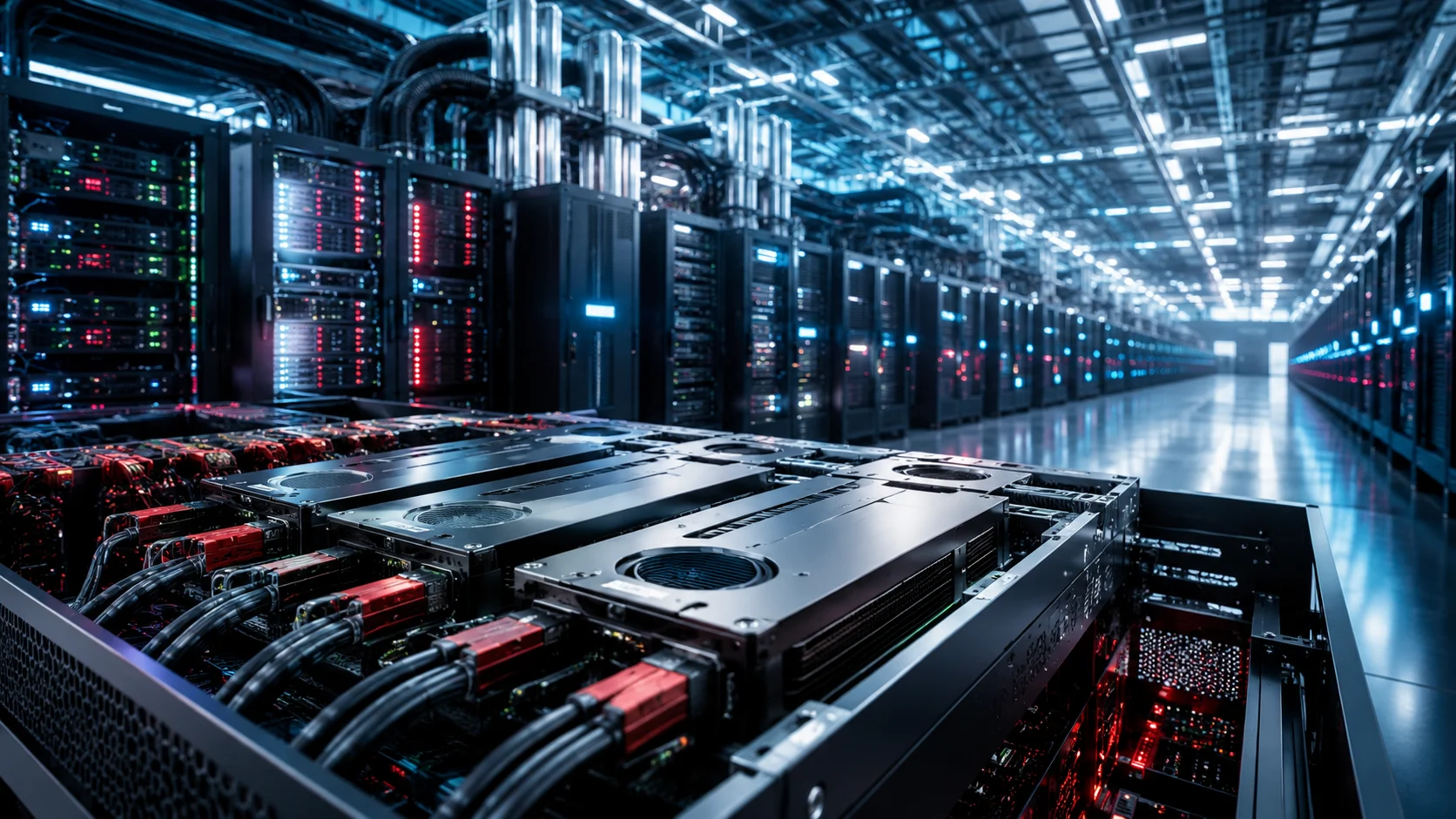
The new AMD AI compute partnership with Core Scientific lands at a moment when artificial intelligence is no longer just a software story. For the last two years, most of the hype has lived around models, chatbots, agents, copilots, and the companies racing to make them feel smarter every quarter. But behind every clean interface and every instant answer is a brutal infrastructure question: where does all that compute actually run? That is why AMD securing access to large-scale data center capacity through Core Scientific feels bigger than a routine vendor deal. It signals that the AI race is shifting from who has the flashiest demo to who can lock in power, space, hardware, and deployment speed before everyone else does.
For Growth Vortixel readers, this is the kind of move that matters because it connects the dots between chips, cloud demand, infrastructure bottlenecks, startup economics, and enterprise AI adoption. The story is not only that AMD wants more room to deploy GPUs. The deeper story is that AI compute is becoming a growth market with its own supply chain, financing logic, and competitive map. Core Scientific, once seen mainly through the lens of crypto mining infrastructure, now sits inside a much more valuable narrative: repurposed and expanded high-density power capacity for AI workloads. In plain English, the picks-and-shovels era of AI is getting more expensive, more physical, and way more strategic.
Why AMD AI Compute Suddenly Feels Different
AMD has been working for years to become more than the alternative name people mention after Nvidia. The company already has a strong position in CPUs, servers, gaming, and custom silicon, but AI has changed the scoreboard. In this new market, chips are only one part of the pitch. Customers want full-stack confidence: GPUs, CPUs, networking compatibility, software maturity, available rack capacity, and a deployment path that does not vanish into a twelve-month waiting list. That is why an AMD AI compute deal tied to data center capacity can feel like a step toward platform power rather than simple component sales.
The partnership with Core Scientific matters because it gives AMD a way to address one of the most painful constraints in the AI economy: physical deployment. Every enterprise wants to talk about agentic workflows, generative search, automated analytics, and AI-native operations, but none of that scales without serious compute behind it. Developers can prototype on rented cloud credits, yet production AI quickly becomes a different game. Inference traffic grows, model sizes change, latency demands tighten, and costs start to pressure margins. When AMD secures capacity, it is not just buying space; it is strengthening its ability to tell customers, “We can actually get you running.”
This is also a response to how buyers are changing. Early AI buyers were often research teams, frontier labs, or venture-backed startups chasing breakthrough performance. The next wave is broader and more operational. Banks want controlled AI systems for risk and customer service. Retailers want personalization and forecasting. Healthcare groups want analysis tools. Software companies want AI features embedded across their products. These customers do not only ask whether a chip is fast; they ask whether the entire deployment can be reliable, auditable, cost-efficient, and available when the business needs it.
Core Scientific’s Pivot From Crypto to AI Infrastructure
Core Scientific’s role in this story is just as important as AMD’s. The company built its name around high-power computing facilities, with roots in the crypto mining boom. That background used to carry a very specific market identity: volatile coin prices, energy-heavy operations, and a business model tied closely to digital asset cycles. But AI has changed the value of that same infrastructure. Facilities that can support dense power loads, cooling demands, and large-scale compute clusters are suddenly attractive to companies trying to feed the AI boom.
This is the infrastructure remix happening across the market. Some assets that looked overexposed to crypto are being re-evaluated as potential AI campuses. Data center operators with power access and technical experience are no longer just landlords. They are becoming strategic partners for chipmakers, cloud providers, and enterprise AI platforms. For Core Scientific, working with AMD gives the company a stronger bridge into a market that investors may view as more durable than crypto mining alone. It turns raw capacity into a story about AI infrastructure, enterprise demand, and long-cycle compute growth.
The reason this pivot matters is that AI workloads are hungry in a different way. Crypto mining rewards raw power efficiency and continuous operation, but AI compute needs more complex orchestration. Training clusters, inference systems, networking, memory, cooling, uptime, and customer deployment requirements all create a higher bar. That does not mean every crypto facility can become an AI data center overnight. It does mean companies with the right power footprint and technical operating base now have a second act if they can execute well. Core Scientific’s partnership with AMD sits directly inside that second-act narrative.
The AI Compute Shortage Is Becoming a Business Model
The most interesting part of the AI boom is that scarcity keeps creating new businesses. First, GPUs were scarce. Then cloud access became scarce. Then high-quality AI engineers became scarce. Now power, cooling, land, and interconnection capacity are becoming scarcity points too. The market is learning that AI compute is not a single product; it is a stack of constraints that has to be solved together. When one layer opens up, another layer becomes the bottleneck.
That is why the AMD-Core Scientific deal feels like a practical answer to a very real market problem. AMD cannot win more AI workloads simply by announcing faster chips. It needs customers to believe there will be enough deployed infrastructure around those chips. Core Scientific cannot simply say it owns power-rich facilities. It needs high-value partners that can pull demand into those facilities. Together, they are aiming at the same pain point: customers want AI capacity that is not theoretical, not permanently waitlisted, and not locked inside one dominant ecosystem.
For startups, this matters because compute availability shapes product strategy. A young AI company can have a great model, strong demand, and a clean interface, but still get trapped by rising inference costs. If every user action triggers an expensive model call, growth can become dangerous instead of exciting. More available AMD AI compute could eventually help expand the menu of infrastructure options for founders. Even if the biggest capacity blocks go first to major enterprises, broader supply can reduce pressure across the ecosystem over time.
Why AMD Needs More Than Great Chips
AMD’s AI challenge has never been only about engineering. The company has strong hardware credibility, and its Instinct GPUs have become part of the conversation around high-performance AI. But the AI infrastructure market rewards complete confidence. Customers want to know that hardware, software, support, optimization, and availability are moving together. Nvidia’s biggest advantage has not been chips alone; it has been the ecosystem around those chips. AMD’s path forward depends on making its own ecosystem feel easier, deeper, and less risky for serious buyers.
That is where data center capacity becomes a strategic weapon. A customer choosing AI infrastructure is not making a casual purchase. It may be committing product roadmaps, internal tools, customer-facing AI features, and future margins to a particular stack. If AMD can package compute availability with its hardware roadmap, the company becomes easier to choose. Buyers do not have to imagine a future deployment; they can see a more concrete route from decision to capacity. That shift can help AMD compete not only on performance, but also on go-to-market credibility.
This also fits a wider trend in tech: the biggest AI players are becoming infrastructure architects. Chipmakers are thinking like cloud builders. Cloud providers are thinking like energy buyers. Data center companies are thinking like platform partners. Startups are thinking about margin discipline earlier than they used to. The clean separation between software, hardware, cloud, and real estate is fading because AI has forced all of them into the same room. In that room, the companies that coordinate fastest may have an edge.
A New Opening for Open AI Infrastructure
One of the strongest angles for AMD is the market’s appetite for more choice. AI teams do not want to be trapped with limited supply, rising prices, or a single hardware path. Enterprises especially like optionality because infrastructure lock-in can become expensive once AI moves from experiment to daily workflow. A more credible AMD-backed compute network gives buyers another path to scale. It can also push the broader market toward more competitive pricing and more flexible deployment models.
This is especially relevant for companies building around open models, private AI systems, and industry-specific inference. Not every AI workload needs the most expensive training cluster on earth. Many businesses need reliable inference, data security, predictable cost, and enough performance to support real users. If AMD can pair its hardware with accessible infrastructure, it can compete in areas where customers care about value and control as much as benchmark bragging rights. That positioning could become important as the AI market matures beyond the first wave of hype.
The open infrastructure story also connects to developer trust. Developers and AI teams want stacks that are improving fast, documented well, and supported by a growing community. AMD has been investing in software support, but perception changes slowly in technical markets. Large infrastructure partnerships help because they show commitment at scale. They suggest that AMD is not treating AI as a side quest, but as a core growth engine. That signal matters when startups, cloud platforms, and enterprise buyers are making long-term bets.
What This Means for Startups and SaaS Builders
For SaaS founders, the lesson is simple: AI infrastructure is now part of business strategy. It is no longer enough to say a product is AI-powered. Teams need to understand the cost structure behind their features, the latency expectations of their users, and the dependency risks inside their stack. A startup building with AI has to ask whether its product becomes stronger or weaker as usage increases. In the old SaaS world, more users usually meant better unit economics over time. In AI SaaS, more users can also mean a bigger compute bill if the architecture is not designed carefully.
The AMD-Core Scientific move points to a market where compute sourcing becomes a growth advantage. Larger companies will negotiate capacity directly. Mid-sized AI firms may use specialized cloud providers. Smaller startups will need to choose platforms that balance speed, cost, and flexibility. The founders who win will not necessarily be the ones using the biggest model for every task. They may be the ones who know when to use a smaller model, when to cache results, when to fine-tune, when to route workloads, and when to optimize inference before costs eat the business.
This is why Growth Vortixel readers should treat AI infrastructure strategy as part of product-market fit. If a product only works when compute is cheap, it may not be ready for scale. If a workflow depends on one provider without backup options, it may carry hidden platform risk. If a company cannot explain how AI margins improve over time, investors may start asking harder questions. The AI boom is still full of opportunity, but the easy narrative is fading. The new narrative is about execution, efficiency, and infrastructure discipline.
Enterprise AI Is Moving From Pilots to Capacity Planning
Large companies are also entering a new phase. Many enterprises spent the first wave of generative AI testing tools, running internal pilots, and letting teams experiment. That phase created excitement, but it also revealed the limits of casual adoption. Once AI becomes embedded in customer support, coding, compliance, marketing operations, sales enablement, and analytics, the infrastructure demands become predictable and serious. Enterprises stop asking, “Can we try this?” and start asking, “Can this run every day across thousands of employees?”
That shift is good for infrastructure players. It creates demand for capacity that is stable, contracted, and tied to real workflows. It also forces buyers to think about governance, data privacy, workload isolation, and regional deployment. The result is a more mature AI market where compute is not just rented in panic during launch week. It is planned like a core operational resource. AMD’s capacity-focused partnership with Core Scientific fits neatly into that evolution because enterprise customers increasingly want confidence before they scale.
There is also a branding layer here. AMD wants to be seen as a serious AI platform company, not just a challenger selling chips into a crowded market. Core Scientific wants to be seen as a future-facing compute infrastructure company, not only a business shaped by crypto cycles. Enterprise buyers want to be seen as serious AI adopters, not trend chasers. When those incentives align, deals like this can carry more weight than the headline number alone. They become signals of where the market thinks durable demand will live.
The Power Problem Behind the AI Boom
Every conversation about AI eventually comes back to power. Models can get smarter, chips can get faster, and software can get cleaner, but data centers still need electricity, cooling, grid access, and physical space. The scale of modern AI infrastructure has made energy strategy impossible to ignore. That is one reason partnerships with companies that already understand high-density compute environments are becoming more valuable. The winner is not always the company with the loudest AI announcement; sometimes it is the company with the best access to power and the patience to build around it.
This creates both opportunity and tension. On one side, AI infrastructure investment can support new digital services, enterprise productivity, scientific workloads, and startup innovation. On the other side, it raises questions about energy use, local grid pressure, sustainability, and whether every AI application deserves the compute it consumes. Businesses will have to get more honest about the value created per unit of compute. The next phase of AI growth will not only be measured in model capability. It will also be measured in efficiency, utilization, and responsible deployment.
For AMD and Core Scientific, execution will matter more than the announcement. Large capacity plans sound impressive, but building and operating AI-ready infrastructure is hard. Timelines can shift, customers can change budgets, power constraints can create delays, and hardware roadmaps can evolve quickly. The companies that manage these moving parts well can turn infrastructure into an advantage. The companies that underestimate the complexity may discover that AI compute is as unforgiving as it is lucrative.
Growth Lessons From the AMD-Core Scientific Deal
The first practical lesson is that distribution now includes infrastructure. In software, distribution usually means channels, partnerships, sales teams, content, integrations, and product-led growth loops. In AI, distribution also means having enough compute to serve demand when demand arrives. A company can win attention and still lose customers if its product becomes slow, unavailable, or too expensive at scale. That makes infrastructure planning a growth function, not just an engineering concern. The most serious AI companies will treat compute as a strategic asset from day one.
The second lesson is that vertical partnerships are coming back. The AI market is pushing companies to connect more tightly across the stack. Chipmakers need data centers. Data centers need anchor customers. Cloud providers need differentiated supply. Startups need affordable access. Enterprises need trusted deployment paths. This creates a partnership economy where growth depends on who can assemble the right ecosystem before competitors do. AMD working with Core Scientific is part of that broader pattern, and it will likely inspire more deals across the infrastructure landscape.
The third lesson is that AI companies must prepare for margin scrutiny. Investors may still love growth, but they are increasingly aware that AI revenue can be expensive to produce. A SaaS company with impressive adoption but poor inference economics may face tough questions. A cloud platform with strong demand but limited capacity may struggle to fulfill the upside. A model company with powerful technology but no efficient deployment plan may burn capital faster than expected. The winners will connect product value to compute efficiency in a way the market can understand.
The Bigger Trend: AI Infrastructure as a Growth Category
The AMD-Core Scientific partnership is part of a broader shift toward AI infrastructure as its own growth category. This category includes chips, servers, data centers, cooling systems, power contracts, networking, orchestration software, developer tools, and specialized clouds. It is not as glamorous as consumer AI apps, but it may be more durable. Every new AI product needs compute somewhere. Every enterprise AI rollout needs infrastructure behind it. Every agentic workflow that moves from demo to production adds pressure to the system.
This creates opportunities far beyond AMD and Core Scientific. Startups can build tools for workload optimization, GPU scheduling, cost observability, AI security, synthetic data pipelines, model evaluation, and infrastructure monitoring. Agencies and consultants can help companies choose AI architectures that do not explode budgets. Investors can look beyond model labs and search for the operational layers that make AI usable at scale. Even content and SEO teams can learn from this shift because AI search, AI-generated answers, and automated content workflows will all depend on the economics of compute.
That is why this story belongs in Artificial Intelligence, but it also reaches into business strategy, startup growth, and technology trends. The market is moving from excitement to infrastructure realism. The next big AI winners may not be the loudest apps on social media. They may be the companies quietly solving capacity, cost, reliability, and deployment problems. Those problems are less viral, but they are where real defensibility often begins.
Risks That Still Need Watching
Even with the upside, this deal is not a guaranteed win. AI infrastructure demand is huge, but the market can still overbuild in certain areas or misread how quickly customers will deploy. Hardware cycles move fast, and data center projects require long planning windows. If demand shifts from training-heavy workloads to more efficient inference, some capacity assumptions may need to change. If energy costs rise or local resistance grows, timelines can become more complicated. A strong partnership reduces some risks, but it does not erase the operational challenge.
AMD also still has to prove that its software ecosystem can keep gaining trust. AI buyers care about performance, but they also care about developer experience. The smoother the tooling, the easier it is for teams to move workloads, optimize models, and troubleshoot issues. Any friction can slow adoption, especially among teams already familiar with another ecosystem. That makes software maturity, partner support, and real-world customer wins essential to AMD’s AI growth story. Infrastructure capacity helps, but customer confidence comes from the full experience.
Core Scientific faces its own execution test. AI data center customers have different expectations than crypto mining operations. They may demand higher reliability, tighter service-level agreements, stronger security, more advanced cooling, and deeper integration with hardware roadmaps. Meeting those expectations can create a more valuable business, but it can also require major investment and disciplined operations. The companies that succeed in this market will not simply own buildings with power. They will operate complex AI campuses that customers trust with mission-critical workloads.
Conclusion: Compute Is the New Growth Layer
The AMD-Core Scientific partnership marks a new chapter because it shows how physical infrastructure is becoming central to the AI growth story. The market has spent years obsessing over models, apps, and headline valuations. Now the attention is moving toward the hard stuff: power, capacity, deployment, efficiency, and ecosystem trust. That is where AMD AI compute becomes more than a keyword. It becomes a sign of how the next phase of AI competition will actually be built.
For AMD, the deal strengthens the message that it wants to compete at the platform level. For Core Scientific, it reinforces the idea that high-density compute infrastructure can have a future beyond crypto cycles. For startups and enterprises, it is a reminder that AI strategy must include infrastructure strategy from the beginning. The companies that understand this early will build products with better margins, stronger reliability, and fewer scaling surprises. The AI boom is not slowing down; it is becoming more grounded, more capital-intensive, and more operationally serious.
That is the real takeaway for Growth Vortixel readers. The next wave of AI growth will not be won only by better prompts, prettier interfaces, or bigger funding rounds. It will be won by teams that understand how intelligence turns into infrastructure and how infrastructure turns into business advantage. The AMD-Core Scientific deal is one more signal that the AI economy is entering its buildout era. In that era, compute is not backstage anymore. It is the stage.